

Development: Rules effective 21 October; government reminder issued 20 November 2026
Householders in England without off-street parking have gained wider planning rights to install electric vehicle charge points, under changes highlighted in the government's November planning update.
The rules allow equipment within the grounds of a house or block of flats, including on a wall immediately adjoining the highway. Previously, the relevant rights were restricted to areas lawfully used for off-street parking.
The amendment took effect on 21 October. The Ministry of Housing, Communities and Local Government set out the changes in a newsletter to planning authorities on 20 November, alongside measures covering substations and larger charging installations.
Where a footway separates the charge point from the vehicle, the legislation requires the cable to pass through a cross-pavement solution. The new permission does not authorise a loose cable to be laid across the pavement.
A separate permitted development right covers work needed to install, alter or replace the crossing itself. That work must be carried out by the highway authority, on its behalf or with its authorisation, and remains subject to the limitations in the order.
The distinction puts the charge point and the pavement works on separate parts of the planning route. A homeowner's ability to install equipment within the property boundary does not remove the highway authority's role in the crossing.
The same package expands provision for equipment housing serving non-domestic, off-street charging points. Multiple units are allowed up to a combined volume of 45 cubic metres. Above 29 cubic metres, additional conditions apply, including prior approval where the housing is on specified protected land.
Electricity undertakers also gain a higher permitted development threshold for substations, rising from 29 to 45 cubic metres. Larger installations remain subject to additional restrictions and, in specified locations, approval of their siting and appearance.
Together, the measures widen the circumstances in which charging and supporting electricity infrastructure can proceed through permitted development. The detailed conditions still determine whether an individual installation qualifies.
Sources: MHCLG: November planning newsletter, page 3; Legislation: 2026 permitted development amendment.
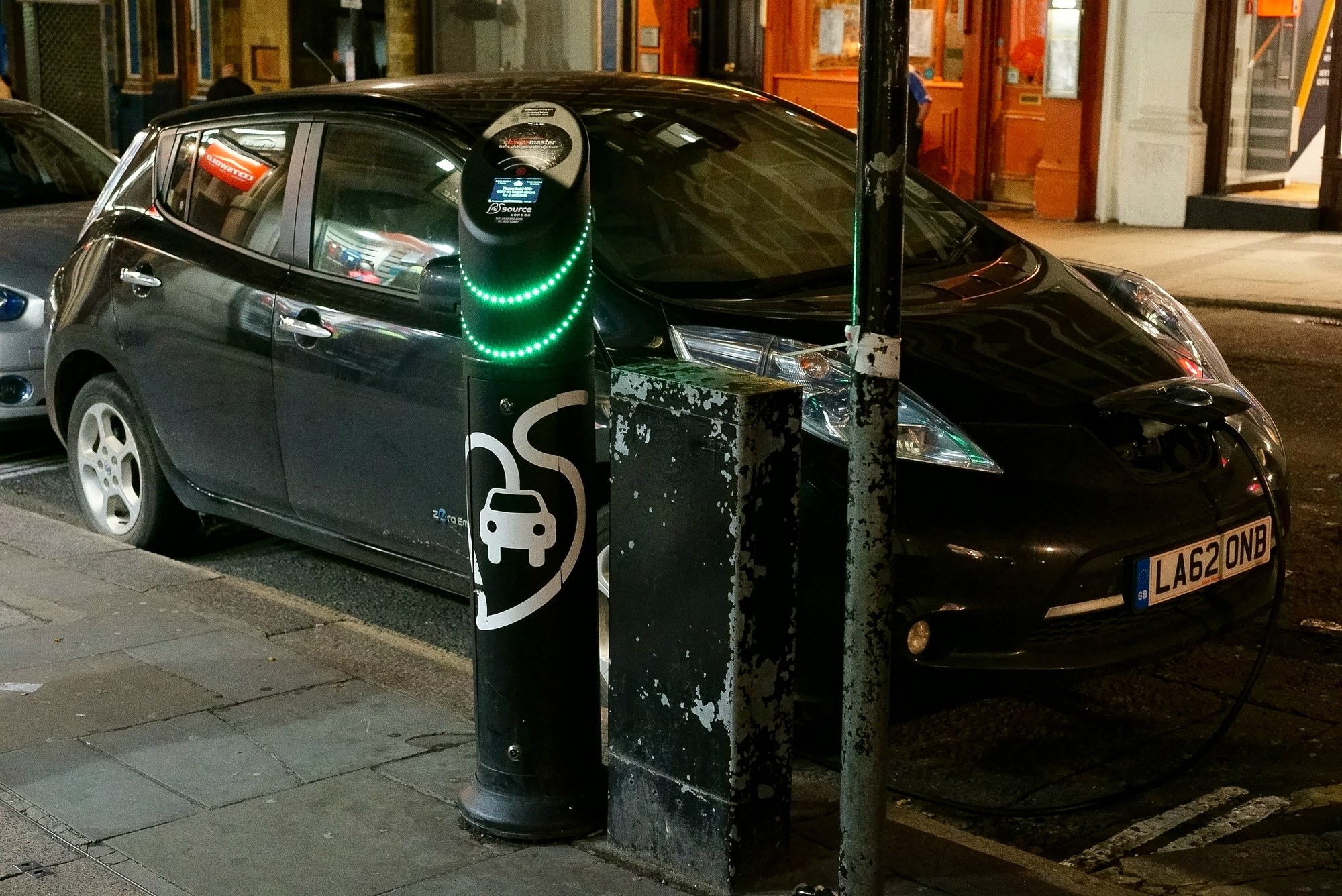
An electric car at a public charging point in Westminster, London, on 14 November 2014. Archive illustration of street charging, predating the October 2026 planning changes. Image credit: Peter Trimming / Geograph / Wikimedia Commons. CC BY-SA 2.0.
Share article
Was this article helpful?
Thanks — that helps us improve these guides.