
Development: Bill published 27 November 2026
People in Scotland who develop serious asbestos-related illness would find it easier to claim compensation under a bill published by the Scottish Government.
The Damages (Scotland) Bill would clarify when the three-year time limit for bringing a claim starts to run.
Key facts
- At present, the time limit can run out before a person knows they have a serious disease.
- Under the bill, an earlier diagnosis of a symptom-free condition, such as pleural plaques, would not on its own stop a later claim if the person goes on to develop mesothelioma.
- Compensation for care would recognise help given by friends and neighbours, not only relatives.
- Courts would have a stronger role in deciding how compensation awarded to children is managed.
- The bill also allows more flexibility in how inflation is considered when setting the personal injury discount rate.
Why it matters
Asbestos exposure can cause symptom-free conditions such as pleural plaques. The same exposure can lead to a much more serious disease, such as mesothelioma, many years later. The proposals follow recommendations from the Scottish Law Commission, which published a draft bill in 2024.
Victims minister Kirsten Oswald said: “People affected by asbestos-related illness deserve a fair chance to seek justice.”
What it means for tradespeople
Electricians, plumbers, joiners, roofers and other trades who work on older buildings can disturb asbestos. Asbestos-related disease can take decades to appear. Tradespeople may want to:
- keep records of past employers and jobs where asbestos may have been present
- keep copies of any medical paperwork if they are diagnosed with pleural plaques
- follow HSE guidance and complete asbestos awareness training before working on older properties
The bill must now go through the Scottish Parliament before it can become law.
Sources · Scottish Construction Now · Law Society of Scotland Journal
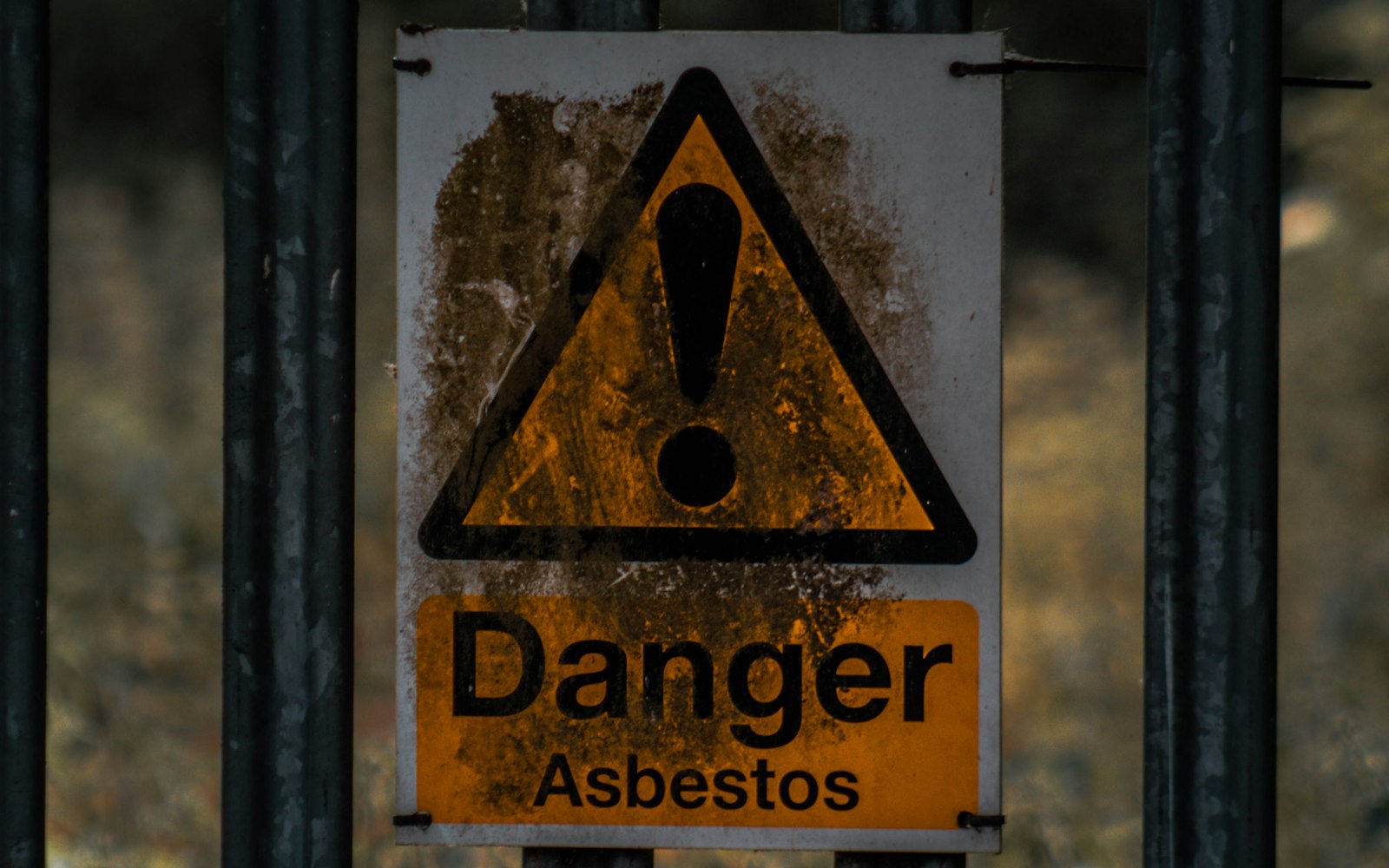
Main image: danger warning sign on a metal fence. Photo by Ben Hessler on Unsplash.
Share article
Was this article helpful?
Thanks — that helps us improve these guides.