

Development: Robot launched in Italy 24 November 2026
Brick and block maker Wienerberger has launched its WLTR bricklaying robot in Italy, with a demonstration at the Cinecittà film studios in Rome on 24 November.
The machine, pronounced “Walter”, has already been used on building sites in seven European countries, including the United Kingdom.
Key facts
- In the first nine months of 2026, WLTR worked on 62 sites and laid 19,099 square metres of masonry.
- The fleet grew from five robots in 2024 to 11 by September 2026.
- Besides the UK, it has worked in the Czech Republic, Slovakia, Poland, Austria, Slovenia and Hungary.
- It was developed with the Czech Institute of Informatics, Robotics and Cybernetics at the Czech Technical University in Prague.
- Wienerberger offers it as a service, charged per square metre of wall built, rather than selling the machine.
Comment cela fonctionne-t-il ?
The robot lays compatible clay blocks using a digital model of the wall that is planned in advance. On suitable projects, it can carry out 90 to 95% of the planned laying, according to Italian trade reports.
People are still needed for site preparation, moving materials, quality checks, detailing and any work that has to be done by hand. Wienerberger says 14 “Robot-Ready” block types are now made across seven countries.
The company also showed shoulder and lower-back exoskeletons from Italian start-up Agade. These are being tested on site and are meant to support, not replace, training and risk assessment.
Why it matters
Wienerberger Italia said it was bringing a new way of building masonry to market, not simply a robot. The group says the machine takes on heavy, repetitive work and turns the bricklayer into a trained operator.
What it means for UK trades
Wienerberger says it has completed WLTR projects in the UK and runs a training and demonstration centre here.
However, the robot works with large clay blocks rather than the small facing bricks used on most British homes. It was mainly designed for long walls in buildings such as factories and schools, so it is unlikely to replace traditional bricklaying on typical housing soon.
Where it is used, bricklayers may find more of their work shifts to setting out, operating the machine and finishing the details it cannot do.
Sources · Startup-News.it · Ingenio · Wienerberger · ZI Ziegelindustrie International
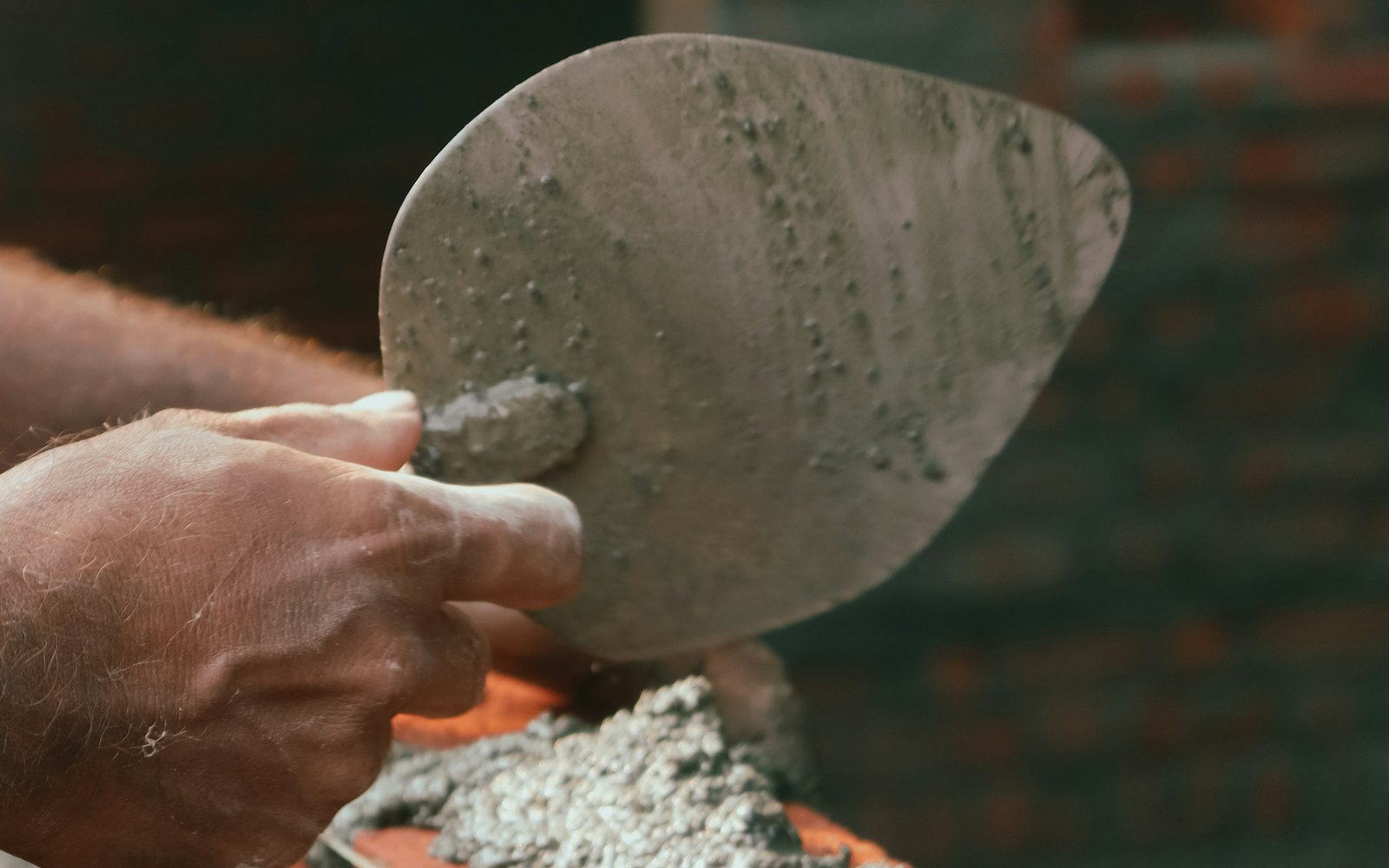
Main image: bricklayer working on a brick wall with a trowel. Photo by Gowtham AGM on Unsplash.
Share article
Was this article helpful?
Thanks — that helps us improve these guides.