

Development: Government response to the CMA civil engineering market study, published 24 November 2026
Public bodies buying road and rail work will have to follow the government’s Construction Playbook, after ministers accepted most of the competition watchdog’s plan to fix how infrastructure is bought.
The government has accepted 15 of the 19 recommendations made by the Competition and Markets Authority (CMA) in its study of the civil engineering market. It accepted three more in principle and said one was already in place.
The Playbook sets out how public clients should plan, procure and manage construction work. Until now it has applied on a “comply or explain” basis, which industry bodies say has been followed unevenly.
What has been agreed
- Compliance with the Construction Playbook will be mandated for road and rail work.
- The Department for Transport will lead a single strategic sector plan for road and rail civil engineering. A draft is expected by autumn 2027 and the final plan by winter 2027.
- Improvements to the UK Infrastructure Pipeline, and more scope for longer-term contracts.
- Contract risk and the use of “Z clauses”, which amend standard contracts, were accepted only in principle. A decision on whether the department will review them is due by spring 2027.
The CMA estimated that public bodies spent about £10.3bn on roads and £8.7bn on railways in 2023/24. Its final report, published in May, argued that better planning and procurement could save billions of pounds a year.
What the industry says
The Civil Engineering Contractors Association (CECA) welcomed the response. Its director of policy and public affairs, Ben Goodwin, said, according to Highways Industry: “We are extremely pleased that the Government has accepted the vast majority of the CMA’s recommendations.”
CECA urged ministers to move quickly. The Institution of Civil Engineers singled out the decision to mandate the Playbook as the most welcome change.
What it means for contractors and trades
Firms working in road and rail supply chains have long complained of stop-start funding and work being cancelled at short notice. This week the government confirmed it was dropping two major road schemes as money moved to defence.
A published sector plan and a clearer pipeline should, in time, give subcontractors a better view of when work is coming. That matters for decisions on hiring, buying plant and taking on apprentices.
But most of the commitments will not take full effect until 2027. Specialist firms should watch for the draft sector plan next autumn and for any change in how Z clauses are used, as these affect who carries the risk on a job.
Sources · Highways Industry · Rail Business Daily · Building
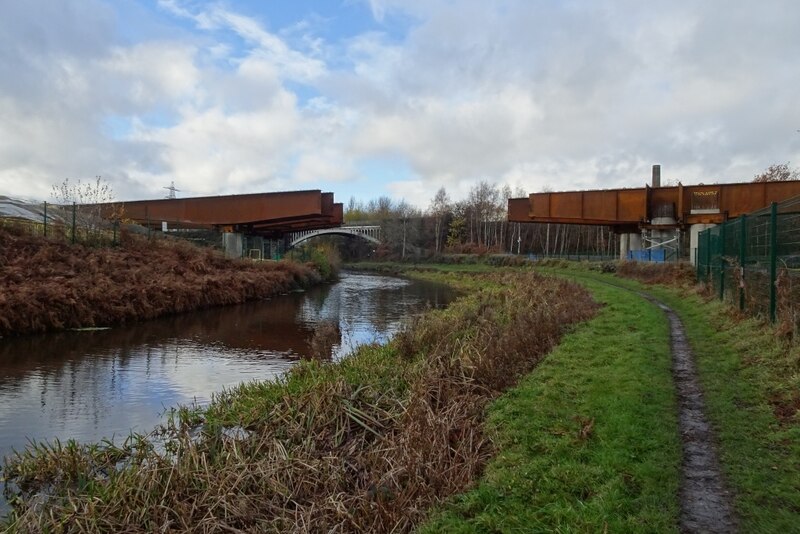
Main image: Baker Viaduct under construction on the Transpennine Route Upgrade. © DS Pugh, licensed under CC BY-SA 2.0 via Geograph.
Share article
Was this article helpful?
Thanks — that helps us improve these guides.