
Development: Energy Independence Bill introduced 4 November 2026
Communities could be offered larger ownership stakes in local renewable electricity projects under powers proposed in the Energy Independence Bill.
The government wants to allow future regulations requiring qualifying developers to offer a stake equivalent to up to 20% of a project's capital costs. The existing enabling framework provides for a 5% level.
The Bill would also allow the threshold for qualifying generation projects to fall from five megawatts to one megawatt. That could bring a wider range of developments within future shared ownership requirements.
The proposals would create powers for subsequent regulations. They do not give every community an immediate right to a free share of a nearby wind or solar project, and the precise percentage would be settled later.
Shared ownership involves a community group investing in part of a development. Its share can provide a voice in the project and revenue that the group can use for local priorities, subject to the arrangements agreed.
The wider Energy Independence Bill sets out a package of measures intended to change how energy infrastructure is developed and how customers participate in the system. The shared ownership provision is one element, with its own implementation requirements.
For contractors building renewable projects, the relevance is commercial as well as local. Future project structures may involve a community investor alongside the main developer, making clear responsibilities and project information important from the outset.
Ownership is also distinct from other forms of community benefit. A payment or local fund does not necessarily provide an equity stake, while an investment brings its own terms and risks. The proposal should be described in those terms rather than as a guaranteed reduction in every nearby household's bill.
Developers would remain free to offer more voluntarily than the eventual minimum, according to the government's factsheet. The next stages will determine which projects qualify and how an offer must be made. Until those rules are established, the Bill signals the direction of policy rather than a completed ownership arrangement for any named development.
Sources: DESNZ: shared ownership proposals; DESNZ: Energy Independence Bill overview.
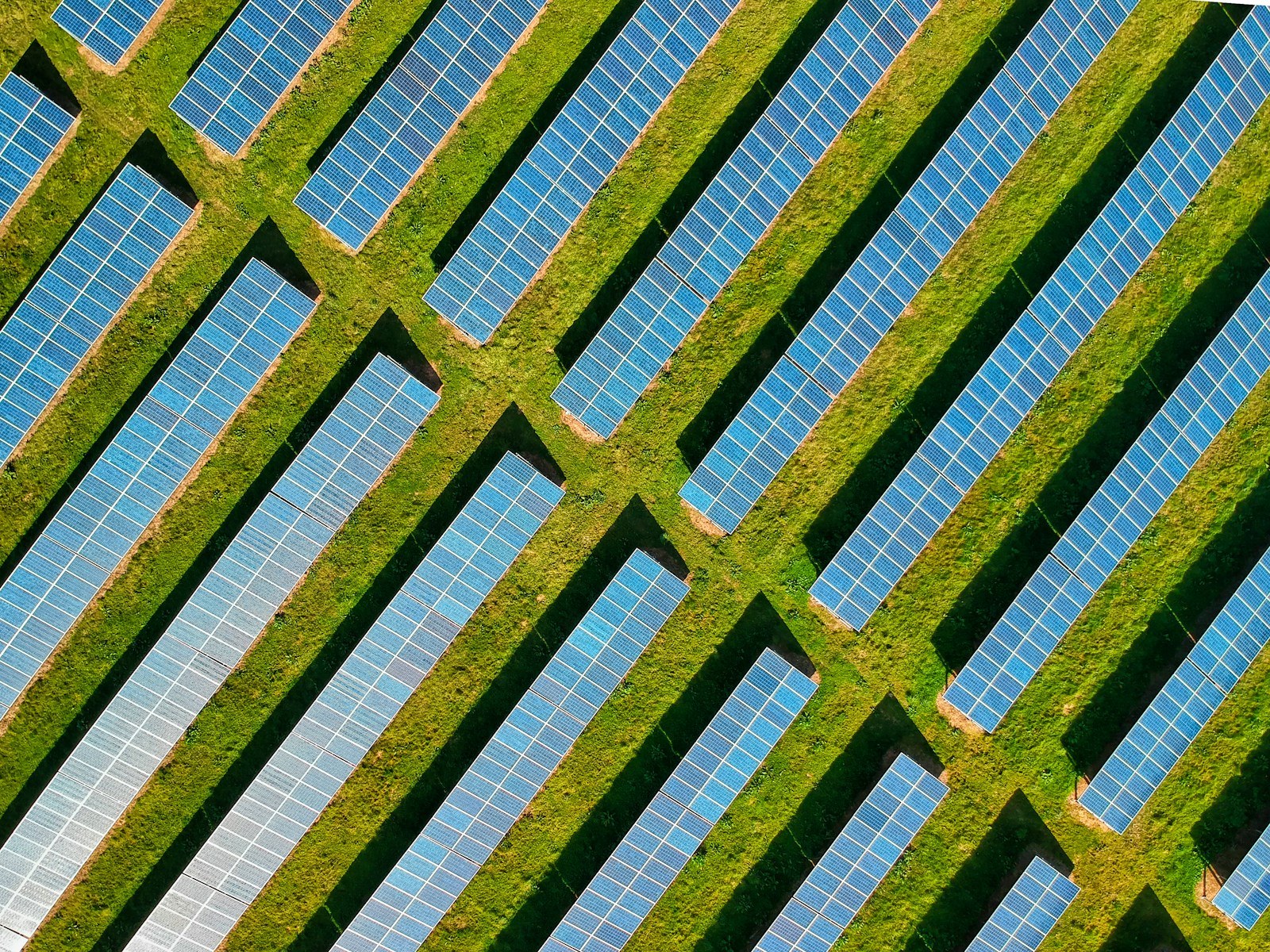
Archive aerial photograph of a solar farm at Lower Allercombe, Devon, April 2020. Illustrative UK renewable energy; the image does not establish community ownership or participation in the proposed scheme. Image credit: Red Zeppelin / Unsplash. Unsplash License.
Share article
Was this article helpful?
Thanks — that helps us improve these guides.