

Development: Bill introduced 4 November 2026
Battery storage systems sold in Great Britain could be required to include smart functionality under powers proposed in the Energy Independence Bill.
The measure would let ministers make further regulations if the market does not adopt the capability quickly enough. It is a proposed power, rather than an immediate requirement to replace or modify batteries already installed.
The government says automated controls can help consumers shift electricity use away from expensive peak periods. Customers would retain the choice not to use a device's smart functions.
For battery installers, that places attention on how a system communicates, responds to tariffs and works alongside other equipment. The policy is about the ability to participate in a more flexible electricity system, rather than a promise of the same saving for every household.
The proposal sits alongside the Smart Secure Electricity Systems programme. Its first phase addresses energy smart appliances, including electric vehicle charge points, heat pumps and certain other heating equipment, using powers in the Energy Act 2023.
That broader programme considers how equipment can respond to electricity system conditions while maintaining consumer protection. A battery sold as part of a solar installation may be one element of a household system that also includes heating, a vehicle and an energy management service.
Compatibility therefore matters beyond the individual product. The equipment's controls, the tariff, the customer's needs and any service agreement determine how much flexibility can actually be used. Technical capability should not be confused with an obligation on the customer to surrender control over when they use energy.
The Bill's battery provisions would create the legal route for a future mandate. Detailed regulations would still be needed to set the requirements and how they apply. Businesses should distinguish the proposed legislation from existing product specifications when describing compliance to customers.
The commercial implication is a reason to examine future product support and controls when selecting systems. It is not evidence that a particular battery model has become non-compliant. Until the detailed rules are settled, installers need to keep manufacturer claims, present requirements and possible future obligations clearly separated in quotations and advice.
Sources: DESNZ: battery storage smart mandate; DESNZ: first phase energy smart appliance proposals.
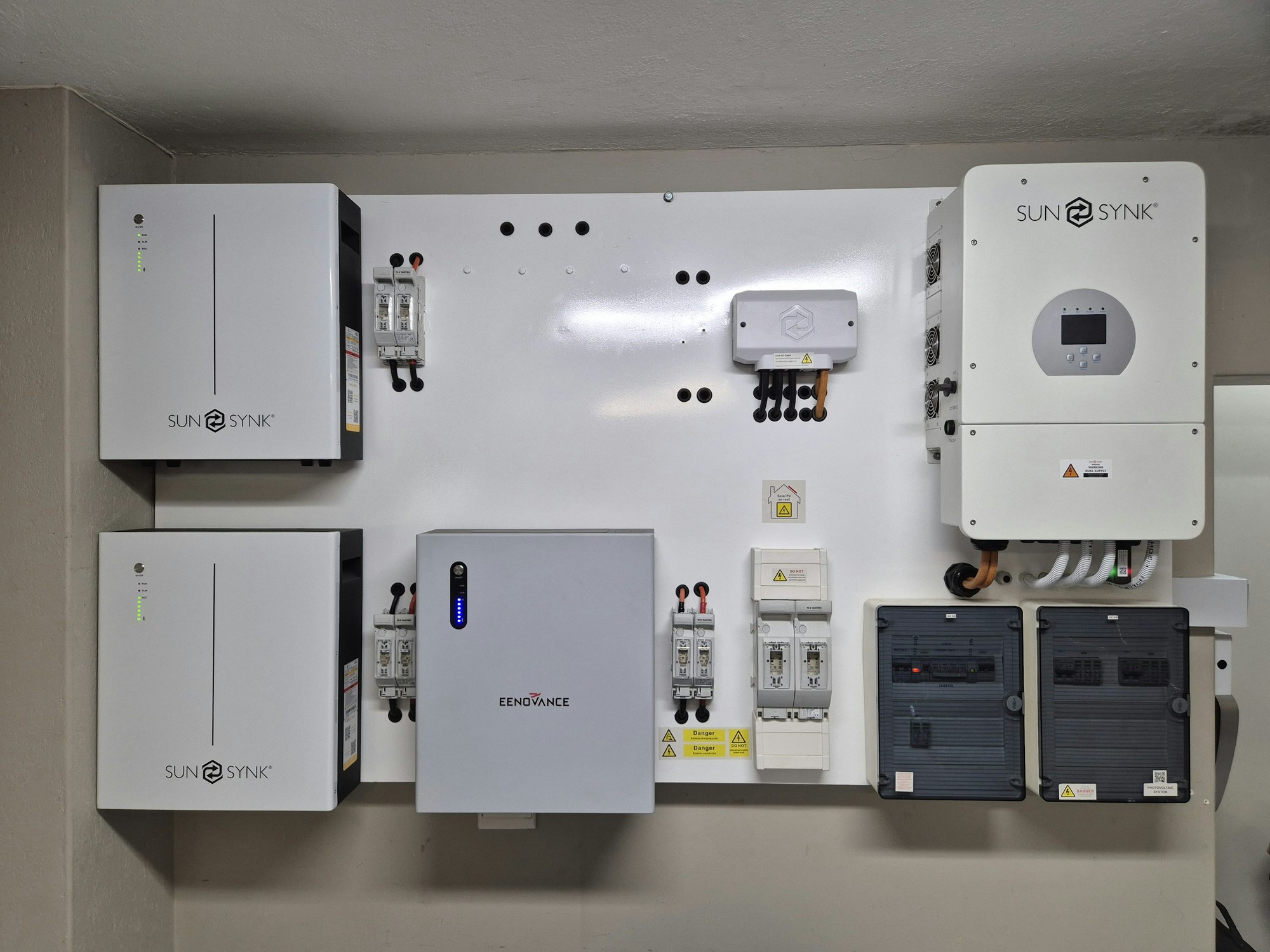
Solar and battery equipment, illustrative stock. The photograph does not demonstrate compliance with proposed smart-functionality requirements. Image credit: Sergio Martins / Unsplash. Unsplash License.
Share article
Was this article helpful?
Thanks — that helps us improve these guides.