




Solar PV installer
Also called: Solar panel installer, Renewables installer
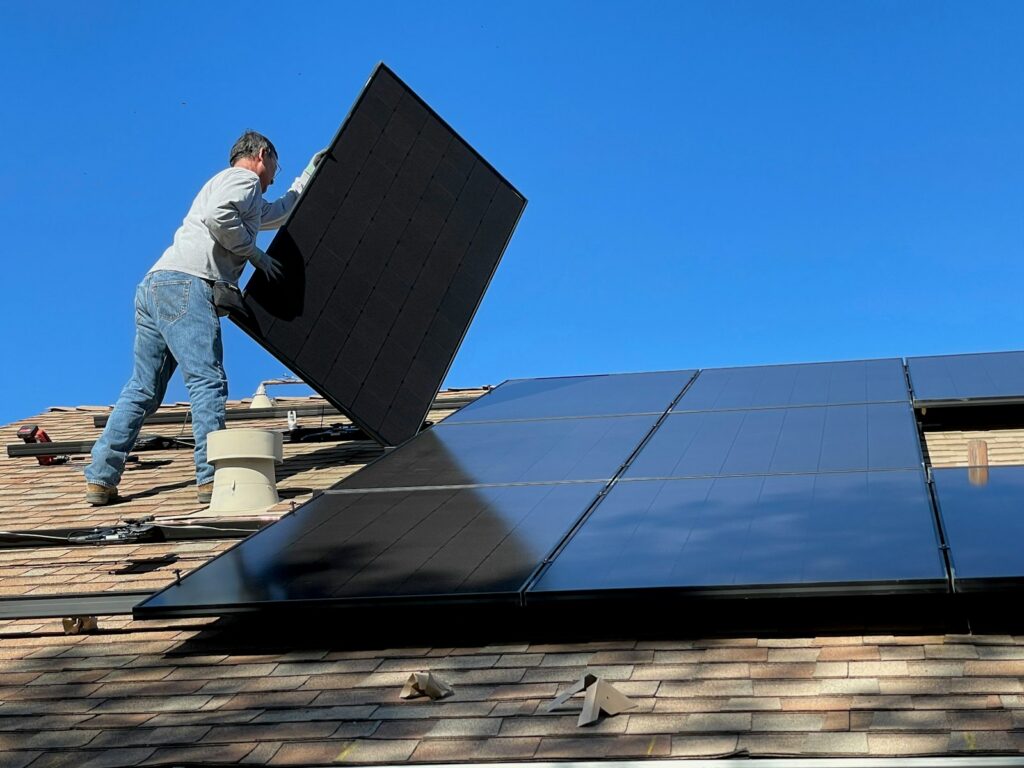
Solar PV installers design, fit and maintain solar panel systems on homes and commercial buildings, often with battery storage.
- Starter pay
- £25,000
- Experienced pay
- £47,000
- Training
- 3 to 4 years, plus a short solar course
- Site card
- CSCS card
Coming to the Tradefox app. The app trains electricians today, with more trades coming.
Tradefox's electrical simulations cover the correct isolation and testing skills this work relies on. See the electrician page
Quick self-check · 5 questions
Is this trade for you?
Five honest statements about the job. Pick the answer that fits you best. It’s not a test, and lots of people grow into a trade.
Think about each of these. If most sound like you, this trade could suit you.
- You're comfortable working at height. Most installs are on roofs, so safe access and height work are part of it.
- You're interested in electrics and renewable energy. Electrical knowledge is a core skill.
- You follow safety procedures carefully. Panels produce electricity in daylight, so isolating and proving dead matter every time.
- You like practical installation work. You fit rails, mount panels, run cables and test systems.
- You enjoy explaining things to customers. You show customers how their system works.
What people like
- Work in renewable energy
- Variety: homes, commercial roofs, solar farms and new-builds
- Builds on electrical skills
What can be hard
- Working at height on roofs
- Electrical safety is critical: panels can't be switched off
- You'll usually need an electrical qualification
Next steps
Compare similar trades
A day on site
- Surveying the roof and the building's electrics
- Planning safe access, such as scaffold and edge protection
- Fitting mounting rails and sealing roof fixings
- Mounting panels and running cables safely
- Connecting inverters and batteries, with electrical work done by a qualified electrician
- Testing the system and showing the customer how it works
Where you work
- Homes
- Commercial and industrial roofs
- Solar farms
- New-build housing
Skills you need
- Comfortable working at height
- Electrical knowledge
- Practical installation skills
- Attention to detail
- Customer service
- Problem solving
- Physical fitness
Practise the maths with our free calculators ›
Routes in
Electrician first
About 3 to 4 years, plus a short solar course
Many installers qualify as electricians through the Level 3 installation and maintenance electrician apprenticeship, then add solar PV training.
Find out more (electrician first) (opens in new tab)Roofer or installer moving into solar
Short course
Roofers or installation labourers can take a solar PV course, but an electrician still needs to connect the panels to the building's electrical system.
Find out more (roofer or installer moving into solar) (opens in new tab)College course
1 to 2 years
Electrical installation courses, the 18th edition wiring regulations, or the T Level in building services engineering for construction can lead into solar work.
Find a course (college course) (opens in new tab)Foundation apprenticeship
Varies
The Level 2 building services engineering foundation apprenticeship is open to people aged 16 to 21 with no set qualifications. People aged 22 to 24 can apply if they have an EHC plan, have been in care or have been in prison.
Find an apprenticeship (foundation apprenticeship) (opens in new tab)A typical route
- School or college
- Electrical apprenticeship (Level 3)
- Électricien
- Solar PV installation course
- Solar PV installer
- Work for an MCS certified company
Find an apprenticeship near you
Compare every way in on the routes hub ›
Qualifications by nation
England
- Installation and maintenance electrician Level 3 apprenticeship
- Building services engineering Level 2 foundation apprenticeship
- 18th edition wiring regulations
- Solar PV installation and maintenance course
Scotland
- Apprenticeships are run through Skills Development Scotland. Search for construction Modern Apprenticeships at apprenticeships.scot.
Wales
- Search for construction apprenticeships through Careers Wales.
Northern Ireland
- Search for construction apprenticeships through nidirect (ApprenticeshipsNI).
Cards for site
- CSCSRougeTrainee
Red · Trainee - CSCSBleuSkilled Worker
Blue · Skilled Worker
Illustration, not the official card design.
CSCS card
Most sites ask for a Construction Skills Certification Scheme (CSCS) card, or an equivalent, before you can work there. You'll usually need to pass the CITB health, safety and environment (HS&E) test first.
Visit the CSCS site (opens in new tab)MCS certification (for companies)
MCS certifies installation companies, not individuals. Customers need an MCS certified (or equivalent) installation and installer to get Smart Export Guarantee payments, so many solar firms are MCS certified.
Visit the MCS certification (for companies) site (opens in new tab)Not sure which card?
Answer a few questions and we’ll point you to the right card and test.
Use the card finder ›What you could earn
Apprentice
At least £8.00an hour
The apprentice minimum wage from 1 April 2026. Many employers pay more.
Starting out (about)
£25,000a year
Experienced (up to)
Up to £47,000a year
Up to about £47,000 a year
Pay depends on whether you're a qualified electrician, the size of systems you install and whether you're employed or self-employed. Source: National Careers Service: solar panel installer (opens in new tab), 2026.
Where it can lead
- Lead installer or team leader
- Solar design engineer
- Battery storage and EV charging
- Large-scale solar farms
- Running your own renewables business
Myths and facts
Stay safe on site
Useful guides
Related trades

Roofer
Roofers fit, repair and replace roofs, from slate and tile pitched roofs to flat roofs with waterproof membranes, sheeting and cladding.
£42,000Experienced
Explore roofer ›
Scaffolder
Scaffolders put up, alter and take down the temporary structures that let everyone else work safely at height.
£51,000Experienced
Explore scaffolder ›
Site supervisor
Site supervisors run the day-to-day work on a construction site, keeping it safe, on schedule and built to standard.
£60,000Experienced
Explore site supervisor ›Questions
Do I need to be an electrician to install solar panels?
You'll usually need an electrical qualification. Roofers who train in solar still need an electrician to connect the panels to the power system, so many installers qualify as electricians first.
What is MCS?
The Microgeneration Certification Scheme sets standards for small-scale renewables and certifies installation companies. To get Smart Export Guarantee payments, customers need an MCS certified (or equivalent) installation and installer.
What does a solar installer earn?
The National Careers Service gives about £25,000 to £47,000 a year.
Is solar a growing trade?
Solar installers can move into battery storage, EV charging, large-scale solar and the wider renewables sector.
How long does it take to become a solar PV installer?
It depends on where you start. Qualified electricians can take a short course in installing and maintaining small solar PV systems. If you're starting from scratch, the usual route is the Level 3 Installation and Maintenance Electrician apprenticeship, which typically takes 3 to 4 years. You could also start as an installation labourer and train on the job.
Can I become a solar installer at 30 or 40 without an apprenticeship?
Yes. Adults can start as an installation labourer and train on the job. Another option is college courses such as electrical installation and the 18th Edition wiring regulations, followed by a short solar PV course. If you already hold electrical installation qualifications and experience, you can apply directly for installer jobs.
Do you need to be an electrician to install solar panels?
You'll usually need an electrical qualification to work as a solar PV installer. Qualified roofers can take solar PV training to fit panels, but they must work with an electrician to connect them. Installer businesses can also be certified through the Microgeneration Certification Scheme (MCS), which shows they work to industry standards.
Sources (6)
- National Careers Service: solar panel installer (opens in new tab)
- MCS: Microgeneration Certification Scheme (opens in new tab)
- GOV.UK: Find an apprenticeship (opens in new tab)
- GOV.UK: National Minimum Wage and National Living Wage rates (opens in new tab)
- GOV.UK: Smart Export Guarantee (opens in new tab)
- BRE/DTI: Guide to the installation of PV systems (2nd edition) (opens in new tab)
Rules and fees change, so always check the official sources linked on this page. Last reviewed 24 November 2026.