
Development: Budget proposal reiterated in Parliament on 24 November 2026
Residential developments on brownfield sites of up to 1.5 hectares in England would be exempt from biodiversity net gain requirements under a government plan reiterated in Parliament.
Housing minister Matthew Pennycook referred to the proposed exemption in a written answer on 24 November, saying viability pressures were affecting housing markets across the country.
The measure was announced in the October Budget as part of the government's support for development on previously used land. The Treasury said a full consultation response and impact assessment would set out the implementation timetable.
That means the proposed 1.5-hectare exemption should be distinguished from the smaller-site exemption already in force. It is not a general statement that all brownfield housing schemes can disregard biodiversity requirements now.
Current guidance provides an exemption for qualifying developments on sites no larger than 0.2 hectares, where the application was made on or after 6 August 2026 and no onsite priority habitat is affected. Other exemptions and transitional arrangements also apply.
Where the rules do apply, biodiversity net gain requires development to leave habitats with at least 10% more measured biodiversity value. The calculation considers habitat characteristics such as size, quality, location and type, rather than simply counting trees or comparing the amount of green space.
Developers can create or improve habitats on the site, provide qualifying gains elsewhere or, as a last resort, purchase statutory credits. Offsite gains and significant onsite gains must be maintained for at least 30 years.
Widening the exemption would remove that mandatory gain requirement from a larger group of residential sites. Ministers present the change as a way to improve development viability; the environmental consequence would be fewer schemes required to deliver the additional habitat value through this particular mechanism.
The Budget has not yet resolved the detailed implementation questions. Its promised response and impact assessment will be important for establishing which applications qualify, when the change starts and how it interacts with permissions already being pursued.
Sources: House of Commons: housing viability answer, 24 November, page 148; HM Treasury: Budget 2026, biodiversity net gain reforms; Government: current biodiversity net gain exemptions; Government: how biodiversity net gain works.
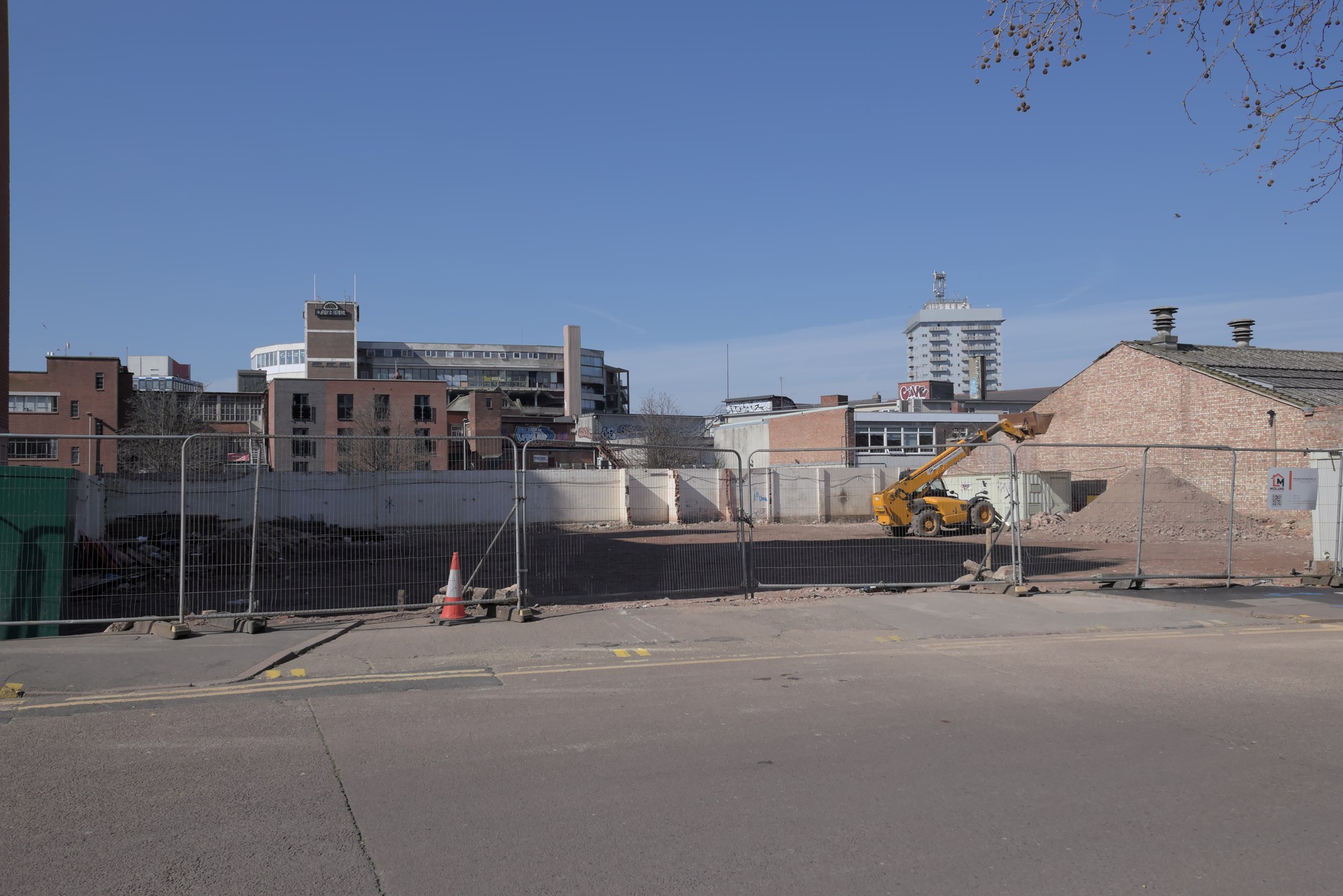
Previously developed land in Leicester, photographed on 19 March 2026. Archive illustration; the site’s eligibility for the proposed biodiversity exemption has not been established. Image credit: Aethonatic / Wikimedia Commons. CC0 1.0 Universal.
Share article
Was this article helpful?
Thanks — that helps us improve these guides.