




Steel fixer
Also called: Steelfixer, Rebar fixer, Reinforcement fixer
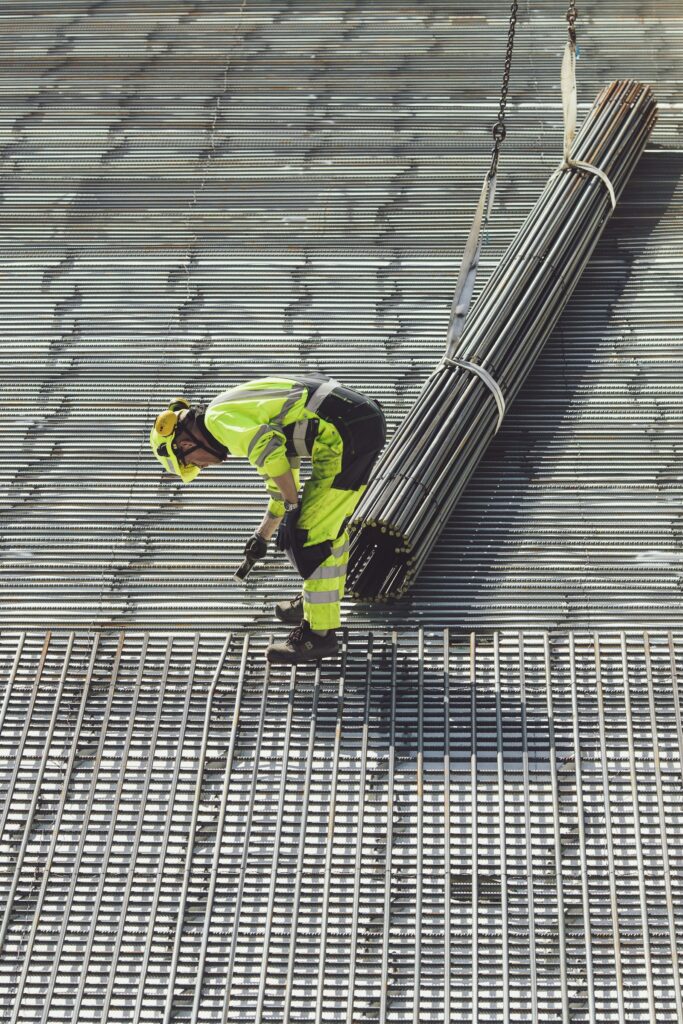
Steel fixers cut, bend, place and tie the steel reinforcing bars and mesh that give concrete its strength in foundations, columns, walls and floor slabs.
- Starter pay
- £22,000
- Experienced pay
- £45,000
- Training
- 18 months
- Site card
- CSCS Apprentice card (red)
Coming to the Tradefox app. The app trains electricians today, with more trades coming.
Quick self-check · 5 questions
Is this trade for you?
Five honest statements about the job. Pick the answer that fits you best. It’s not a test, and lots of people grow into a trade.
Think about each of these. If most sound like you, this trade could suit you.
- You like reading drawings and schedules. Reading drawings and bending schedules tells you what goes where.
- You have strength, balance and stamina. Physical strength, balance and stamina are core skills.
- You're comfortable working at height. High-rise frames often mean working at height.
- You're happy outdoors in all weathers. Much of the work is outdoors on large sites.
- You enjoy close teamwork. You work with formwork carpenters, concrete gangs and engineers.
What people like
- Your work holds the building up
- Large, impressive projects: high-rise frames, bridges and tunnels
- A skilled trade with its own Level 2 apprenticeship and NVQ
What can be hard
- Physically demanding
- Outdoors in all weathers
- Working at height on frames
Next steps
Compare similar trades
A day on site
- Reading drawings and bending schedules to see what goes where
- Measuring, marking, cutting and bending bars and mesh
- Fixing steel into position for foundations, columns, walls and slabs
- Tying bars together with wire and clips, and fitting spacers and supports
- Fitting bar caps and barriers so exposed steel is safe
- Checking the cage before the concrete pour and fixing any problems
- Working closely with formwork carpenters, concrete gangs and engineers
Where you work
- Large building and civil engineering sites
- High-rise frames, often working at height
- Bridges, tunnels and infrastructure projects
- Outdoors in all weathers
Skills you need
- Reading drawings and specifications
- Accurate measuring and marking out
- Physical strength, balance and stamina
- Comfortable working at height
- Good hand skills with hand and power tools
- Teamwork and clear communication
- Working safely and keeping the area safe for others
Practise the maths with our free calculators ›
Routes in
Apprenticeship
Typically 18 months (the National Careers Service says up to 2 years); check with your training provider
In England, the Steel Fixer Level 2 apprenticeship trains you on site with an employer while you study. You'll usually need some GCSEs, including English and maths, or equivalent.
Find an apprenticeship (apprenticeship) (opens in new tab)College course
Usually 1 to 2 years
A construction or engineering course, such as construction skills, gives you the basics and can help you find a trainee job. Entry requirements vary by college.
Find a course (college course) (opens in new tab)Start on site
Varies
Some people start as a labourer with a steel fixing gang, learn on the job and then work towards an NVQ in steelfixing.
Find out more (start on site) (opens in new tab)Experienced worker route
Varies with experience
If you already fix steel but have no qualification, you can be assessed on site for a Level 2 NVQ in steelfixing (or an SVQ in Scotland). While you're registered on it you may be able to get a red CSCS Experienced Worker card, and finishing it leads to a blue Skilled Worker card.
Find out more (experienced worker route) (opens in new tab)A typical route
- School or college
- Steel Fixer Level 2 apprenticeship
- End-point assessment
- Blue CSCS Skilled Worker card
- Experienced steel fixer or charge hand
Find an apprenticeship near you
Compare every way in on the routes hub ›
Qualifications by nation
England
- Steel Fixer Level 2 apprenticeship
- Level 2 NVQ Diploma in Steelfixing (Construction), offered by awarding bodies such as NOCN
Scotland
- SVQ in Steelfixing Occupations (Construction) at SCQF Level 5, part of the Construction Specialist Modern Apprenticeship
Wales
- Construction apprenticeships are listed on the Welsh Government's Find an Apprenticeship service; check with employers and providers for steel fixing places
Northern Ireland
- Construction apprenticeships are run through ApprenticeshipsNI; check nidirect for current frameworks
Cards for site
CSCS Apprentice card (red)
Free for people registered on a recognised construction apprenticeship, so you can train on site.
Visit the CSCS Apprentice (red) site (opens in new tab)CSCS Blue Skilled Worker card
Needs a construction-related NVQ or SVQ Level 2 (or SVQ at SCQF Level 5) or a completed apprenticeship, plus the CITB Health, Safety and Environment test passed in the last two years. It lasts five years.
Visit the CSCS Blue Skilled Worker site (opens in new tab)Not sure which card?
Answer a few questions and we’ll point you to the right card and test.
Use the card finder ›What you could earn
Apprentice
At least £8.00an hour
The apprentice minimum wage from 1 April 2026. Many employers pay more.
Starter (about)
£22,000a year
Experienced (about)
£45,000a year
Pay depends on the project, overtime, and whether you're employed or self-employed. Source: National Careers Service: steel fixer (opens in new tab), 2026.
Where it can lead
- Site safety supervisor
- Engineering technician
- Charge hand or gang leader
- Related trades such as welding or scaffolding
- Training others
- Running your own steel fixing gang
Myths and facts
Stay safe on site
Useful guides
Related trades

Carpenter & joiner
Carpenters and joiners make and fit the timber parts of buildings, from roofs, floors and stud walls to doors, staircases and kitchens.
£40,000Experienced
Explore carpenter & joiner ›
Scaffolder
Scaffolders put up, alter and take down the temporary structures that let everyone else work safely at height.
£51,000Experienced
Explore scaffolder ›
Groundworker
Groundworkers prepare a site before building starts, digging foundations, laying drainage and building roads, paths and kerbs.
£35,000Experienced
Explore groundworker ›Questions
How long does it take to become a steel fixer?
The Steel Fixer Level 2 apprenticeship in England typically takes about 18 months, and up to 2 years. Check the length with your training provider.
Do steel fixers need a CSCS card?
Yes, you'll need a CSCS card or equivalent to train and work on most construction sites. Apprentices can get a red Apprentice card, and a Level 2 NVQ or completed apprenticeship leads to a blue Skilled Worker card.
Is steel fixing hard work?
It's physically demanding. You'll lift and carry steel, work outdoors in all weathers and often work at height, so fitness and safety matter.
What can a steel fixer move on to?
Experienced steel fixers can become charge hands, site safety supervisors or engineering technicians, or run their own gang.
Can I become a steel fixer with no experience?
It's possible, but employers usually want construction qualifications or on-site experience. Without those, an apprenticeship or a college course in construction skills is the usual way in, and can help you find a trainee job. You'll need a CSCS card or equivalent to work on a construction site.
What's the difference between a steel fixer and a steel erector?
Steel fixers build the steel reinforcement inside concrete. They cut, bend and tie bars and mesh to form beams, columns, floors, walls and slabs before the concrete is poured. Steel erectors put up structural steel frames for buildings and bridges, guiding steel into position and bolting it together.
Sources (7)
- National Careers Service: steel fixer (opens in new tab)
- Find apprenticeship training: Steel fixer (level 2) (opens in new tab)
- SQA: SVQ Steelfixing Occupations (Construction) SCQF level 5 (opens in new tab)
- CSCS: Skilled Worker card (opens in new tab)
- GOV.UK: National Minimum Wage and National Living Wage rates (opens in new tab)
- NOCN: Level 2 NVQ Diploma in Steelfixing (Construction) (opens in new tab)
- CSCS: Apprentice card (opens in new tab)
Rules and fees change, so always check the official sources linked on this page. Last reviewed 21 November 2026.