
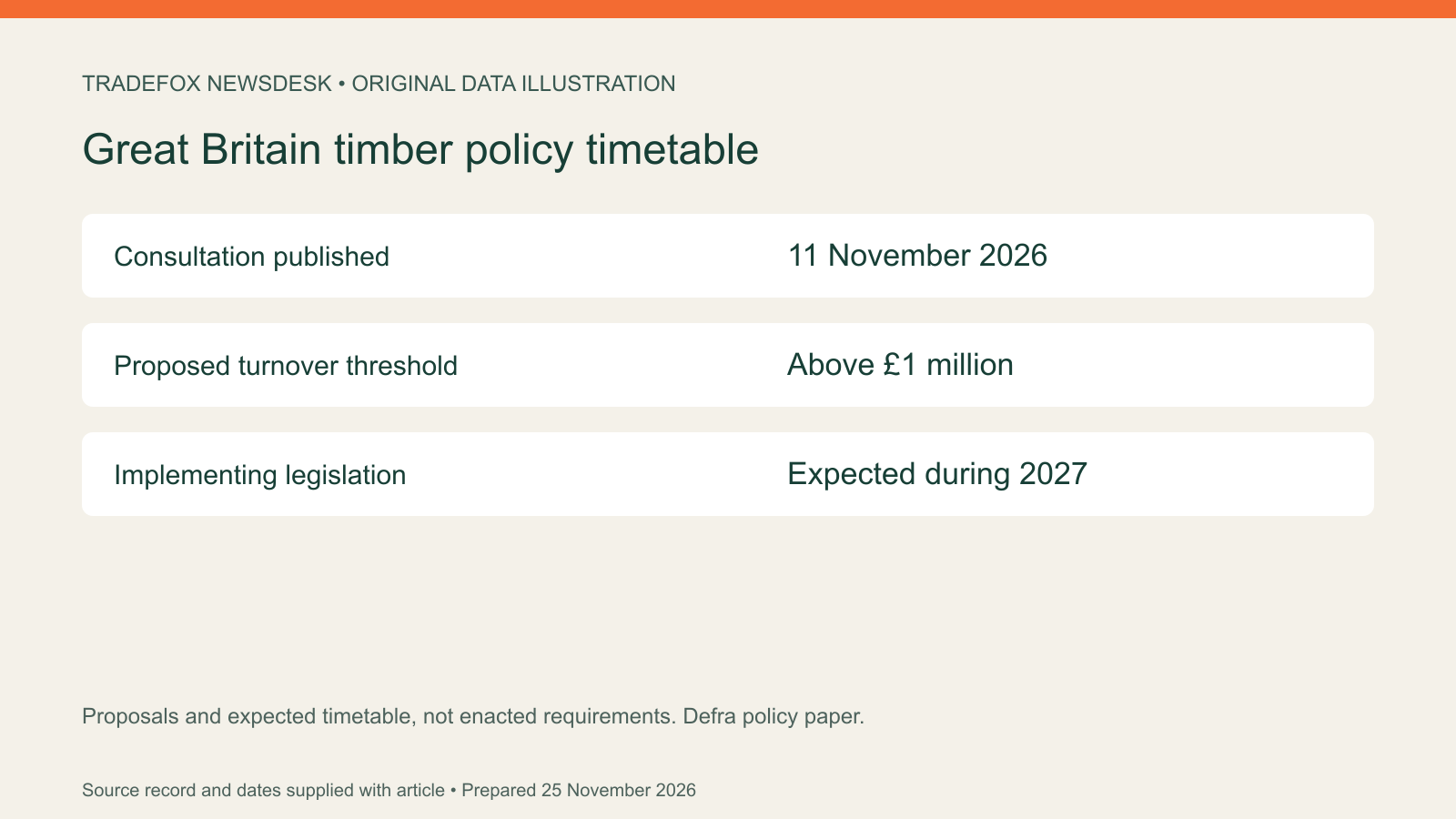
Consultation opened · 2026-11-11
GB implementing legislation expected, not enacted · 2027
Timber businesses in Great Britain face proposals for stronger checks on where their materials come from, following a Defra consultation published on 11 November. The exercise asks for views on the products and businesses covered, effective due diligence systems, and how firms should identify and manage illegal deforestation risks. It also seeks evidence on costs and practical impacts.
The accompanying government policy paper proposes duties for businesses with annual turnover above £1 million that use wood and other forest risk commodities. It envisages origin information including geolocation data, due diligence systems and reporting. Ministers expect legislation to implement the Great Britain regime in 2027. The proposals are therefore a policy development for suppliers and purchasers to examine, rather than a new set of enacted duties taking effect immediately.
That distinction matters for carpentry and joinery firms buying a mixture of boards, mouldings, doors and structural products. A useful first step would be to map which products come from which supplier and identify where origin records are held. This would give a business a clearer basis for explaining any administrative difficulty in its consultation response. It would also make it easier to separate a gap in its own purchasing records from information that only an upstream supplier can provide.
The consultation specifically invites evidence about impacts, creating an opportunity for smaller manufacturers to explain how a requirement would work in practice. A response could set out an example purchase, the documents available and the time needed to assemble them. Such evidence is more concrete than assuming that all timber products pass through the same kind of supply chain.
For customers commissioning fitted joinery, the likely practical issue is how material provenance will be documented alongside the specification. Firms can use the consultation period to review that process without presenting a proposal as settled law. Purchasing teams should follow the official consultation and final government response as the detailed rules develop, particularly before changing contractual promises or advertising a product as compliant with a future regime.
Sources · Defra consultation · Defra deforestation policy paper
Great Britain timber policy timetable. Proposals and expected timetable, not enacted requirements. Defra policy paper. Image credit: TradeFox Newsdesk / original illustration · CC0-1.0 for original graphic elements; factual data attributed to linked primary sources. No third-party photographs or logos used..
Share article
Was this article helpful?
Thanks — that helps us improve these guides.