




Dryliner
Also called: Drylining fixer, Interior systems installer
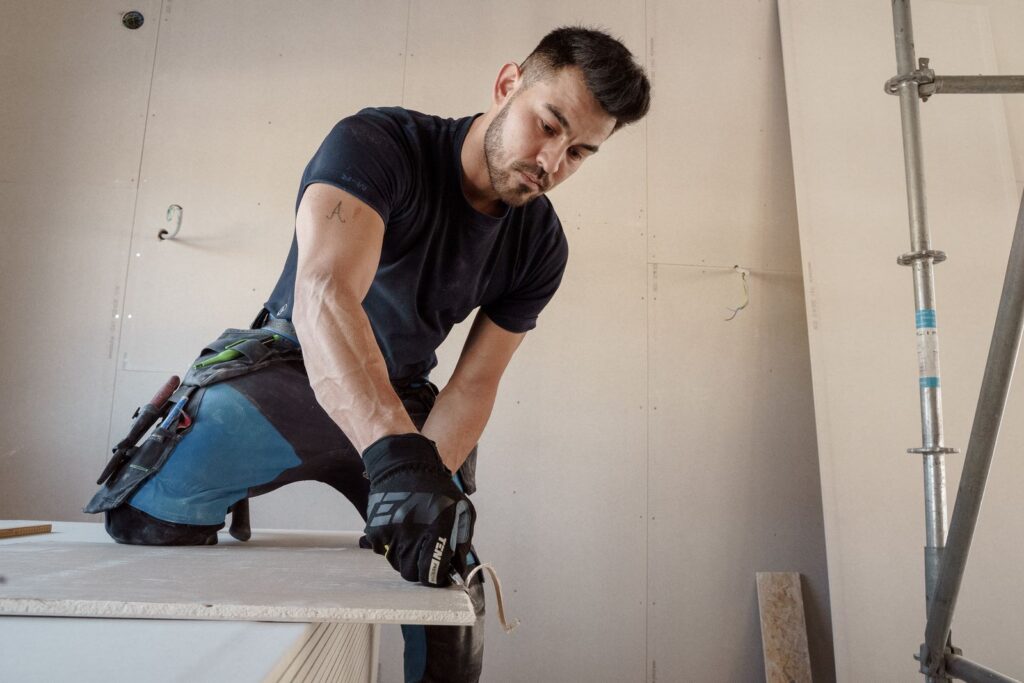
Dryliners build internal walls, ceilings and linings from metal or timber frames and plasterboard, ready for plastering or decorating.
- Starter pay
- £22,000
- Experienced pay
- £43,000
- Training
- 2 years
- Site card
- CSCS Apprentice card (red)
Coming to the Tradefox app. The app trains electricians today, with more trades coming.
Quick self-check · 5 questions
Is this trade for you?
Five honest statements about the job. Pick the answer that fits you best. It’s not a test, and lots of people grow into a trade.
Think about each of these. If most sound like you, this trade could suit you.
- You like accurate, methodical work. Marking out walls and ceilings and measuring boards precisely is the job.
- You're comfortable reading drawings. Dryliners work from drawings to set out frames, walls and ceilings.
- You're happy working at height from towers or platforms. Ceilings and tall walls are often fixed from towers or platforms.
- You like seeing a building's inside take shape. You build the frames and fix the boards that form walls and ceilings.
- You're happy doing physical work as part of a team. Physical fitness and teamwork are listed as key skills.
What people like
- Work on everything from homes to hospitals, schools, offices and hotels
- Clear progress: frames, then boards, then a finished wall
- Room to add taping, jointing and other finishing skills
What can be hard
- Lifting and handling boards is physical
- Often working at height from towers or platforms
- Sanding joints and cutting boards create dust you need to control
Next steps
Compare similar trades
A day on site
- Reading drawings and marking out where walls and ceilings go
- Fixing metal or timber frames to floors, walls and ceilings
- Measuring, cutting and fixing plasterboard, including round doors and windows
- Fitting insulation and boards for fire or sound protection
- Taping, filling and sealing joints, and sanding them smooth
- Clearing up and getting rid of waste safely
Where you work
- New-build housing
- Offices and shops being built or fitted out
- Hospitals, schools and hotels
- Homes being extended or refurbished
- Often working at height from towers or platforms
Skills you need
- Accurate measuring and maths
- Reading drawings
- Attention to detail
- Practical hand and power tool skills
- Teamwork
- Physical fitness
- Organising your time and work
Practise the maths with our free calculators ›
Routes in
Apprenticeship
About 2 years
In England the Interior Systems Installer Level 2 apprenticeship covers drylining, ceilings and partitions. It usually asks for some GCSEs, typically including English and maths, or equivalent.
Find an apprenticeship (apprenticeship) (opens in new tab)College course
Usually 1 year
Colleges run drylining and construction skills courses, such as the City & Guilds Level 2 Diploma in Drylining. Entry requirements vary by course.
Find a course (college course) (opens in new tab)Working your way in
Varies
You can start as a dryliner's labourer or mate and train on the job.
Find out more (working your way in) (opens in new tab)Career changer
Varies
If you have site experience in joinery, plastering or ceiling fixing, you may be able to apply directly. An on-site NVQ assessment can turn experience into a qualification.
Find out more (career changer) (opens in new tab)A typical route
- School or college
- Interior systems apprenticeship or drylining course
- End-point assessment or NVQ
- CSCS Blue Skilled Worker card
- Qualified dryliner
Find an apprenticeship near you
Compare every way in on the routes hub ›
Qualifications by nation
England
- Interior Systems Installer Level 2 apprenticeship
- College courses such as a Level 2 Diploma in Drylining
- Level 2 NVQ Diploma in Interior Systems (Dry Lining Fixing) for experienced workers
Scotland
- SVQ Interior Systems (Construction): Dry Lining – Fixing at SCQF Level 5, available through employers and training providers
- Construction Specialist Modern Apprenticeship (SCQF Level 5 or 6), which names dry lining among its subject areas; check with your provider which framework they use
Wales
- Apprenticeship using the City & Guilds Level 3 qualifications introduced from September 2022, which include dry lining
Northern Ireland
- Construction Level 2 apprenticeship framework, interior systems pathway, which includes NVQs in interior systems and diplomas in dry lining
Cards for site
CSCS Apprentice card (red)
For people registered on a construction apprenticeship or qualification, so you can train on site.
Visit the CSCS Apprentice (red) site (opens in new tab)CSCS Blue Skilled Worker card
Needs a construction-related Level 2 NVQ or SVQ, which most apprenticeships lead to. Most sites ask for a CSCS card or equivalent before you can work there.
Visit the CSCS Blue Skilled Worker site (opens in new tab)Not sure which card?
Answer a few questions and we’ll point you to the right card and test.
Use the card finder ›What you could earn
Apprentice
At least £8.00an hour
The apprentice minimum wage from 1 April 2026. Many employers pay more.
Starter (about)
£22,000a year
Experienced (up to)
Up to £43,000a year
Up to about £43,000 a year
Pay depends on location, the size of the project, overtime, and whether you're paid by the day, by the metre or on a salary. Source: National Careers Service: dryliner (opens in new tab), 2026.
Where it can lead
- Ceiling fixer or partition specialist
- Taper and jointer
- Supervisor or site manager
- Estimator or quantity surveyor
- Running your own business
- Training apprentices
Myths and facts
Stay safe on site
Useful guides
Related trades

Carpenter & joiner
Carpenters and joiners make and fit the timber parts of buildings, from roofs, floors and stud walls to doors, staircases and kitchens.
£40,000Experienced
Explore carpenter & joiner ›
Plasterer
Plasterers give walls and ceilings a smooth finish ready for decorating, apply render to outside walls, and make decorative plaster mouldings.
£38,000Experienced
Explore plasterer ›
Painter & decorator
Painters and decorators prepare and finish surfaces with paint, wallpaper and specialist coatings, inside and outside homes and commercial buildings.
£32,000Experienced
Explore painter & decorator ›Questions
How long does it take to become a dryliner?
The Interior Systems Installer Level 2 apprenticeship in England typically takes about 2 years.
What's the difference between a dryliner and a plasterer?
Dryliners put up frames and plasterboard to make walls and ceilings. Plasterers apply plaster finishes. The two often work on the same jobs.
Do dryliners need a CSCS card?
Most construction sites ask for a CSCS card or equivalent. A Level 2 NVQ or SVQ in interior systems can lead to the Blue Skilled Worker card.
Is the work physical?
Yes. You'll lift and carry boards, and often work at height from towers and platforms, so fitness and safe working matter.
Can I move into management?
Yes. With experience, dryliners move into supervising, estimating, quantity surveying or running their own business.
Do I need qualifications to become a dryliner?
Not always. You can join a company as a dryliner's mate and train on the job. If you already have site experience in joinery, plastering or ceiling fixing, you can apply for dryliner jobs directly. The apprenticeship usually asks for some GCSEs, including English and maths, and you'll need a CSCS card for site work.
Is dry lining the same as plastering?
Not quite. Dry liners use plasterboard and panels to build internal walls, suspended ceilings and raised floors, then seal the joints and may skim a thin coat of plaster. Plasterers apply plaster to surfaces and do external rendering. Dry lining is a specialism of its own, with its own Interior Systems Installer apprenticeship.
Sources (7)
- National Careers Service: dryliner (opens in new tab)
- Find apprenticeship training: Interior systems installer (Level 2) (opens in new tab)
- SQA: SVQ Interior Systems (Construction): Dry Lining Fixing (opens in new tab)
- Qualifications Wales: construction apprenticeship changes (opens in new tab)
- nidirect: construction level 2 apprenticeship framework (opens in new tab)
- CSCS: qualifications and cards (opens in new tab)
- GOV.UK: National Minimum Wage and National Living Wage rates (opens in new tab)
Rules and fees change, so always check the official sources linked on this page. Last reviewed 21 November 2026.