


Wall murals have moved well beyond novelty. For decorators and finishing trades, a feature wall design is now a regular part of the brief, whether that is a statement wall in a domestic lounge, branded graphics in a commercial unit, or large format print across a hospitality space. The difference between a job that looks considered and one that overwhelms the room comes down to two things: getting the scale right and placing the design where it earns its keep.
This guide is written for tradesmen and those entering the decorating trade. It covers how to assess a space, how to advise a client without overpromising, and how to deliver a wallpaper mural finish that holds up.
Why Scale Decides Everything
Scale is the first judgement call on any mural job, and it is the one most likely to go wrong. A pattern that reads beautifully on a sample sheet can become chaotic across four metres of wall. The repeat changes, the focal points multiply, and the eye has nowhere to rest.
Before quoting, measure the wall properly. Record height, width, and any interruptions such as sockets, switches, radiators, and door architraves. These interruptions matter more with bold designs because the pattern gets sliced in ways the manufacturer’s preview never shows.
A Simple Rule for Scale
Use this as a starting point when advising clients:
- Large patterns suit large walls and rooms with distance to view them from.
- Smaller, tighter designs hold up better in compact spaces and hallways.
- A central motif behind a sofa or headboard usually works, while the same motif spread floor to ceiling on a narrow wall tends to feel cramped.
The viewing distance is as important as the wall size itself. A feature wall that looks balanced from across a lounge can feel overwhelming in a tight hallway where the viewer stands a foot away.
Reading the Room Before You Commit
A busy room is rarely caused by the design alone. It is caused by competition. If the client already has patterned curtains, a feature rug, gallery frames, and bold upholstery, adding high detail pushes the space past comfortable into cluttered.
Walk the room and take stock of what is already fighting for attention. The strongest installations usually sit in rooms where the other surfaces stay calm. That is worth saying to a client early, because it manages expectations and protects you from being blamed for a result the wider scheme caused.
Wall murals work best as the lead element, not one of several. When a client wants a pattern everywhere, your job is to guide them toward a single dominant surface and quieter supporting finishes.
Placement Principles That Hold Up
Placement is where trade knowledge separates a clean job from an awkward one.
Where a Mural Works Best
- Feature walls remain the safest application. A single wall behind a bed, sofa, or desk gives the design a clear purpose and a natural frame.
- Chimney breasts can work, though the breaks and returns demand careful pattern matching and often more material.
- Commercial sightlines matter. In hospitality and retail settings, consider where people enter, wait, and sit. A design positioned in the natural eyeline as someone walks in delivers far more than one hidden behind fixtures.
Where to Be Careful
Avoid wrapping a design across a wall broken by multiple windows or doors unless it is specifically a non-directional texture. Directional or scenic prints lose coherence the moment they are interrupted by an opening.
Ceiling height also shapes placement. In rooms with low ceilings, vertical elements can help, while heavily horizontal designs can make the room feel lower still.
Surface Preparation Is Non-Negotiable

No mural survives poor preparation. Large format prints and paste the wall papers are unforgiving of defects because the flat, often matt surface shows every lump and hollow.
The basics every time:
- Walls must be sound, clean, dry, and even.
- Fill and sand imperfections, then prime according to the manufacturer's specification.
- New plaster must be fully cured and sealed with a suitable primer or mist coat before any mural goes up, otherwise adhesion fails and you will be back to fix it.
- Damp must be resolved at source first, not papered over.
Adhesive type, soak time where relevant, and surface requirements vary between paste the wall, paste the paper, and self adhesive systems. Always follow the product data sheet, and use trade guidance from a recognised body such as the Painting and Decorating Association as a reference point for current best practice.
Working Safely at Height
Many installations involve work at height, and in the UK this is governed by the Work at Height Regulations 2005. These regulations apply to all work at height where there is a risk of a fall liable to cause personal injury, and there is no minimum height threshold. The duty is to avoid working at height where reasonably practicable, and where it is not, to plan the work, use suitable equipment, and prevent falls.
Practical Steps on Site
- Use a properly rated platform, step, or podium rather than overreaching from an inadequate stool.
- Inspect access equipment before use, set it on firm level ground, and never exceed the working load.
- For larger commercial work, scaffold towers must be erected, used, and inspected by competent persons. Mobile tower competence is covered by PASMA, and powered access platforms (MEWPs) by IPAF.
- Where the job is in an occupied or public space, assess the risks first and factor in pedestrian management and barriers.
Material Choice and Fire Compliance
Not all products belong in all rooms. Bathrooms, kitchens, and high traffic commercial areas need wipeable, moisture tolerant finishes. A standard uncoated print in a steamy bathroom will fail.
Check the Product Spec
Before specifying, check:
- Washability and moisture tolerance for the room it is going in.
- Batch numbers across rolls or panels. Mismatched batches show as subtle colour shifts that become obvious once the wall is complete.
- Fire classification, where the setting demands it.
When Fire Classification Matters
For a typical single domestic feature wall, fire classification is rarely a concern. It becomes important in commercial, public, and multi-occupancy buildings, and especially on walls forming part of a protected escape route.
En England, since 2 March 2025, amendments to Approved Document B removed the old national reaction to fire classifications, such as Class 0, in favour of the European standard BS EN 13501-1. Confirm a product’s BS EN 13501-1 classification before specifying it for those settings. Wales and Scotland operate on separate timelines, so check the rules for the relevant nation.
Where building control sign off applies, work to the current Approved Document B guidance.
Helping Clients Avoid a Busy Result
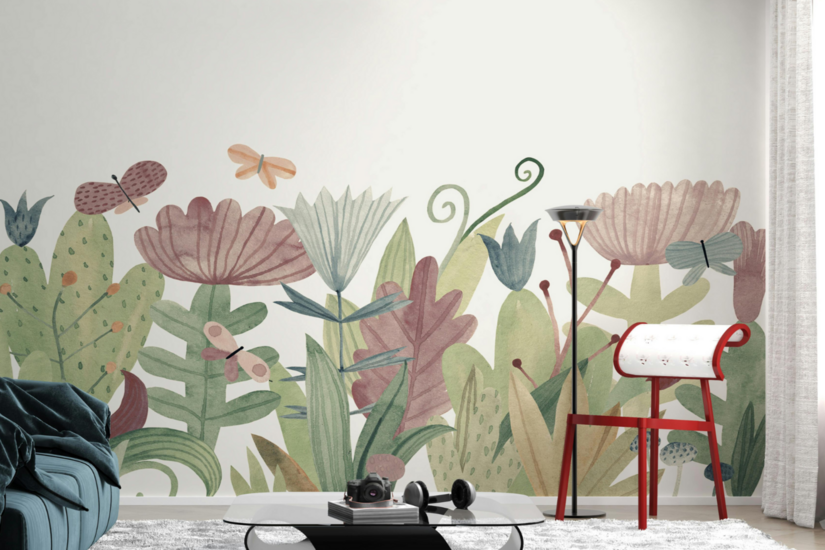
Part of the trade value you offer is honest advice. When a client is set on a strong design, a few practical pointers protect the outcome:
- Keep one wall as the hero and let the rest of the room stay neutral.
- Match the dominant tone to existing furnishings so the design integrates rather than clashes.
- For smaller rooms, lean toward designs with depth or perspective, which can open a space rather than close it in.
- Avoid pairing high detail with equally busy soft furnishings.
These conversations are easier when you can show examples. Keeping a small portfolio of completed wall murals lets clients see scale and placement in real rooms rather than guessing from a swatch.
Good advice and a clean finish both come down to skill you can build over time. TradeFox helps you sharpen your skills through hands-on simulations you can practise at your own pace. Try it today.
Pricing and Setting Expectations
Mural jobs carry more variables than standard papering. Pattern matching, wastage on bold repeats, surface preparation, and access all add time. Quote with these in mind rather than pricing as if it were plain lining paper.
Be clear with clients about:
- Wastage on large repeats.
- Lead time on bespoke printed designs.
- Preparation needed if the wall is not already sound.
Setting these expectations upfront protects your margin and your reputation.
Le mot de la fin
Delivering a quality feature wall is a blend of measurement, judgement, and honest client guidance. Get the scale right for the wall and viewing distance, place the design where it leads rather than competes, prepare the surface properly, work safely at height, and confirm fire compliance where the building demands it. Do that consistently and you turn a high risk decorative job into a reliable part of your service.