

The demand for bespoke domestic entryways has grown substantially across the UK. Clients are increasingly commissioning carpenters, joiners, and general builders to optimise compact vestibules and hallways. Delivering high-quality installations requires more than basic joinery skills. It demands a thorough understanding of spatial ergonomics, material durability, and compliance with current UK Building Regulations.
When clients search for specific solutions, they often request comprehensive concepts. Providing professional-grade Mudroom Ideas for Small Homes: Entry Storage Bench Layouts and Easy-Clean Design Choices is essential for winning contracts and ensuring long-lasting, safe installations. This guide outlines the technical specifications required to execute these projects to a professional standard.
Site Survey And Preparation
Before any materials are ordered, a comprehensive site survey is mandatory. Tradesmen must assess the structural integrity of the partition walls or masonry where the bench will be anchored.
- Locating hidden services such as electrical conduits and plumbing pipes using a reliable multi-detector prevents costly and dangerous accidents during installation.
- Documenting wall plumbness and floor levels during this phase dictates the amount of scribing tolerance required in the final design.
- Identifying the primary substrate dictates the types of fixings and structural reinforcements needed for a safe build.
Spatial Planning And Ergonomics
Small British homes present unique spatial challenges. Victorian terraces and modern new-builds often feature narrow hallways. Precise, millimetre-perfect bespoke joinery is required rather than off-the-shelf cabinetry.
Bench Dimensions And Layouts
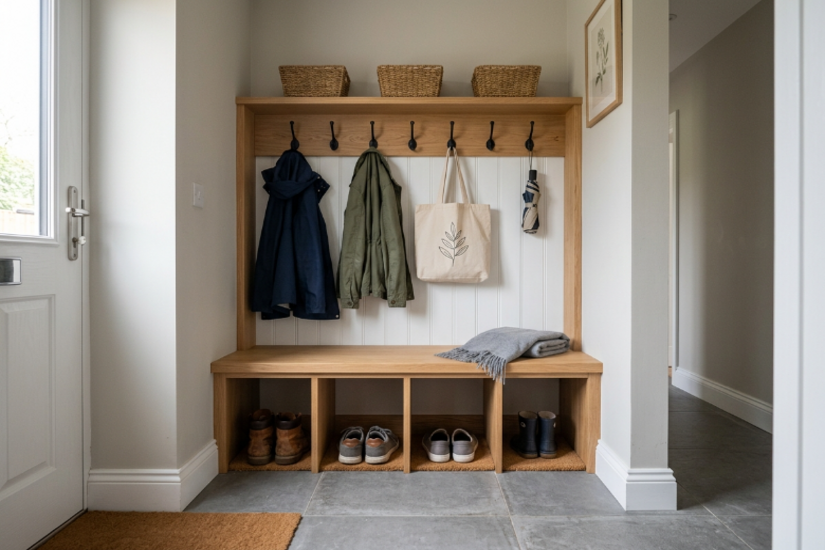
The foundation of a functional entryway is the storage bench. Standardising dimensions ensures both comfort and structural integrity for professional installations.
Consider these optimal bench dimensions:
- Seating height must range between 400mm and 450mm from the finished floor level.
- Depth should be maintained at a minimum of 350mm to accommodate adult seating.
- Extended depths of 400mm to 450mm are preferable if the hallway width permits.
When constructing bench carcasses, tradesmen should rely on a minimum of 18mm thickness for sheet materials. Internal structural supports must be spaced no more than 600mm apart to prevent bowing under human weight. The sub-frame must be securely fixed to the masonry or studwork using heavy-duty anchors.
Footwear Compartments
Integrating footwear compartments beneath the bench requires specific clearances. An allowance of 200mm to 250mm height per tier is recommended to accommodate typical UK shoe and boot sizes. Presenting well-engineered Mudroom Ideas for Small Homes: Entry Storage Bench Layouts and Easy-Clean Design Choices ensures the client understands the value of custom-built cabinetry over flat-pack alternatives.
Structural Anchoring Systems
Selecting the correct fixings guarantees structural safety. For solid brick or blockwork walls, heavy-duty nylon wall plugs paired with 6.0mm woodscrews offer substantial shear strength.
When dealing with modern stud walls, securing directly into the timber studs is non-negotiable. If stud spacing does not align with the bench supports, tradesmen must install heavy-duty plasterboard anchors. Toggle bolts or metal cavity fixings are suitable, ensuring each fixing is rated for a minimum shear load of 30kg.
UK Building Regulations And Safety
Professional tradesmen must prioritise safety and regulatory compliance. Installing built-in furniture in an entryway often intersects with critical escape routes. Strict adherence to UK Building Regulations is an absolute necessity.
Fire Safety Under Approved Document B
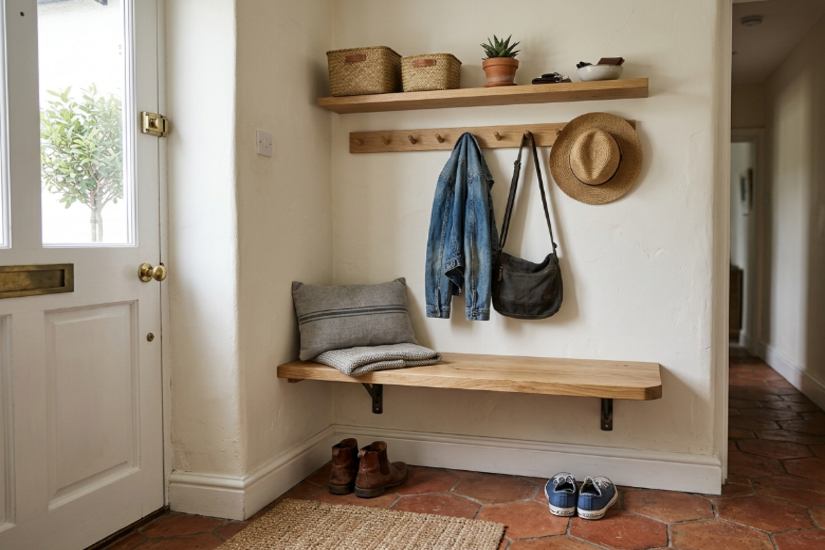
The primary hallway often serves as the main escape route in the event of a fire. Built-in joinery must never impede this escape route.
- Minimum clear widths of a hallway cannot be compromised by the addition of a storage bench.
- Materials used in escape routes require careful consideration.
- Tradesmen must ensure timber finishes do not rapidly accelerate flame spread.
Ventilation Under Approved Document F
Entryways designed for storing wet coats and muddy boots generate localised humidity. Enclosed mudrooms or dedicated porch extensions require adequate ventilation to prevent dampness and mould proliferation. Passive air vents or mechanical extraction systems should be discussed with the client during the initial site survey.
Material Specification For High-Traffic Zones
Material selection separates professional installations from amateur attempts. Hallways endure heavy footfall, moisture ingress, and impact damage.
Timber And Sheet Materials
Standard Medium Density Fibreboard is unsuitable for mudroom applications due to its vulnerability to moisture swelling. Professional material choices include the following options:
- Moisture Resistant Medium Density Fibreboard is mandatory for painted cabinetry.
- Marine Plywood compliant with BS 1088 offers superior longevity for wet areas.
- Exterior-grade birch plywood provides excellent structural resilience.
Adhesives And Fixings
Assembly of carcasses and face frames must utilise Class D3 or D4 water-resistant wood glues. These adhesives prevent joints from failing when exposed to ambient moisture from damp clothing or wet cleaning methods.
Scribing Techniques
Period UK properties rarely feature perfectly plumb walls or level floors. Attempting to fit square cabinetry into uneven spaces results in unsightly gaps. Professional tradesmen must utilize scribing techniques to tailor the face frames and end panels to the exact contours of the room.
Using a scribing compass and a coping saw or jigsaw equipped with a fine-tooth blade allows for precise material removal. A well-executed scribe eliminates the need for excessive decorators caulk. This results in a superior, high-end finish that prevents dirt accumulation behind the units.
Surface Finishes And Hardware
Clients prioritising hygiene and maintenance will judge the success of a project based on its cleanability. Integrating professional Mudroom Ideas for Small Homes: Entry Storage Bench Layouts and Easy-Clean Design Choices requires specifying the correct surface treatments.
Professional Paint Systems
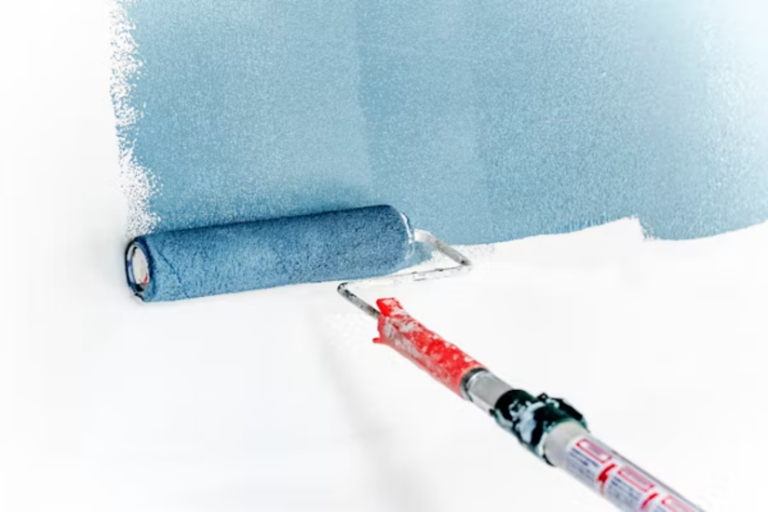
Retail-grade emulsions and standard eggshells lack the durability required for a mudroom.
- Tradesmen must prime raw MDF with dedicated shellac-based or high-adhesion trade primers.
- Topcoats should consist of two-part catalysed lacquers or polyurethane-modified acrylics.
- Trade-specific diamond-tough scuff-resistant finishes are highly recommended.
- These coatings cure to form a hardwearing shell that withstands regular scrubbing with chemical detergents.
Hardware Integration
Recessed handles, push-to-open mechanisms, or heavy-duty cup handles offer fewer dirt traps than intricate knobs. Coat hooks must be cast iron, solid brass, or stainless steel. Hooks must be secured directly into timber battens rather than just the plasterboard or MDF backing panel. This prevents tear-out under the weight of wet winter coats.
Flooring Considerations And Slip Resistance
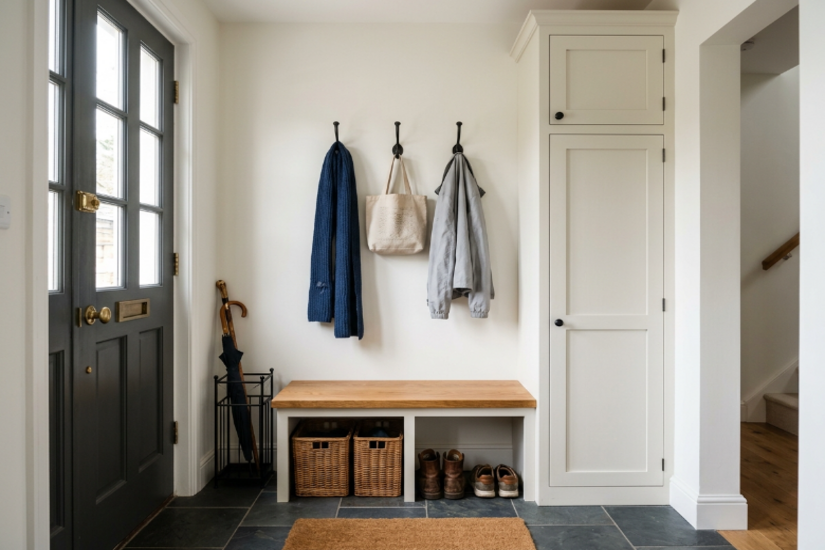
Tradesmen taking on full hallway refurbishments must address the flooring beneath and around the built-in joinery. Wet shoes introduce a significant slip hazard, demanding strict safety considerations.
Flooring materials must achieve a high Pendulum Test Value rating to comply with Health and Safety Executive guidelines for slip resistance in wet conditions.
- A Pendulum Test Value of 36 or above is recommended.
- Porcelain tiles with a textured, anti-slip glaze are excellent choices.
- Installing cabinetry directly onto new tiles requires sealing the junction with a high-modulus, mould-resistant sanitary silicone.
Properties featuring a solid concrete subfloor require a Damp Proof Membrane check. Ensuring the membrane is intact before installing fixed timber structures is vital to prevent rising damp from compromising the joinery.
For learners building practical site awareness, TradeFox helps develop core trade skills through step-by-step online training and simulations that make it easier to understand how safety, materials, and installation details all connect on real jobs.
Conclusion And Final Considerations
Executing high-end domestic entryways requires technical precision, regulatory knowledge, and robust material selection. Prioritising safety, moisture resistance, and ergonomic planning allows trades professionals to deliver exceptional results. These results will easily withstand the rigours of daily household use.
Implementing tested Mudroom Ideas for Small Homes: Entry Storage Bench Layouts and Easy-Clean Design Choices elevates the standard of residential joinery. This guarantees client satisfaction and secures long-term durability. Tradesmen are encouraged to consult the latest UK Approved Documents via the official government planning portals for further technical guidance.