



Ask any groundworker or wet-trade specialist and they will tell you the terms get thrown around loosely on site. People say “plastering the outside wall” when they mean rendering, and the confusion causes ordering mistakes, failed finishes and callbacks. Understanding the difference between render vs plaster is basic trade knowledge, but it is the knowledge that separates a competent finisher from someone chasing blown coats within a year.
This guide breaks down the real differences across materials, location, moisture resistance and finish, so you can specify and apply the right product every time.
The Core Difference Between Render and Plaster
The simplest way to hold onto the distinction is this: plaster is for interior surfaces, render is for exterior surfaces. Both are wet-applied coatings built up in coats over a background, and both create a surface ready for decoration or a final finish. But they are formulated for completely different exposure conditions, and that formulation difference drives everything else.
Render has to survive wind-driven rain, frost, UV and thermal movement. Plaster only has to deal with the controlled internal environment of a building.
Treat one like the other and it will fail:
- Internal plaster used externally will absorb water, freeze and spall.
- External render used internally is overkill, harder to finish smooth and unpleasant to decorate over.
Materials: What Render and Plaster Are Actually Made Of
This is where the two genuinely diverge, and it is worth knowing the common product families rather than just the generic terms.
Plaster Materials
Plaster in UK interiors is dominated by gypsum-based products.
- Undercoat plasters: Browning and Bonding are the common backing coats.
- Finish plasters: Multi-Finish and Board Finish are the skim coats.
Gypsum sets fast, gives a smooth surface ideal for painting and is easy to work. Its weakness is water. Gypsum plaster is not moisture resistant and breaks down when repeatedly wetted, which is exactly why it stays indoors.
Render Materials
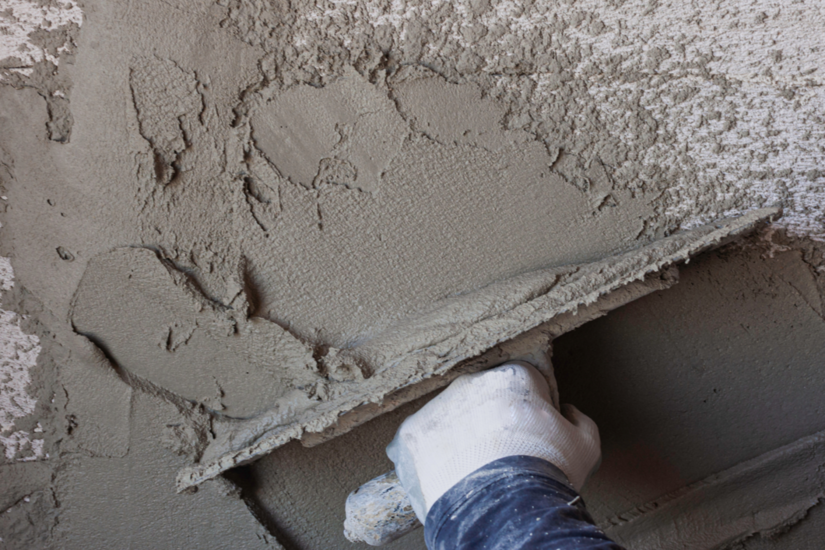
Render is cement-based or lime-based, not gypsum-based.
- Traditional render: Sand and cement, often with lime and a plasticiser added.
- Lime render: Hydraulic or non-hydraulic lime, the correct choice on older solid-wall and heritage properties because it is breathable and flexes with the building.
- Modern systems: Polymer-modified and through-coloured monocouche renders, plus thin-coat silicone and acrylic systems, common on new build and external wall insulation. These offer water resistance combined with vapour permeability.
A critical point for anyone entering the trade: never use gypsum in an external render mix or in any location subject to persistent damp. It is a genuine defect, not a shortcut.
Location: Which Side of the Weatherline
Location is the deciding factor, and it maps directly onto Building Regulations and good practice.
Plaster goes on internal masonry, blockwork and plasterboard. It finishes ceilings, internal partitions and the room-side face of external walls.
Render goes on the external face of walls: brick, block and insulation boards. It also appears in specific wet or high-exposure internal locations where a cement-based coat suits better than gypsum, such as some plant rooms, though tanking and specialist systems usually take over there.
When you are choosing between render vs plaster, the question to ask first is always: which side of the weatherline is this surface on? That single question resolves most specification decisions.
Moisture Resistance: The Most Defect-Prone Area
This is the most safety-relevant and defect-relevant area, so it deserves detail.
Why Gypsum Stays Indoors
Gypsum plaster has effectively no moisture resistance. Once it gets wet repeatedly it loses cohesion, softens and detaches.
In bathrooms and kitchens, gypsum plaster is acceptable behind tiling only where a suitable tile backer or tanking system manages the water. In wet rooms you should be using cement board or a proprietary tanking membrane rather than relying on plaster.
Why Render Needs to Breathe
Render is designed to shed and manage water. But moisture resistance in render is not simply about being waterproof.
On solid walls and older buildings, breathability matters more than water repellency. A dense cement render trapping moisture behind it on a solid wall causes damp problems, spalling and interstitial condensation. This is why lime render and modern breathable silicone systems are specified on those backgrounds. They resist liquid water while letting the wall dry out as vapour.
For anyone learning the trade, get comfortable with the distinction between two things:
- Water resistant: Repels liquid water hitting the surface.
- Vapour permeable: Lets moisture inside the wall escape as vapour
Good external detailing depends on that distinction, and getting it wrong causes the damp complaints that generate expensive remedial work.
Finish: Smooth Interiors, Textured Exteriors
The finish expectations differ sharply.
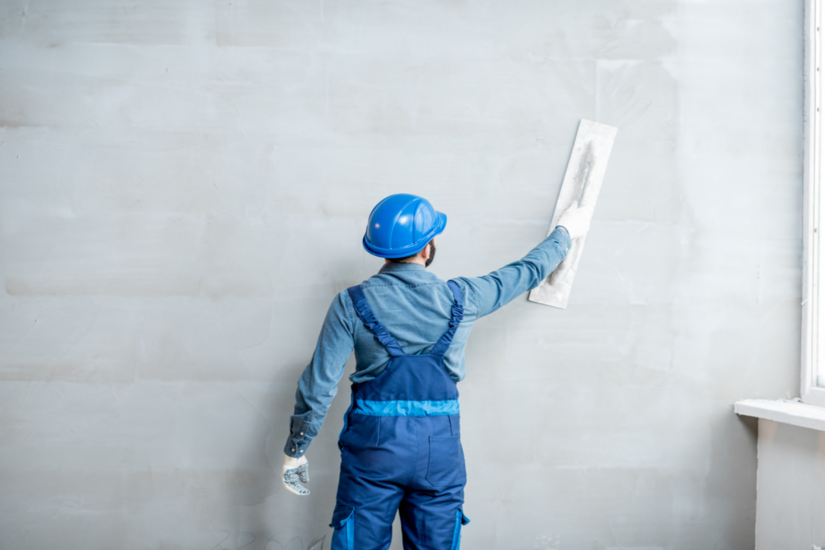
Plaster is finished to a smooth, flat surface ready for paint or wallpaper. Skim coat plastering is a polished trade in its own right, and the standard is a defect-free surface under critical light.
Render is finished in a range of textures depending on the system and the look required:
- Smooth trowelled finish.
- Floated or wood-float texture.
- Scraped monocouche.
- Roughcast or pebbledash.
- Through-coloured thin-coat finish that needs no painting.
Render finishes are chosen for durability and appearance under exterior conditions, not for the glass-smooth result you want on an internal wall.
Quick Comparison Table
| Factor | Plaster | Render |
|---|---|---|
| Primary location | Interior | Exterior |
| Main material | Gypsum | Cement or lime based |
| Moisture resistance | Low | High (with correct breathability) |
| Typical finish | Smooth, paint-ready | Textured or through-coloured |
| Governing concern | Smooth surface quality | Weather and vapour management |
Standards, Regulations and Site Safety
Work to the relevant British Standards and manufacturer technical data. Getting this part right is what keeps you compliant and keeps the finish on the wall.
Key Standards
- BS EN 13914-1:2016 covers the design, preparation and application of external rendering.
- BS EN 13914-2:2016 covers internal plastering.
- Always follow the specific manufacturer data sheet for mix ratios, coat thicknesses, curing and background preparation. Thin-coat and monocouche systems have proprietary requirements that a generic sand and cement approach will not meet.
Building Regulations
Approved Document C covers resistance to moisture and is directly relevant to external wall finishes. It should inform how you detail render on any external wall.
For fire safety, the rules are stricter and lower than many trades assume. Regulation 7 of the Building Regulations 2010 bans combustible materials in the external walls of relevant residential buildings, and since 1 December 2022, additional statutory guidance in Approved Document B applies to buildings with a storey at 11 metres or more above ground level, not only those over 18 metres. If you work on external wall insulation or medium and high-rise external wall systems, correct specification and proven competence are not optional.
Dust and COSHH
Cutting, mixing and sanding cement and render releases respirable crystalline silica. This is a controlled hazard under COSHH, and long-term exposure causes serious lung disease.
- Use water suppression or on-tool extraction when cutting.
- Wear correctly fitted RPE rated for fine dust.
- Do not dry-sweep cement or render dust.
Choosing the correct material and finish starts with understanding the surface, location, moisture exposure, and product system. TradeFox helps learners review plastering procedures and site safety through guided simulations they can revisit whenever they need more practice.
Practical Takeaways for the Trade
Get these fundamentals right and the confusion around render vs plaster falls away.
- Match the product to the side of the wall. Interior gets plaster, exterior gets render, and no gypsum ever goes anywhere it will get repeatedly wet.
- On old solid-wall buildings, prioritise breathable lime or silicone systems over dense cement.
- Prep the background correctly and follow the manufacturer data sheet for coats, thicknesses and curing times.
- Treat fire and moisture compliance as core parts of the job on external wall insulation and tall buildings, remembering the 11 metre threshold.
- Control silica dust on every cut and mix.
Knowing the difference is entry-level knowledge. Applying it correctly under real site and weather conditions is what makes a reliable finisher.