

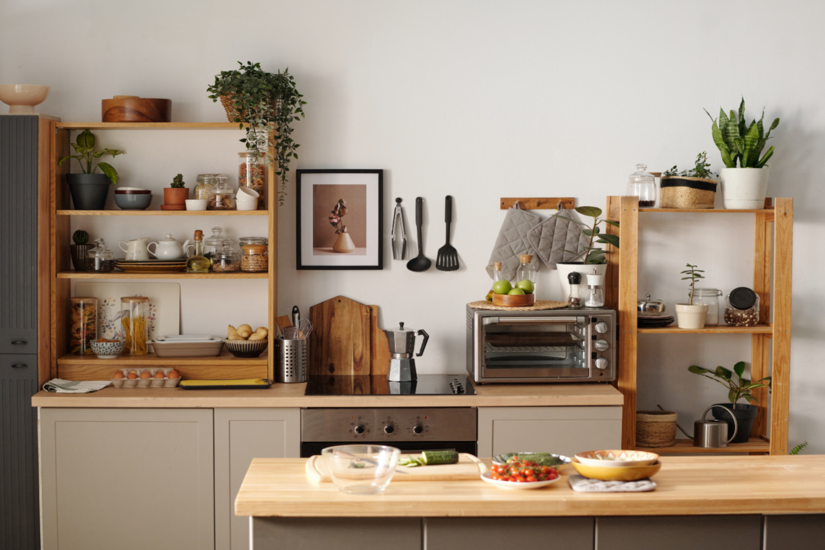
Organic modern is the style clients ask for when they want their kitchen to look calm rather than clinical. It pairs the clean geometry of contemporary design with natural materials, muted colour palettes, and softer forms.
For tradesmen, the brief looks simple on paper. In practice, it asks more of the fitter than a standard slab-door kitchen, because the materials are less forgiving and the tolerances are tighter.
This guide covers the material specifications, colour decisions, and layout principles that define the style, alongside the UK regulatory and safety considerations that sit behind every kitchen install. The audience is tradesmen and those training into the trade. The information assumes you are working to a paid specification, not advising a homeowner on what they fancy.
What Defines an Organic Modern Kitchen
The style sits between Scandinavian minimalism and Japandi, with three consistent threads running through every project that earns the label.
- Natural materials carry visible grain, vein, or texture rather than being printed or laminated to imitate them
- Muted, earth-derived colour palettes dominate, with white and stark grey largely absent
- Soft geometry appears in the form of curved islands, rounded handle profiles, and arched cabinetry detail
A kitchen that uses a high-gloss white slab door and a printed quartz worktop is not in this style, regardless of how the marketing brochure describes it. Tradesmen quoting for this work need to recognise the difference, because the labour and material costs are not comparable.
Material Choices That Define the Style
Material selection is where most organic modern kitchen ideas succeed or fail. The fabric of the kitchen has to look natural under both daylight and warm artificial lighting, which rules out a lot of cheaper substitutes.
Cabinetry
Solid timber and timber veneer dominate. Common specifications include:
- Oak, typically rift-cut or quarter-sawn for a straighter grain pattern
- Walnut, for a darker palette with more pronounced figuring
- Ash, lighter than oak with a similar grain expression
- Tulipwood and poplar as painted carcass options under a hand-applied finish
Veneer thickness matters on this style of work. A 0.6mm veneer will not survive multiple sandings or repair work over the kitchen’s life. Specify a minimum 0.9mm veneer where the client is paying for solid timber appearance, and confirm the substrate is moisture-resistant MDF or moisture-resistant chipboard rated to EN 312 P3 as a minimum for kitchen environments. P5 is available as an upgrade where the specification calls for higher humidity resistance.
Worktops
Three materials carry the look reliably:
- Honed natural stone, including quartzite, marble, and limestone, finished without a polish to keep light reflection low
- Solid timber worktops in oak, walnut, or iroko, sealed with hardwax oil rather than lacquer
- Sintered stone in matte finishes, where the client wants stone aesthetics with higher stain resistance than marble offers
Polished granite, high-gloss quartz, and laminate worktops are inconsistent with the style. They reflect light in a way that fights the muted palette and reads as builder-spec rather than designed.
Splashbacks and Wall Finishes
Handmade ceramic tile, microcement, and tadelakt plaster all sit comfortably in the style. For tile, specify the actual handmade product rather than the printed lookalike. The variation in glaze thickness and edge profile is the entire point.
For microcement and tadelakt, the work is specialist and should not be subcontracted to a general plasterer without checking their specific training in the system being used. Failed microcement is expensive to put right.
Hardware
Brushed brass, aged bronze, and blackened steel handles and tap fittings replace the chrome and brushed nickel of standard contemporary work. Where the client specifies handle-free cabinetry, the alternative is typically a routed finger pull along the top or bottom of the door, machined as part of the door blank rather than added afterward.
Colour Palettes That Feel Warm
The defining colour move in this style is the absence of pure white. The palette draws from earth, stone, and unpainted timber, with a colour temperature consistently on the warm side of neutral.
Base Cabinetry Colours
- Warm off-whites with cream or yellow undertones, replacing brilliant white
- Mushroom and taupe, sitting between beige and grey
- Clay, terracotta, and ochre, used as accent or full base colour
- Soft sage and olive, the most common green choices
- Deep brown and aubergine for darker schemes, replacing matte black
How to Specify Paint Correctly
For painted cabinetry, the finish is as important as the colour. Hand-painted or factory-sprayed two-pack polyurethane delivers the durability needed for kitchen use. The finish is typically specified as eggshell or satin for this style, with matte finishes reserved for cabinetry that will not see heavy daily contact.
LRV (Light Reflectance Value) should be checked before signing off any colour. North-facing kitchens with low natural light need an LRV above 50 on the main cabinetry to avoid the room feeling closed in. South-facing rooms can carry darker colours comfortably, with LRVs as low as 15 to 20 on lower units.
Worktop and Splashback Coordination
The worktop should sit one or two tonal steps away from the cabinetry, never matching exactly. A common pairing is warm off-white cabinets with a honed limestone or pale quartzite worktop, which keeps the surfaces distinct under daylight.
Layout Choices That Support the Style
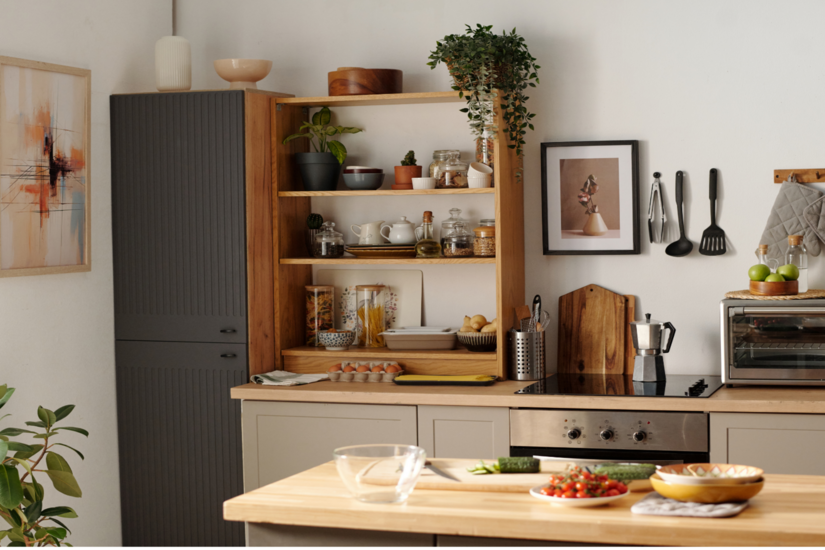
Layout decisions are where the design intent connects with hard regulation. The aesthetic permits softer forms, but UK Building Regulations apply equally regardless of how the kitchen looks.
The Soft Island
Curved or radiused island ends are a signature of the style. From a fitting perspective, a curved island demands:
- A purpose-built carcass with curved ends rather than a standard rectangular box trimmed at site
- Worktop material capable of being machined to the radius, which rules out most timber worktops above a 150mm radius without lamination
- Increased fitting time, typically 30-50% longer than an equivalent square island
Specify the radius at design stage and confirm with the worktop fabricator before the cabinetry is ordered. Retrofitting a curve is rarely possible.
Open Shelving and Reduced Wall Units
The style favours fewer wall units, often replaced by open timber shelving or a single run of glass-fronted display cabinets. This shifts storage demand onto the base units and any tall larder, so the layout must compensate. A kitchen plan that has lost a significant share of its wall storage requires either a deeper base unit run or a dedicated pantry.
Sightlines and the Triangle
The standard kitchen work triangle (sink, hob, fridge) still applies. The style does not change the ergonomics, even if the materials around the triangle have softened. Maintain:
- Total triangle perimeter between 4m and 8m
- No single leg longer than 2.7m
- No traffic path crossing the triangle
Ventilation Considerations
Open-plan kitchens, which dominate the brief on this style of work, fall under Approved Document F of the Building Regulations in England. Wales operates under its own equivalent documentation, and Scotland and Northern Ireland under separate frameworks. Tradesmen working across borders should confirm the relevant document for the jurisdiction.
Under AD F (England), kitchen intermittent extract rates are:
- 30 litres per second when the extract is fitted adjacent to the hob
- 60 litres per second when the extract is not adjacent to the hob
A recirculating extract does not satisfy these extract requirements on its own, as AD F is concerned with extract to outside. A statement island hood that vents to the atmosphere through the ceiling void must have its ducting routed and terminated correctly, not coiled in the loft.
Gas Hob Installation
Gas hob installation is governed by the Gas Safety (Installation and Use) Regulations 1998 and must be carried out by a Gas Safe registered engineer. Approved Document J becomes relevant where flue arrangements and combustion air provision interact with the building fabric, but the primary regulatory route is GSIUR 1998 and Gas Safe certification.
Lighting the Style Correctly
Lighting can finish the kitchen or kill it. Cold 6000K LED downlighting will strip every warm tone out of the room and turn an oak veneer into something that looks like beech laminate.
Colour Temperature
- 2700K to 3000K for general lighting in living-adjacent kitchens
- 3500K as an upper limit where task lighting needs higher clarity
- Avoid 4000K and above for this style entirely
Layering
A kitchen in this style needs at least three lighting layers:
- Ambient lighting, typically recessed downlights or a pendant array
- Accent lighting, often inside glass-fronted cabinetry or above open shelving
- Task lighting, including under-cabinet LED strips with a diffuser to prevent dot-matrix shadowing on the worktop
Electrical Compliance
Fixed kitchen electrical work in England and Wales falls under Part P of the Building Regulations. Notifiable electrical work must be carried out by a person registered under a Part P competent person scheme, or notified to building control before commencement. The current scope of notifiable work is set out in Approved Document P, with circuit additions, consumer unit replacements, and work in special locations among the items that remain notifiable.
Scotland operates under the Building (Scotland) Regulations and the Technical Handbooks. Northern Ireland operates under the Building Regulations (Northern Ireland) and associated technical booklets. Confirm the requirements for the jurisdiction before quoting.
The IP rating around sinks also dictates fitting selection, with IP44 minimum required within 600mm of a sink. RCD protection is required on all socket and lighting circuits in a domestic kitchen under the current edition of BS 7671 (the IET Wiring Regulations).
Safety and Compliance Considerations
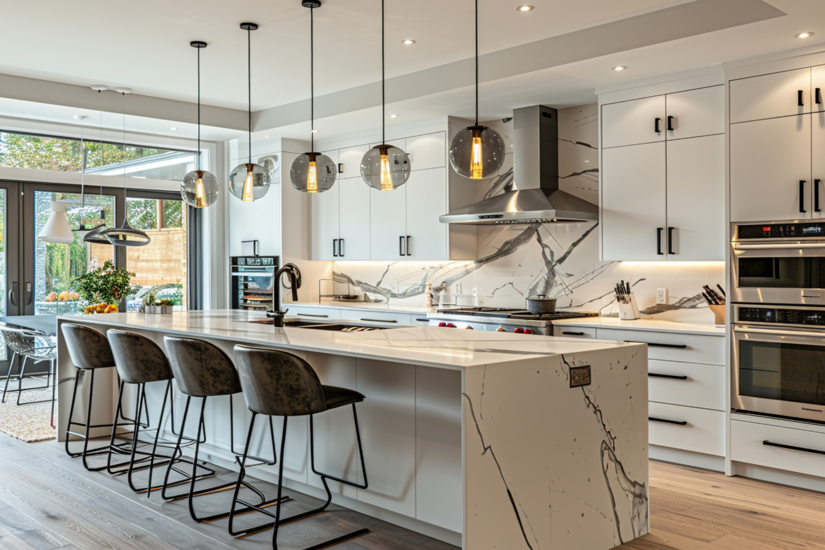
The style often introduces specific compliance issues that standard kitchens do not.
Timber Worktops Around Hobs
Solid timber worktop near a hob requires a minimum clearance specified by the hob manufacturer, often in the range of 30mm to 100mm depending on the appliance. A stainless steel or stone hob surround is the conventional answer, with the timber kept clear of direct heat exposure.
Hob manufacturers publish clearance figures in their fitting instructions, and these are not advisory. Disregarding them can void the appliance warranty and create a fire risk.
Stone Worktop Loading
Honed natural stone worktops, particularly thicker profiles at 30mm and above, can exceed the loading capacity of standard 18mm carcass tops. Granite, quartzite, and marble at 30mm typically run between 80 and 90 kg per square metre, with the loaded weight per linear metre depending on worktop depth and overhang.
Specify a 25mm or 30mm carcass top, or an additional structural rail at the front and back of the cabinet, where the worktop is heavier than standard. Confirm exact loading and required substrate with the worktop fabricator at quotation stage.
Microcement, Tadelakt, and Solvent Exposure
Microcement and tadelakt finishes use sealants and primers with significant solvent content. Two distinct safety frameworks apply:
- Operative exposure during application is governed by the COSHH Regulations, with risk assessments, ventilation provision, and PPE selection required for the installer
- Re-occupancy guidance for the homeowner is set by the manufacturer's safety data sheet, which specifies cure times before the room can be occupied normally
Clients should not be in the room while sealants are curing. Confirm the specific re-occupancy timing with the product data sheet for the system being applied.
Electrical Zoning
Kitchens are not designated as special locations under BS 7671 in the way bathrooms are. The proximity of water and electricity around sinks and dishwashers still demands proper zoning, with the general requirements of chapter 41 (protection against electric shock) and section 522 (selection and erection) applying in full.
Budget and Lead Time Realities
These kitchens carry longer lead times and higher budgets than standard contemporary kitchens. Tradesmen quoting for this work should set client expectations from the first conversation.
Lead Time Anchors
Lead times have fluctuated significantly in recent years, so confirm current figures with each supplier rather than working from rough averages. As general guidance:
- Solid timber cabinetry from a UK workshop typically runs into months rather than weeks
- Hand-painted finishes add to factory lead time, often two to three weeks
- Honed natural stone worktops require template, fabrication, and fitting time, with slab selection abroad extending the schedule
- Microcement and tadelakt installation requires on-site work plus curing, typically two to three weeks before the room is back in use
Budget Anchors
Material premiums over standard contemporary kitchens are significantly higher, with hand-finished timber and natural stone driving most of the increase. Labour is also higher because the tolerances for visible joints, scribed timber to non-square walls, and stone-to-cabinetry transitions are tighter. Quote on the basis of measured time, not on a percentage uplift from a standard kitchen.
Common Pitfalls in Quoting and Fitting
Five issues come up repeatedly on this style of work:
- Underestimating scribe time on solid timber to walls and ceilings, particularly in older properties
- Specifying veneer that is too thin for the brief, leading to corner damage and edge wear within the first year
- Failing to coordinate stone and cabinetry deliveries, with stone arriving before cabinets are levelled and remaining propped on site
- Overlooking ventilation compliance on open-plan layouts, particularly extract rates and hob clearances
- Using cold-temperature lighting, which undoes the colour work in the rest of the room
Each of these is a margin issue. A good quote anticipates them. A poor quote absorbs them. For tradespeople still building confidence in planning, fitting, electrics, plumbing, or safe working methods, TradeFox can support learning through practical online simulations that are easy to follow and revisit when needed.
Réflexions finales
Organic modern kitchen ideas are not a styling trend that can be applied with a paint card and a brushed brass tap. They are a coherent design approach that demands the right materials, the right finishes, and the right layout discipline, executed within UK Building Regulations, gas safety law, and electrical safety standards.
Tradesmen who can deliver this work to specification, on time, and without compliance gaps, occupy a profitable niche in the kitchen market. Those who treat it as a standard install with different colours produce work that looks close to the brief but never quite right, and the client knows it before the snagging list is written.