


When specifying sheet materials for site work, joinery shop fabrication, or large scale commercial fit-outs, tradesmen must make decisions based on structural requirements, environmental conditions, and strict UK health and safety regulations. The debate of MDF vs Plywood is not about which board is universally better. It is about understanding the exact technical properties of each material to ensure compliance, durability, and a professional finish.
This guide breaks down the technical specifications, machining characteristics, and safety requirements of both materials to help carpenters and joiners make informed, research-backed decisions on site.
Core Material Specifications and UK Standards
Understanding the manufacturing process of these sheets is the first step in specifying the correct board for building control approval. Both boards have distinct grading systems under British and European standards.
Medium-Density Fibreboard (MDF) Technical Profile
Medium-density fibreboard is an engineered wood product made by breaking down hardwood or softwood residuals into fine wood fibres. Manufacturers combine these fibres with wax and a resin binder, forming them into panels under high temperature and pressure.
For professional applications in the UK, MDF must comply with BS EN 622-5. Standard grade MDF is suitable for basic dry interior applications. Tradesmen frequently specify Moisture Resistant (MR) MDF or Fire Retardant (FR) MDF depending on the building control requirements of the project.
- Moisture Resistant (MR) MDF: Typically identifiable by a green core, this board uses moisture-repellent resins. MR MDF is not waterproof. It is designed to withstand high humidity environments like bathrooms or kitchens without immediately swelling.
- Fire Retardant (FR) MDF: Usually tinted pink or red, FR MDF is heavily specified in commercial environments, shopfitting, and public buildings. It is required to meet strict fire safety codes, specifically Euroclass B or C for flame spread.
Plywood Grading and Structural Ratings
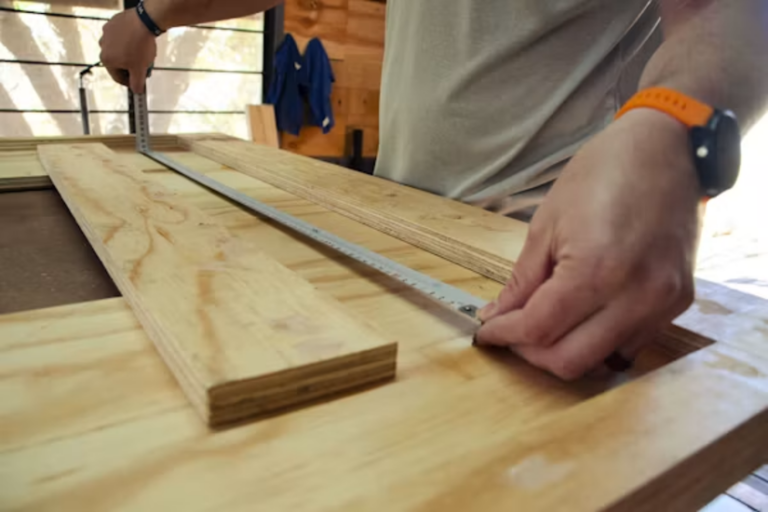
Plywood is manufactured from thin layers or plies of wood veneer. These veneers are glued together with adjacent layers having their wood grain rotated up to 90 degrees to one another. Cross-graining reduces the tendency of the wood to split when nailed at the edges, limits expansion, and makes the panel strength consistent across all directions.
In the UK, plywood is graded under BS EN 636. This standard categorises panels into three specific classes based on moisture resistance and environment.
- Class 1: Designed exclusively for dry interior use.
- Class 2: Formulated for humid conditions or temporary exposure.
- Class 3: Engineered for exterior conditions and prolonged weather exposure.
Furthermore, professionals must consider the bonding quality categorised under BS EN 314. Structural plywood must carry a UKCA or CE mark demonstrating it meets the required load-bearing standards. Marine plywood, governed by BS 1088, is manufactured from highly durable face and core veneers with zero core voids. It performs exceptionally well in consistently wet conditions, provided all cut edges are properly sealed.
Structural Integrity and Working Properties
The physical behavior of the sheet under load and under the blade dictates exactly where it can be installed on a job site.
Load Bearing Capacity and Deflection
When comparing MDF vs Plywood for structural applications, plywood is the undisputed superior choice. Because plywood features cross-laminated wood veneers, it possesses significant tensile strength and rigidity. It can span greater distances without deflecting or sagging. This makes it the standard choice for flooring, roofing, wall sheathing, and heavy-duty carcass construction.
MDF lacks the directional grain structure of plywood. While it is dense and heavy, it has exceptionally poor stiffness. If MDF is used to span a gap under continuous load, such as a wide bookshelf or a suspended ceiling panel, it will inevitably bow over time. It requires heavy support by a framework or a batten system to remain flat. For any load-bearing first-fix carpentry, plywood is the mandatory specification.
Machinability and Edge Finishing
Where MDF lacks structural strength, it excels in machinability. MDF is perfectly homogenous. It has no knots, no grain patterns, and no voids in the core. This makes it an exceptional material for bespoke joinery, cabinetry, and complex CNC routing. Carpenters can mill intricate profiles into MDF edges without the risk of tear-out or splintering.
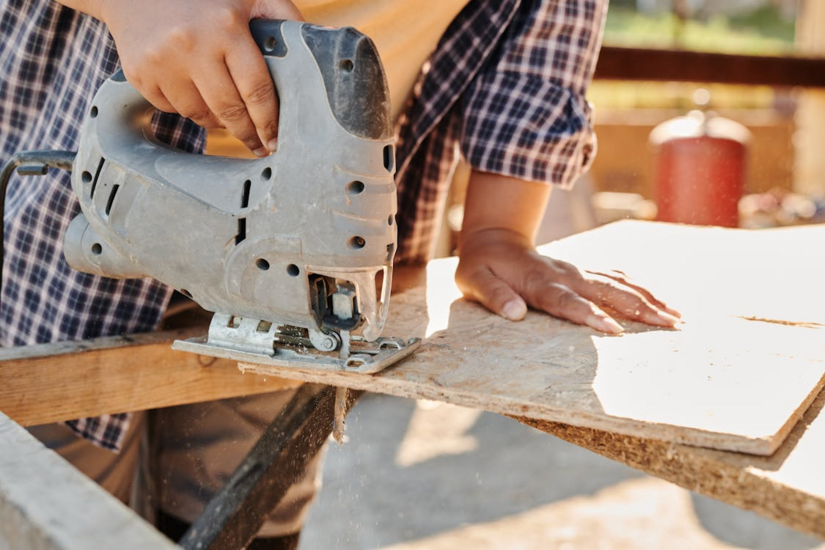
Plywood presents entirely different challenges on the bench. Cutting plywood can result in severe face veneer splintering if the wrong tooling is used. Carpenters must use high tooth count blades, typically alternating top bevel (ATB) or triple chip grind (TCG) profiles, to achieve clean crosscuts. Routing plywood edges exposes the core voids and glue lines. These edges rarely accept paint cleanly and almost always require edge banding or solid wood lipping to achieve a professional finish.
Fasteners, Fixings, and Adhesives
Fastening techniques differ heavily between the two sheet materials due to their internal composition.
Plywood holds screws exceptionally well due to its interwoven grain structure. Carpenters can drive screws near the edge of a plywood panel with a relatively low risk of splitting. Standard pilot holes are recommended but not always strictly necessary depending on the screw type and veneer thickness.
MDF requires strict fixing protocols to prevent failure.
- Driving a screw directly into the face or edge of an MDF board without a pilot hole will almost certainly cause the material to split. The displaced dense fibres have nowhere to go.
- Tradesmen must use specialised MDF screws with cutting threads.
- Drilling pilot holes equipped with a countersink is mandatory for a flush finish.
- When using adhesives, standard PVA wood glue creates an exceptionally strong bond on MDF edges because the porous fibres absorb the adhesive.
- Edge joints in MDF are extremely weak under tension. Joiners must reinforce these joints with biscuits, dominoes, or hardwood dowels.
Environmental Suitability and Safety Compliance
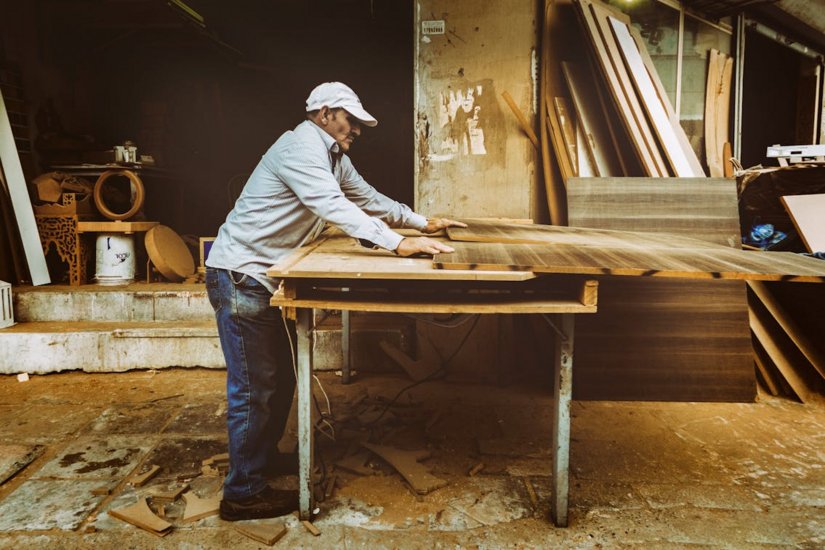
Site conditions and health regulations strictly dictate how these materials must be handled and where they can be installed.
Moisture Resistance and Exterior Use
A critical factor in the MDF vs Plywood decision-making process is the environment where the material will ultimately live. Standard MDF acts like a sponge. If it absorbs water, it swells permanently, blows out, and loses all structural integrity. Even MR MDF is restricted to interior humid conditions and must be fully sealed with appropriate primers and topcoats on all faces and edges.
Exterior grade plywood bonded with WBP (Water and Boil Proof) phenolic resins can withstand severe weather exposure if treated correctly. For tradesmen constructing flat roofs, exterior hoardings, or framing elements exposed to the elements during the build phase, exterior plywood is the only viable option.
UK Health and Safety Regulations
Safety compliance is a non-negotiable aspect of working with sheet materials on site or in the workshop. Both materials present specific respiratory hazards that tradesmen must manage under UK law.
Machining MDF generates exceptionally fine dust. Wood dust is classed as a hazardous substance under the Control of Substances Hazardous to Health (COSHH) regulations. Inhalation of fine wood dust can lead to occupational asthma. Long term exposure to hardwood dust is linked to nasal cancer. Additionally, MDF contains formaldehyde-based resins, which can off-gas during cutting.
Whenever MDF is cut, sanded, or routed, tradesmen must adhere to the following safety protocols.
- Use Local Exhaust Ventilation (LEV) extractors coupled with M-Class vacuums for all power tools.
- Ensure workshop ambient air filtration is active.
- Wear mandatory Personal Protective Equipment (PPE), specifically FFP3 graded respiratory masks.
Plywood also generates wood dust and off-gases formaldehyde. The dust particles from plywood are generally heavier and slightly less volatile than the microscopic dust produced by MDF. Nonetheless, the exact same Health and Safety Executive (HSE) guidelines apply. Commercial workshops are frequently inspected by the HSE for wood dust compliance. Understanding and implementing these safety protocols is paramount for any professional carpentry business.
The Commercial Reality
Material costs and labour time directly impact the profitability of any carpentry package. Specifying the right board is crucial for commercial success.
Estimating and Value Engineering
From an estimating perspective, standard and MR MDF are significantly cheaper per sheet than high-grade plywood. For large-scale interior fit-outs, painted architraves, skirting boards, and non-structural decorative panelling, specifying MDF is a standard value engineering practice. It reduces initial material costs. More importantly, it dramatically reduces the labour time required for sanding and painting, as MDF faces arrive perfectly smooth and ready for a primer coat.
High-quality plywood, such as Baltic Birch ply or Marine ply, carries a premium price tag. The cost is justified by its structural capacity, void-free core, and aesthetic appeal. In high-end architectural joinery, exposed birch plywood edges are often sanded and clear-coated as a design feature. This specific design choice eliminates the labour and material costs required for edge banding entirely.
To sharpen your material decisions and improve site efficiency, TradeFox offers practical, step-by-step trade training with real-world simulations that help you build confidence, reduce mistakes, and deliver better results on every project.
Final Verdict: Selecting the Right Panel
Ultimately, the choice between MDF vs Plywood comes down to specific structural requirements, compliance with UK building regulations, and the intended final finish.
Professional carpenters and joiners should specify Plywood for the following applications.
- First-fix structural applications including joist flooring and flat roofing.
- Load-bearing shelving, heavy-duty carcasses, and workshop furniture.
- Exterior applications or areas prone to direct water exposure.
- High-impact commercial environments like van lining or site hoarding.
Professional carpenters and joiners should specify MDF for the following applications.
- Second-fix interior trim, window boards, architraves, and skirting.
- Bespoke cabinetry and wardrobes that require a flawless, sprayed, or hand-painted finish.
- Complex CNC machining, decorative routing, and custom edge profiling.
- Value-engineered interior fit-outs where the climate and moisture are strictly controlled.
Understanding the precise properties, physical limitations, and statutory safety requirements of these sheet materials separates professional tradesmen from amateurs. By selecting the correct engineered panel for the correct application, carpenters guarantee structural longevity, site safety, and a premium finish for their clients.