

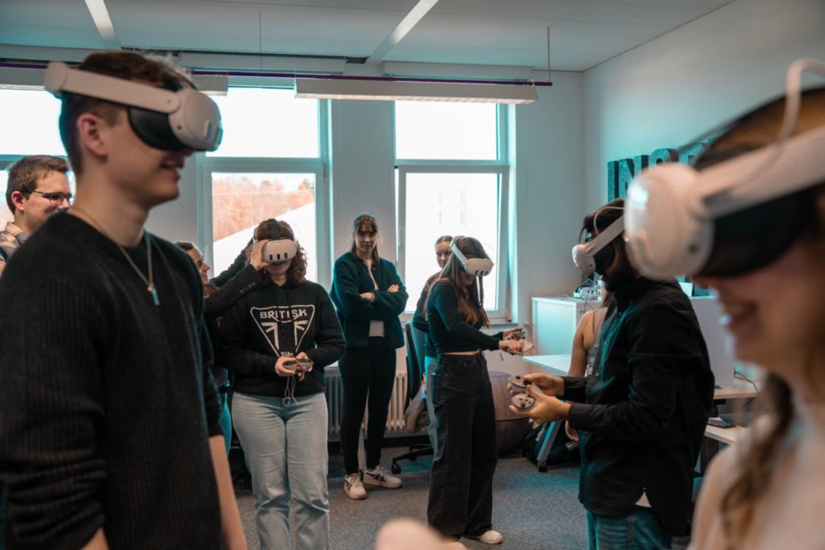
Ask any time-served electrician, gas engineer or bricklayer how they learned the trade, and it usually comes down to hours on the tools with someone watching over their shoulder. That model still holds. What has changed is the kit sitting next to it. Immersive learning, built on virtual reality, augmented reality and high-fidelity simulators, now turns up in training centres, apprenticeship programmes and site inductions across the trades.
The pitch is easy to sell and easy to oversell. A headset that drops an apprentice onto a scaffold or into a live plant room sounds like a shortcut to competence. It is not. Used well, this kind of training sharpens judgement and builds confidence before a mistake can cost a finger or a life. Used badly, it becomes an expensive gimmick that hands people a false sense of readiness. Knowing the difference matters, especially where the margin for error is measured in seconds.
What immersive learning means on the tools
Strip away the marketing and there are three things people usually mean by immersive learning in a trade setting.
- Full VR simulation: A headset places you inside a rendered environment, a domestic property, a confined space or a working roof, where you carry out a task and get instant feedback on what you did.
- Augmented reality overlays: Digital information sits on top of what you are actually looking at, so a trainee can see wiring routes, pipe runs or torque values mapped onto real equipment.
- Task-specific simulators: Welding rigs are the obvious one. A trainee lays a bead against a virtual joint, and a welding simulator scores work angle, travel speed and distance without burning a single rod.
This is not science fiction. It already runs in UK training. The construction skills body CITB has backed VR projects on the dangers of working in tunnels through its work with Tunnelskills, and the same approach now runs on major infrastructure schemes with contractors such as BAM Nuttall.
Where VR training earns its place
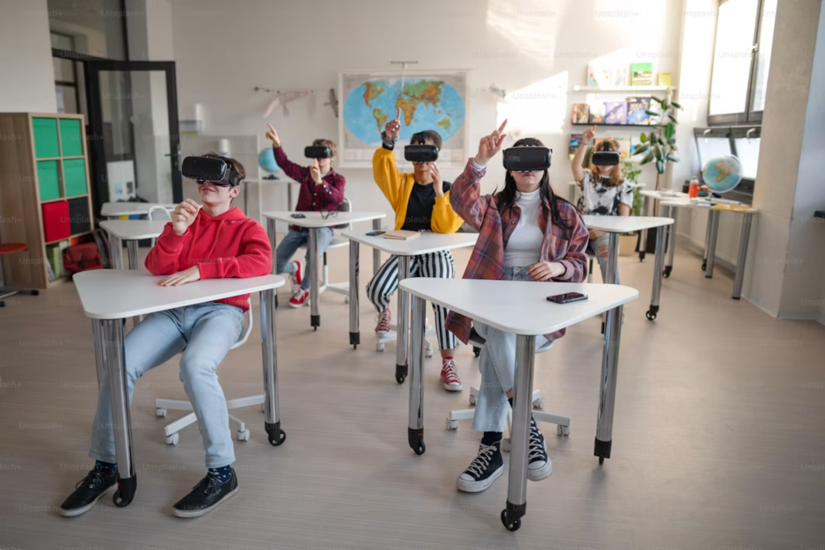
The strongest case for this technology is safety rehearsal.
Practising high-risk work without the risk
HSE’s provisional figures for 2024/25 recorded 35 fatal injuries to construction workers, and falls from height caused more than half of construction deaths across the five years to 2024/25. A trainee can practise working at height, or reacting to a gas leak, dozens of times in a headset before facing the real thing. Get it wrong in a simulation and you reset. Get it wrong on site and there is no reset button.
Building confidence before the first real job
PwC’s 2020 study into VR training found learners completed courses up to four times faster than in the classroom, and came away 275% more confident about acting on what they had learned. Those results came from a soft skills course rather than hand-tool work, so treat the exact numbers with care, but the direction is clear. Rehearsal in a low-stress setting takes the shake out of a first attempt. For a trade where hesitation at the wrong moment is dangerous, that counts for a lot.
Getting more reps for less money
A few practical gains hold up well:
- Repetition without waste: An apprentice can run the same wiring sequence or weld setup as often as needed without burning through copper, gas or timber.
- Rare emergencies on demand: Confined-space rescues, live electrical faults and structural collapses are too dangerous to stage for real, so a simulation lets people meet them in advance.
- Consistent standards: Every learner gets the same scenario to the same benchmark, which is hard to guarantee with live jobs that change day to day.
- Progress you can measure: Systems log where a trainee hesitates or slips, giving instructors hard data instead of a gut feeling.
What immersive learning can never replace
Here is where honesty matters, because this is a safety-first trade and getting it wrong gets people hurt.
The physical feel of the work
A headset cannot build the physical feel of the job. The resistance of a stiff joint, the weight of a full board of plaster, the exact moment a fixing bites, that muscle memory only comes from working with real materials in your hands. Simulation can rehearse the sequence. It cannot train your hands.
Real site conditions
Real sites do not behave like rendered ones. Dust, rain, noise, poor light, fatigue at the end of a ten-hour shift, an awkward loft with no room to swing an arm, none of that lives inside a clean virtual model. Reading a live situation, spotting that something is off before it goes wrong, is a skill built on real exposure and a mentor pointing things out as they happen.

Qualifications and legal sign-off
In the UK, competence in the regulated trades rests on recognised qualifications and practical assessment on real equipment, and the law backs that up.
- Gas work: Anyone fitting, repairing or servicing gas appliances in England, Scotland or Wales must be on the Gas Safe Register, and doing gas work while unregistered is a criminal offence under the Gas Safety (Installation and Use) Regulations 1998. Engineers reach the register by passing ACS assessment on real appliances.
- Electrical work: Electrical work in homes falls under Part P of the Building Regulations, and installations must meet BS 7671, the IET Wiring Regulations, with the Electricity at Work Regulations 1989 covering workplaces. Most electricians certify their own notifiable work through a competent person scheme such as NICEIC or NAPIT.
Rules differ across England, Wales, Scotland and Northern Ireland, so the exact route depends on where you work. No VR score, however high, replaces that sign-off, and any provider suggesting otherwise is selling something you should not buy.
Immersive training works best alongside practical learning. TradeFox gives you safe, guided simulations for trade skills, so you can practise key tasks, review each step, and build confidence before working on site.
The realistic answer is blended training
The people building this technology tend to agree with the tradespeople who are sceptical of it. PwC’s own researchers concluded that VR would not replace classroom or hands-on formats and should sit inside a blended programme. Training specialists working with UK construction make the same point, that immersive tools work best bolted onto proper instruction rather than swapped in for it.
That is the sensible read for anyone weighing it up:
- If you are an apprentice: Use it to walk onto site having already rehearsed the dangerous parts, then earn your competence the way the trade always has, under supervision, on real jobs, with a qualification at the end.
- If you run a firm or a training centre: Use it to cut risk during the steepest part of the learning curve, and to give people reps they could never safely get otherwise.
The trades do not need another shortcut. They need people who are ready for the work. Immersive learning, kept in its lane, gets them there faster and with fewer close calls. It just cannot do the last and most important part of the job for them.