


Resolving hydraulic shock separates experienced plumbers from those who simply rely on guesswork. Among the various acoustic anomalies present in plumbing systems, water hammer presents a distinct and immediate threat to infrastructure integrity. It is a violent transfer of kinetic energy that can fracture pipework, destroy valve seals, and void warranties on expensive unvented hot water cylinders.
This technical guide provides a comprehensive breakdown of the mechanics behind the shockwave. It also covers the diagnostic procedures required on site and the engineered solutions that guarantee a permanent fix.
The Physics Of Hydraulic Shock
Tradesmen must understand the fluid dynamics at play to resolve the issue permanently. Water is an incompressible fluid. It carries a significant amount of kinetic energy when it travels through a domestic supply pipe at high velocity.
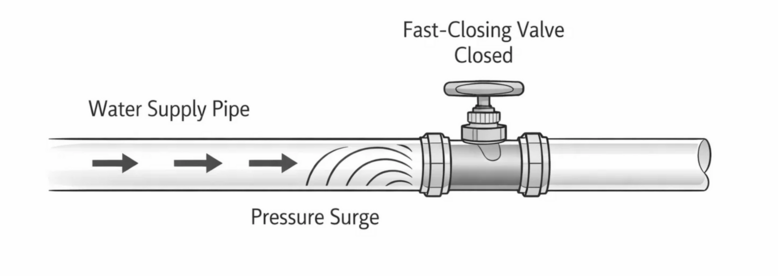
The forward motion of the water is abruptly halted if a valve closes instantly. The kinetic energy instantly converts into a high-pressure shockwave because the water cannot compress. This pressure wave bounces off the closed valve and travels backwards through the pipework. The wave continuously rebounds between the closed valve and the nearest point of relief. This rapid bouncing creates the severe banging noise associated with the phenomenon.
UK Regulatory Framework And Compliance
Professional tradesmen are legally obligated to install systems that do not cause waste, misuse, or undue consumption.
The Water Supply Regulations 1999 provide the legal framework for plumbing installations in England and Wales. The regulations strictly prohibit installations that cause damage to fittings. Hydraulic shock is proven to degrade and ultimately destroy mechanical components. Failing to mitigate it directly breaches these fundamental principles. All components used to resolve the issue must carry full WRAS approval to ensure they do not contaminate the potable supply.
Primary Causes In Modern Plumbing Systems
The frequency of hydraulic shock complaints has risen sharply over the last two decades. This increase directly correlates with modern appliance design and changes to mains infrastructure.
Fast-Acting Solenoid Valves
Modern domestic appliances utilize fast-acting solenoid valves. These electrically operated valves snap shut in a fraction of a second. This instantaneous closure is the primary catalyst for modern hydraulic shock. Quarter-turn ceramic disc taps also allow users to shut off the water supply instantly.
Excessive Incoming Mains Pressure
Water authorities constantly upgrade network infrastructure to meet the demands of new housing developments. This often results in significantly higher static pressure at the boundary stopcock. The velocity of the water becomes too high if the incoming mains pressure exceeds 3.0 bar. High velocity translates into a devastating shockwave when flow is interrupted.
Inadequate Pipe Support
Loose pipes do not cause the initial pressure wave. They do severely amplify the acoustic symptom and the physical damage. The shockwave causes the pipe to whip violently against timber joists if pipework runs under floors without adequate support.
Professional Diagnostics On Site
Misdiagnosing the source of plumbing noise leads to wasted hours. Tradesmen must differentiate between true hydraulic shock and other acoustic issues.
Static Versus Dynamic Pressure Testing
The first diagnostic step is to test the incoming mains pressure. Attach a calibrated pressure gauge to an outside tap.
Take a static pressure reading with all outlets closed. A reading above 3.0 bar indicates a high risk of pressure-induced shock. Open a cold tap elsewhere to observe the dynamic pressure. This data dictates whether a pressure reducing valve is the appropriate solution.
Eliminating Alternative Noises
Tradesmen must listen carefully to the nature of the noise.
- A slow ticking noise that occurs after the heating comes on is thermal expansion.
- A continuous rattling noise localized around a shower pump indicates cavitation.
- True water hammer is a loud and rapid thudding that occurs precisely at the moment a tap is closed.
Engineered Fixes That Actually Last
The tradesman must apply an engineered solution once the fault is diagnosed correctly.
The Danger Of Site-Made Air Chambers
Outdated methods involving site-made air chambers constructed from capped copper pipes are strictly prohibited. These capped pipes form dangerous dead legs where water stagnates. This provides an ideal breeding ground for Legionella bacteria. Tradesmen must adhere to the Health and Safety Executive ACOP L8 guidelines regarding the strict removal of dead legs. These temporary chambers also quickly become waterlogged and lose their compressible air cushion.
Installing Pressure Reducing Valves
Installing a pressure reducing valve is a highly effective universal fix for excessive static pressure. Setting the valve to a controlled 2.5 to 3.0 bar lowers the velocity of the water. This significantly reduces the kinetic energy available to cause a shockwave. You must note that while this mitigates high-velocity shock, it cannot always solve shock caused by a localized fast-acting valve.
Mechanical Arrestor Installation
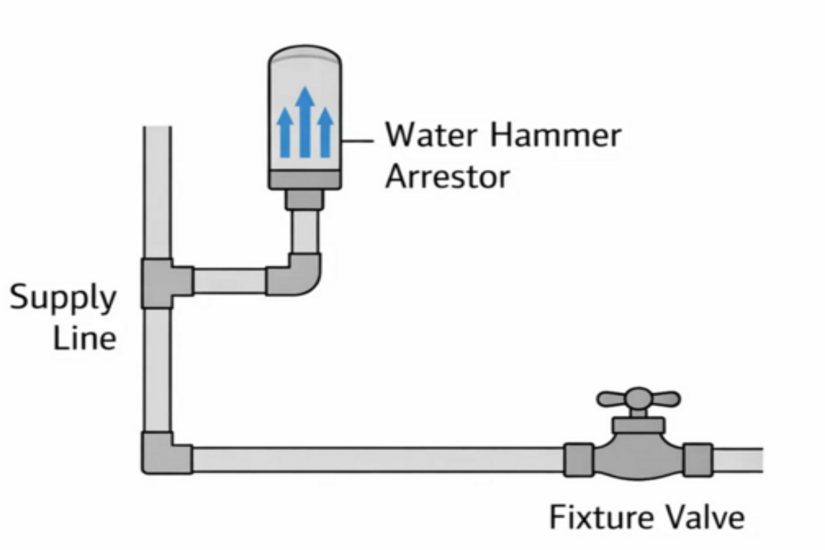
Mechanical arrestors are the industry standard for localized shock. These sealed units contain a sliding piston and a pre-charged chamber of compressed gas. The water pushes the piston upwards against the compressed gas when the shockwave hits. The gas acts as a shock absorber that dissipates the pressure spike. Arrestors must be installed as close to the offending valve as possible. Local mechanical arrestors may still be required for individual appliances even if a pressure reducing valve is installed.
Securing Pipework
Correct clipping is mandatory even with pressure management in place. Tradesmen must adhere strictly to the clipping distances outlined in the manufacturer guidelines. Using rubber-lined acoustic pipe clips provides an additional layer of isolation.
Professional tradesmen can permanently eradicate water hammer by combining accurate pressure diagnostics with WRAS-approved mechanical solutions. If you want to understand what’s happening before you call someone out, Tradefox’s training helps you get clear on construction basics.