

The toilet syphon remains one of the most common flush mechanisms in UK homes and commercial properties, especially in older close-coupled and high-level cistern installations. For tradesmen, knowing how these mechanisms work, why they fail, and what each symptom points to is the difference between a first-time fix and a return visit. This guide breaks down the working principle, the common failure modes, the symptoms that match each fault, and the UK regulations that govern any replacement work.
It is written for working plumbers and for anyone training toward the trade.
How A Toilet Syphon Works
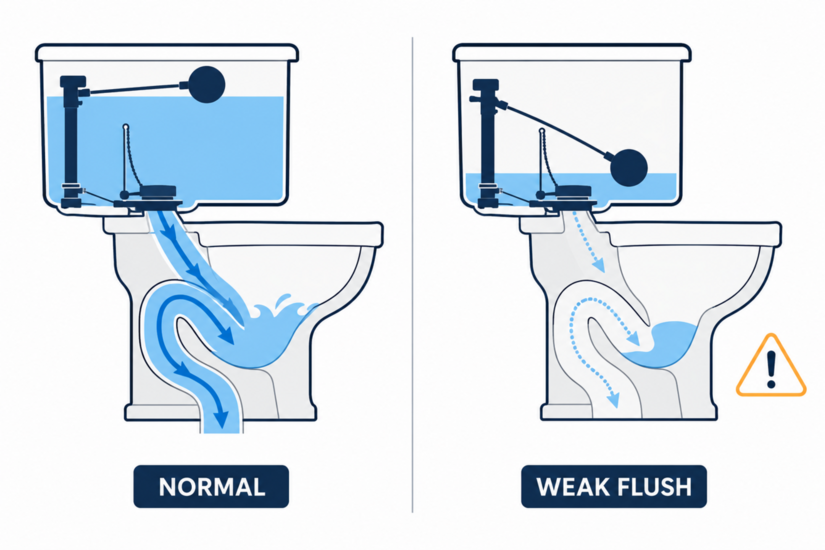
The syphon runs on a simple but reliable principle. When the lever is pressed, it raises a diaphragm, sometimes called a flap washer, inside the syphon chamber. That lifts a volume of water up and over the U-bend. The water falling down the far side then drags the rest of the cistern water behind it, creating the syphonic action that flushes the pan.
The key difference between a syphon and a drop valve is the seal. A drop valve holds water back with a washer sitting against an outlet under constant pressure. A syphon has no such seal. Because it relies on lifting water over a bend rather than holding it back, a healthy syphon physically cannot leak into the pan when it is at rest.
That single characteristic underpins much of the regulatory history covered further down, so it is worth holding onto.
Common Failure Modes Of A Toilet Syphon
Syphons are mechanically tough, but they do wear out. Failures tend to cluster around a handful of components:
- Diaphragm (flap washer) failure. This is by far the most common fault. The thin plastic membrane that lifts water over the bend splits, perforates, or curls at the edges after years of cycling. Once it goes, it can no longer move the full volume of water, so the flush weakens or stops priming altogether.
- Linkage and lever wear. The link arm joining the lever to the diaphragm plate can corrode, bend, or detach. Metal link arms in hard water areas rust through fastest. A worn link means the lever moves but the plate does not lift.
- Cracked syphon body. Less common, but a hairline crack in the body or around the U-bend breaks the seal and stops the unit priming.
- Perished base seal. The seal where the syphon meets the cistern outlet can degrade, letting water leak between the cistern and pan, or onto the floor below on close-coupled units.
Reading The Symptoms
Good diagnosis starts by matching the symptom to the likely cause before you strip anything down. Use the points below as a fault-finding framework.
Lever Needs Several Pumps To Flush
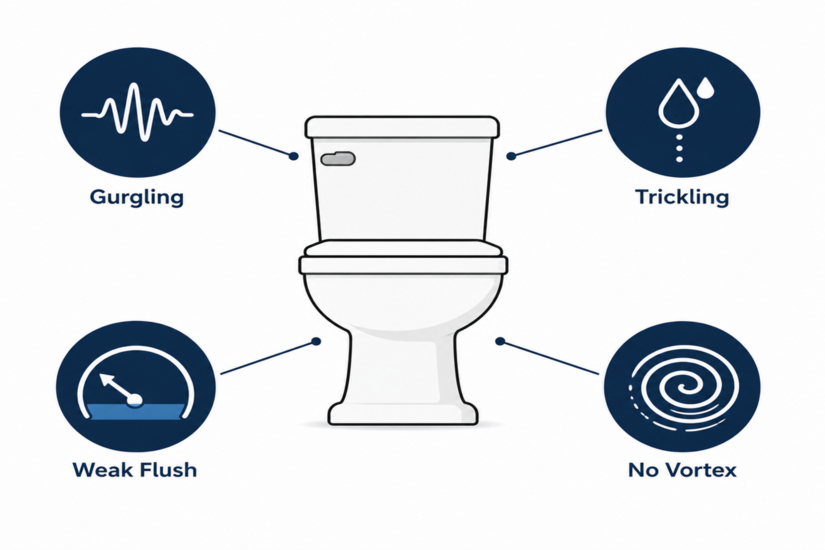
This is the classic signature of a failing diaphragm. The split membrane lets water slip past instead of carrying it over the bend, so one pull no longer generates enough lift to prime the syphon. Replace the diaphragm.
Lever Is Loose Or Offers No Resistance
This points to linkage failure or a detached link arm, not the diaphragm. Inspect the connection between lever, link, and plate before assuming the membrane has gone.
Weak Flush That Does Not Clear The Pan
Check the cistern water level first. A fill valve set too low starves the flush. If the level is correct, suspect a partially perforated diaphragm or debris blocking the chamber.
Continuous Trickle Into The Pan
A healthy syphon should pass no water into the pan at rest. On most traditional units the cistern overflow discharges through a separate warning pipe, so a trickle into the pan usually means the fill valve is overfilling the cistern and water is reaching the overflow weir. On units with a combined internal overflow, that overflow runs into the pan by design. Either way, diagnose the fill valve and water level first rather than condemning the syphon body.
Water On The Floor Beneath A Close-Coupled Cistern
Suspect the doughnut washer, also known as the base seal, or the cistern-to-pan fixing, rather than the flush mechanism itself.
Syphon Versus Drop Valve: The Regulatory Context
This is where precision matters most, and where newer tradesmen most often get caught out.
The syphon became the long-standing UK default partly because it cannot leak silently into the pan. A drop valve relies on a seal that can degrade and pass water continuously with no visible sign, wasting large volumes over time.
UK water fittings are governed by:
- Le Water Supply (Water Fittings) Regulations 1999 in England and Wales.
- The Water Supply (Water Fittings) Regulations (Northern Ireland) 2009.
- Le Scottish Water Byelaws 2014.
These regulations require every water fitting to be of an appropriate quality and standard, and to avoid causing waste, misuse, undue consumption, or contamination of the water supply. The legal duty to use compliant fittings sits with whoever installs them.
The Flush Volume Limits You Must Work To
For any flush mechanism fitted to a WC pan, Schedule 2 of the 1999 Regulations sets hard limits that every installer needs to know:
- No flushing device installed for use with a WC pan may give a single flush exceeding 6 litres.
- On a device designed to give flushes of different volumes, the lesser flush may not exceed two-thirds of the largest flush volume.
- Every flushing cistern, other than a pressure flushing cistern, must be marked internally with an indelible line showing the intended flush volume.
A blog about replacing flush mechanisms that skips the 6-litre ceiling would be skipping the single most enforceable figure in the regulations, so commit it to memory.
The Replacement Rule That Catches People Out
There is one restriction that directly affects any decision to convert a syphon to a valve. A flushing cistern installed before 1st July 1999 may be replaced by a cistern delivering a similar volume, either single or dual flush. However, a single flush cistern may pas be replaced by a dual flush cistern.
In practice, that means converting certain older single-flush installations to dual flush can be non-compliant. Check the age and original type before you quote a conversion.
Choosing A Compliant Replacement
When sourcing parts, confirm approval before you fit anything. WRAS approval is the most widely recognised way to show compliance, and UK water suppliers treat it as the benchmark. Two practical points are worth flagging:
- WRAS approval lasts a maximum of five years before it must be reassessed, so check the live directory rather than trusting old packaging.
- Dual flush units carry extra installation duties. The fitting must have a readily discernible method of actuating the different flush volumes, with instructions clearly and permanently marked on the cistern or displayed nearby.
That marking duty exists for a reason. WRAS research found that as many as eight in ten people press the wrong dual flush button, which quietly undoes the water saving the regulations are designed to deliver.
Get The Height Right
Always confirm the syphon height matches the cistern:
- If the unit sits too tall, the cistern cannot fill to its rated flush volume and the flush underperforms.
- If the water level at rest sits above the crown of the U-bend, the unit self-siphons and runs continuously. The variable that matters is the relationship between the resting water level and the height of the bend, so set the fill valve accordingly.
Choosing the right flush mechanism means understanding both the regulations and the installation details. Explore TradeFox to build practical plumbing skills through interactive learning and gain greater confidence before carrying out work on site.
Practical Replacement Notes For The Trade
Replacing a toilet syphon in a close-coupled cistern usually means isolating the supply, draining the cistern, lifting the cistern off the pan, and releasing the large back nut beneath the unit. It is more involved than a drop valve swap, which is one reason some installers lean toward valve conversions. That call should be made on compliance and client need, not convenience.
While the cistern is off, fit or confirm a servicing valve on the inlet pipe adjacent to the cistern. Schedule 2 requires every inlet to a WC flushing cistern to have one, and it makes every future repair quicker.
Before you sign off, run a full cycle and check:
- The flush clears the pan in a single operation.
- The cistern refills to the marked line and shuts off cleanly.
- A stable resting state with no trickle is your confirmation that the installation is sound.