

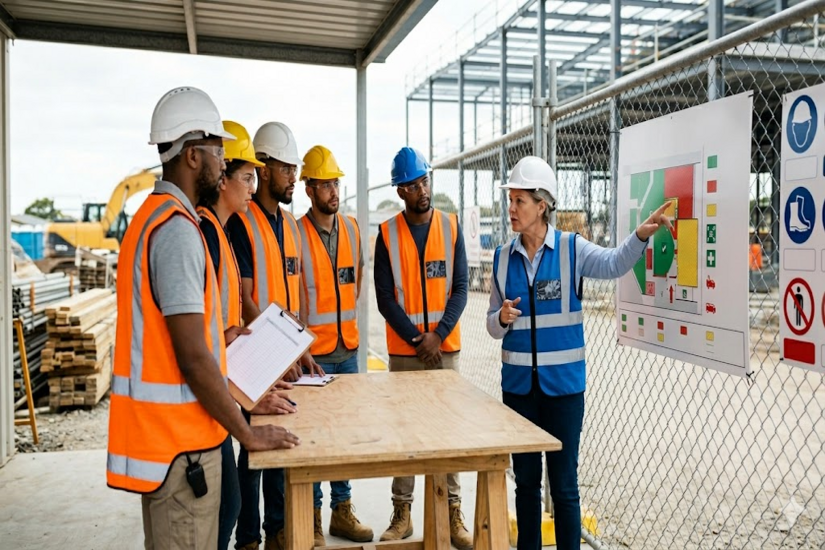
Construction sites are high-risk environments where conditions change daily. Under the Construction (Design and Management) Regulations 2015, principal contractors have a legal duty to ensure every worker receives a comprehensive briefing before starting work. However, there is a distinct difference between a compliant briefing and an effective one.
Effective site inductions are not just a legal formality. They are the primary tool for establishing a safety culture and preventing the same accidents from happening repeatedly. When these briefings are treated as a mere tick-box exercise, critical information falls through the cracks, leaving professional tradesmen exposed to unnecessary risks.
To break the cycle of repeat incidents, safety briefings must go beyond generic videos and boilerplate paperwork. Here are the ten essential items that must be covered, along with the critical details that frequently get missed on the ground.
1. True Site-Specific Hazards
Every project has unique geographical and structural challenges. Generic safety talks often cover the basics of hard hats and high-visibility clothing but gloss over the actual environment the tradesmen are about to enter.
What gets missed: The evolving nature of the hazard. A hazard on Monday might be completely different by Thursday due to the progression of the build. Briefings must highlight specific, current risks such as unguarded edges on level three, fragile roof lights on the existing structure, or contaminated ground in the excavation zone.
2. Dynamic Risk Assessments and Method Statements (RAMS)
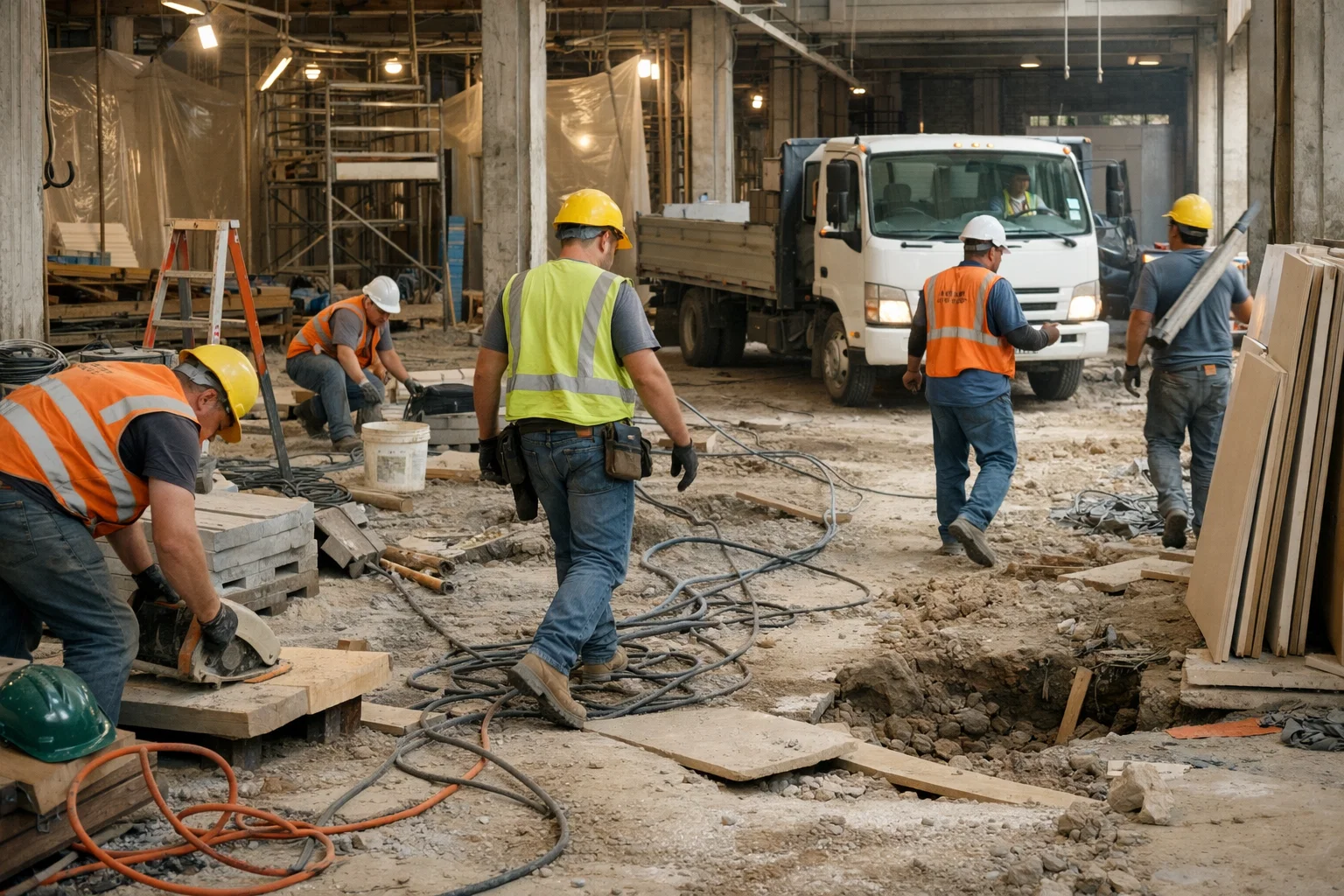
Professional tradesmen are entirely familiar with RAMS. However, the disconnect usually happens between the paperwork approved in the office and the reality on the site floor. Tradesmen often suffer from RAMS fatigue.
What gets missed: Translating the RAMS into practical, day-to-day actions. Workers frequently sign the briefed method statement just to get the site manager off their back. Good site inductions clarify how overarching site rules interact with task-specific method statements, and stress that workers must only sign the paperwork after fully understanding it. If a scaffolder’s method statement conflicts with the site’s temporary traffic management plan, the briefing is the exact moment to identify and resolve that clash before work commences.
3. The Near Miss Reporting Culture
According to the Health and Safety Executive (HSE), the foundation of accident prevention is acting on near misses. A near miss today is a fatal accident tomorrow.
What gets missed: The actual mechanism for reporting without fear of reprisal or excessive bureaucracy. Many sites state that near misses must be reported, but they fail to provide a simple, anonymous, and fast way to do so. If reporting a loose temporary handrail takes thirty minutes of paperwork, tradesmen will simply ignore it. The briefing must establish a blame-free culture where reporting is quick and highly valued.
4. Traffic Management and Plant Segregation
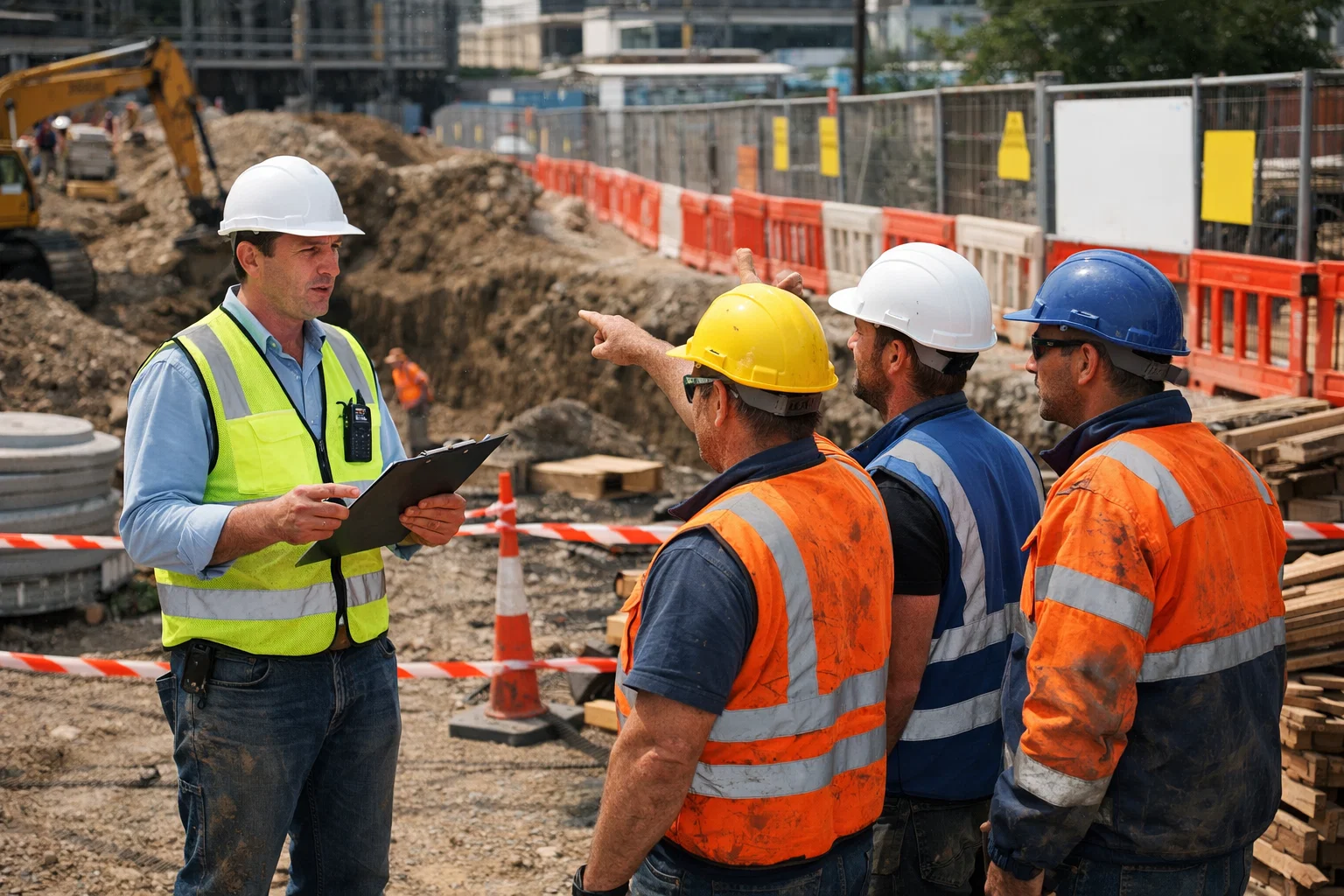
Moving vehicles and heavy plant machinery account for a significant percentage of construction fatalities in the UK. Pedestrian and vehicle segregation is a fundamental requirement, strictly guided by documents like HSG144 for safe vehicle use on construction sites. Furthermore, the Provision and Use of Work Equipment Regulations (PUWER) dictate strict controls on plant machinery.
What gets missed: Blind spots and delivery schedules. It is not enough to point out the pedestrian walkways. Briefings must detail the specific times when heavy articulated lorries are reversing into tight loading bays, the turning circles of telehandlers operating that week, and the exact protocols for making eye contact with plant operators before crossing their path.
5. Evolving Emergency Procedures
Every worker knows to look for the Fire Action Notice. Knowing the muster point is basic compliance.
What gets missed: Temporary escape routes. On a live construction site, stairwells are built, demolished, and blocked off regularly. When briefings fail to highlight the current active escape routes for that specific phase of the project, workers can easily become trapped during a fire or structural failure. Briefings must cover the temporary alarms in use and the evacuation routes applicable for that specific week.
6. Strict Permit to Work Systems
High-risk activities such as hot works, confined space entry, and breaking ground require strict controls. A Permit to Work system ensures that all necessary precautions are in place before these tasks begin.
What gets missed: The handover and cancellation process. Accidents frequently occur not during the permitted work itself, but immediately after. A welder might finish their hot works, but if the fire watch protocol is not clearly communicated and enforced initially, a smouldering spark can ignite a fire hours later. The exact chain of command for closing out a permit must be crystal clear.
7. Hidden Dangers (Asbestos and Buried Services)
For brownfield sites and refurbishment projects, hidden dangers are the most lethal. The Control of Asbestos Regulations 2012 strictly govern how to handle potential exposure.
What gets missed: The presumption of danger. Too often, workers are told that asbestos surveys have been completed, leading to a false sense of security. Comprehensive site inductions must explicitly state the protocol for unexpected discoveries. If a groundworker strikes an unmapped cable or a dryliner uncovers suspect fibrous material, they need to know the exact stop-work procedure and who to contact immediately.
8. Occupational Health and Welfare Facilities
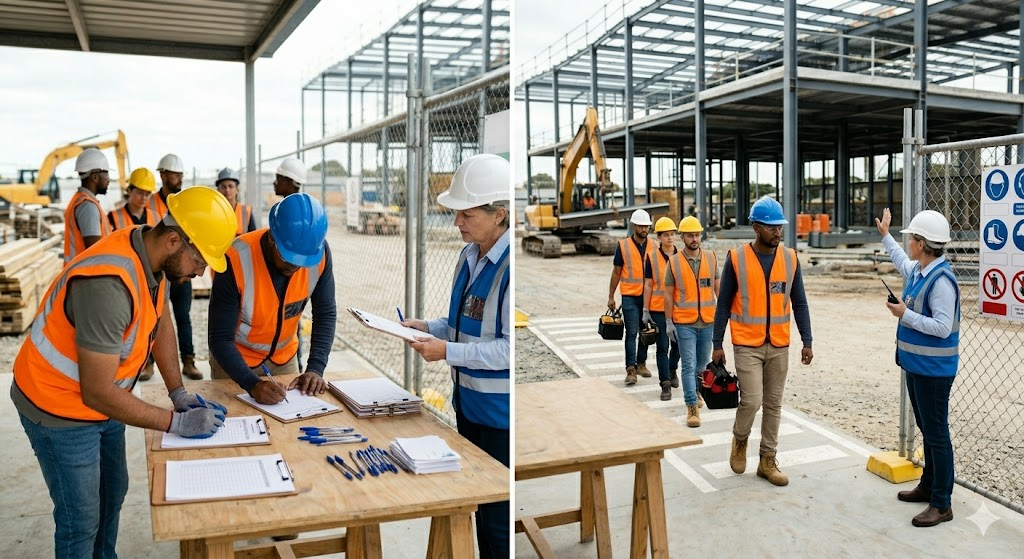
Health is often overshadowed by immediate safety risks. Yet, exposure to silica dust, excessive noise, and hand-arm vibration syndrome (HAVS) causes long-term, irreversible damage to tradesmen. Construction Industry Training Board (CITB) guidelines emphasize managing these occupational hazards.
What gets missed: The specific control measures provided by the principal contractor. It is insufficient to simply tell workers to wear a dust mask. The briefing must detail where the designated cutting stations are located, how to access water suppression tools, and the location of mandatory hearing protection zones. Furthermore, pointing out the location of clean welfare facilities, drying rooms, and proper washing stations is vital for preventing occupational dermatitis and site-borne illnesses.
9. Housekeeping Expectations
The HSE consistently reports that slips, trips, and falls on the same level are the most common cause of non-fatal injuries in the construction industry. Poor housekeeping is the primary culprit.
What gets missed: The definition of clean. One tradesman’s tidy workspace is another’s trip hazard. One of the critical failures during initial site inductions is not defining the exact standard of housekeeping required. The briefing must clearly explain the clean as you go policy, identifying who is responsible for clearing specific waste streams, where the designated skips are, and the penalties for leaving trailing cables across walkways.
10. Mental Health, Drugs, and Alcohol
The modern construction industry is finally recognising the severe impact of mental health issues, fatigue, and substance abuse. Organizations like the Lighthouse Construction Industry Charity provide crucial lifelines for workers in distress.
What gets missed: Peer support and absolute clarity on testing policies. Briefings must clearly state the site’s random drug and alcohol testing procedures to deter impairment on site. Equally important, the presentation should provide immediate, discreet contact points for mental health first aiders. Tradesmen need to know that if they are struggling with fatigue or personal issues, there is a support system in place that prioritises their wellbeing over rigid deadlines.
Securing the Site
By treating safety briefings as an ongoing conversation rather than a singular event, principal contractors and site managers can drastically reduce the likelihood of repeat incidents. A robust briefing respects the expertise of the professional tradesman by focusing on real, actionable, and site-specific intelligence. When workers are armed with the right knowledge regarding specific hazards, reporting systems, and emergency protocols, the entire site operates with a much higher degree of safety and efficiency.
If teams need a clearer baseline, Tradefox helps reinforce the same safety expectations through step-by-step training and realistic simulations that people can revisit whenever they need a refresher.