

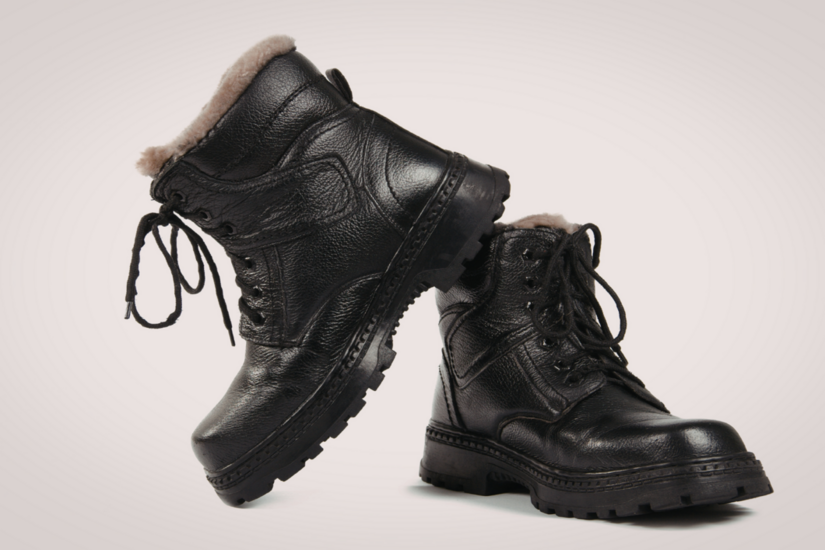
A dropped scaffold pole. A misplaced foot near a stray nail. A wet kitchen floor at the end of a 12-hour shift. These are the moments where safety boots stop being just another item on the kit list and start doing the job they were designed for.
The Health and Safety Executive’s latest figures show roughly 50,000 non-fatal injuries a year in construction alone, with slips, trips and falls accounting for 30% of all non-fatal workplace injuries across Great Britain.
Choosing the right boot is not about brand loyalty or what the crew on site happens to be wearing this season. It is about matching certified protection to the actual hazards faced every shift. This guide walks through toe cap materials, midsole construction, what the EN ISO 20345:2022 codes actually mean, and which combinations suit which trades.
What the Law Actually Requires
Le Personal Protective Equipment at Work Regulations 1992, as amended in 2022, place a duty on every employer in Great Britain to provide suitable PPE free of charge where a risk assessment identifies the need. The 2022 amendment extended this duty to limb (b) workers, meaning agency staff, casual workers and many self-employed operatives now fall under the same protection.
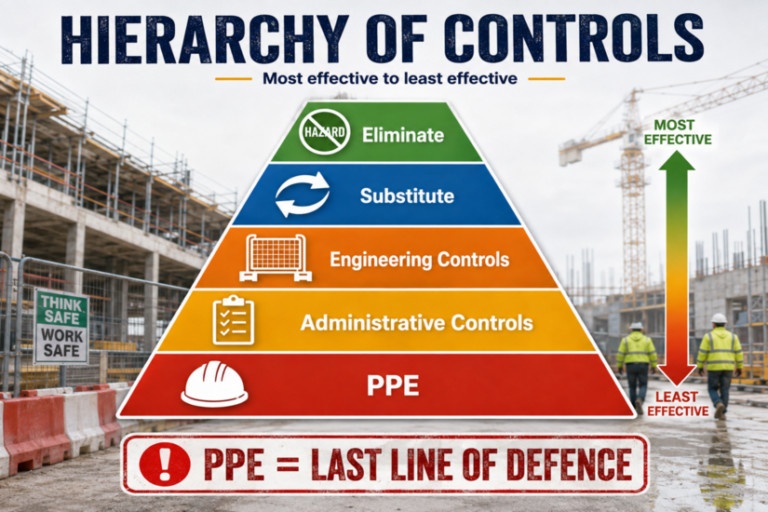
PPE sits at the bottom of the hierarchy of controls. Employers are expected to eliminate, substitute or engineer out hazards before relying on equipment. On a live site or in a working kitchen, foot hazards rarely disappear, which is why certified safety boots remain non-negotiable kit.
The current standard is EN ISO 20345:2022, which replaced the 2011 version. New certifications under the 2011 standard could not be issued after 11 November 2024. However, boots already certified under EN ISO 20345:2011 remain legal to sell and wear until their individual certificate expires, with full phase-out by the end of 2027. So expect to see both standards on shelves for some time yet.
The Toe Cap: Where Protection Starts
Every certified safety boot, regardless of class, must have a toe cap that withstands a 200-joule impact (a 20kg striker dropped roughly 1,020mm) and a 15 kilonewton compression force (about 1.5 tonnes of static load). That is the baseline. Material choice determines weight, conductivity, temperature performance and how the boot behaves after a strike.
Steel Toe Caps
Steel is the original toe cap material and still the most common. It is dense, predictable, and meets the impact and compression standards comfortably. Because steel is thinner than composite alternatives, the toe box can sometimes feel slightly more open inside the boot for the same external shell size, though manufacturer designs vary.
The trade-offs are weight and thermal conductivity. Steel transfers cold quickly, which matters in winter groundworks or refrigerated environments, and it triggers metal detectors. For most general construction, demolition and heavy industrial work, steel remains a solid choice.
Composite Toe Caps
Composite caps use materials like carbon fibre, Kevlar, plastic or a layered combination. They meet the same 200-joule impact requirement but typically weigh 30 to 50% less than steel. They do not conduct heat or cold, do not corrode, and pass through metal detectors freely.
Composite is the obvious choice for airport workers, security personnel, electricians working near live conductors, and anyone covering serious mileage on foot during a shift. The trade-off is bulk: composite caps tend to be thicker than steel, so manufacturers often build the boot’s external toe box larger to maintain the same internal clearance.
Aluminium Toe Caps
Aluminium sits between steel and composite. Lighter than steel, slimmer than composite, and still metallic. It is a sensible middle ground for trades that want weight savings without the bulk of composite, though aluminium will still trigger metal detectors and conducts temperature.
A Note on Replacing Damaged Toe Caps
Any toe cap that has absorbed a serious impact may be compromised even if it looks fine. This applies to steel, aluminium and composite alike. Composite damage is often internal and invisible, which makes inspection harder rather than easier. After any significant strike, replace the boots.
Midsole Protection: The Plate Under Your Foot
The toe cap protects the front. The midsole protects the underside of your foot from perforation, which is a different hazard entirely. Step on a six-inch nail through a plywood offcut and the toe cap does nothing for you. The midsole does.
EN ISO 20345:2022 introduced clearer markings for perforation-resistant midsoles. The terminology shifted from “penetration resistance” in the 2011 standard to “perforation resistance” in 2022.
- P denotes a metallic (typically steel) perforation-resistant insert tested with a 4.5mm diameter nail
- PL denotes a non-metallic insert tested with the same 4.5mm nail (broadly equivalent protection level to the older P marking)
- PS denotes a non-metallic insert tested with a finer 3mm nail. Because a smaller nail concentrates more pressure per square millimetre, PS represents the higher level of perforation protection and is specifically aimed at fine sharps such as needles or hypodermic risks
A boot can carry only one of these three markings, not multiple. So a boot is either P, PL or PS for its midsole.
Steel Midsoles
A steel plate gives reliable, edge-to-edge perforation resistance against larger sharps. It is heavier, less flexible, and can create pressure points during long shifts on hard surfaces.
Steel midsoles still earn their place in demolition, scrap yards, heavy groundworks, and any environment where dropped debris and large sharps are constant.
Composite (Non-Metallic) Midsoles
Kevlar and other textile composite midsoles have improved significantly in the last decade. They are lighter, more flexible, do not conduct heat or cold, and bend with the foot.
PS-rated composite midsoles in particular indicate the highest tier of perforation protection under the new standard. Composite midsoles can occasionally leave small uncovered areas near the edge of the boot depending on construction, so coverage is worth confirming with the manufacturer’s documentation.
For trades on their feet all day, composite midsoles are generally more comfortable.

Decoding the EN ISO 20345:2022 Markings
The labels inside your boots are where the real information lives. Under the 2022 standard, there are now eight main protection classes (up from six in 2011), plus sub-variants for non-metallic midsole inserts.
The Main Classes
| Marking | What it means |
|---|---|
| SB | Safety basic. 200J toe cap and 15kN compression. Open heel permitted. |
| S1 | SB requirements, plus closed heel, antistatic properties, energy-absorbing heel, and a closed seat region |
| S2 | S1 plus water penetration and absorption resistance through the upper (WPA) |
| S3 | S2 plus a metallic perforation-resistant midsole (P) and a cleated outsole |
| S3L | As S3, but with a non-metallic midsole tested with the 4.5mm nail (PL) |
| S3S | As S3, but with a non-metallic midsole tested with the 3mm nail (PS) |
| S4 | All-polymer or all-rubber boot, antistatic, energy-absorbing heel, closed heel |
| S5 | S4 plus a metallic perforation-resistant midsole and cleated outsole |
| S5L / S5S | As S5, with non-metallic midsoles (PL or PS respectively) |
| S6 | New under 2022. S2 plus full whole-boot water resistance (WR) |
| S7 | New under 2022. S3 plus full whole-boot water resistance (WR) |
| S7L / S7S | New under 2022. As S7, with non-metallic midsoles (PL or PS respectively) |
S6 and S7 are the headline additions in the 2022 revision. They give a clean way to specify a fully waterproof boot without combining multiple older markings. An “S2 WR” boot under the 2011 standard becomes an S6 under 2022; an “S3 WR” boot becomes an S7.
Important: WPA and WR Are Not the Same
This is the most commonly misunderstood point in the entire standard.
- WPA (water penetration and absorption) tests only the upper material of the boot. It is not a waterproof boot. Some water can still reach the foot through seams, the tongue, or by working in deep water. WPA replaces the older WRU marking and uses essentially the same test method.
- WR (water resistance) tests the entire finished boot. This is what most people mean when they say "waterproof". S6 and S7 boots have WR built in by definition.
If your work involves standing water, wet excavations, or kitchen floors awash with liquid, look for WR, S6 or S7. S2 and S3 alone are not enough.
Slip Resistance: What Changed
Under the 2011 standard, slip resistance came in three flavours: SRA, SRB and SRC. Those markings no longer appear on new boots certified to the 2022 standard.
Under EN ISO 20345:2022:
- Basic slip resistance is now mandatory for every certified boot. Every new boot must pass a slip test on a ceramic tile with a soap solution. There is no marking for this because it is built into the standard itself.
- SR is an optional additional marking, awarded only to boots that also pass a slip test on a ceramic tile with glycerine. This is the more demanding test, broadly comparable to the old SRC certification.
In practical terms: every new safety boot has baseline slip resistance. Look for the SR marking when you need the higher tier, such as wet kitchens, food processing, hospitality, and anywhere oil or grease is in play.
Other Markings Worth Knowing
- LG Ladder grip. New under the 2022 standard. Confirms the outsole has a transverse profile of at least 1.5mm in the ankle area to grip ladder rungs properly. Important for anyone climbing as part of the job.
- HRO Outsole resists hot contact at 300°C for 60 seconds (a contact test, not an ambient temperature test).
- M Metatarsal protection over the bridge of the foot.
- CR Cut resistance of the upper (note: this does not equal chainsaw protection, which is a separate standard).
- HI / CI Heat or cold insulation of the outsole complex.
- SC Scuff cap abrasion resistance for the toe area, useful when kneeling.
- AN Ankle protection.
- FO Fuel oil resistance of the outsole. No longer mandatory under the 2022 standard, now optional.
The standard was further refined in EN ISO 20345:2022+A1:2024, which tightened requirements around scuff caps and membrane-based water resistance.
What Different Trades Actually Need
Generic “S3 boots” works for many trades, but the right combination depends on your daily hazards. Here is how the main UK trades break down.
Construction and General Building
For most builders, bricklayers, labourers and site managers, S3, S3S or S7 is the sensible default.
- S3 if you are happy with a steel midsole
- S3S if you want a lighter composite midsole rated for finer sharps
- S7 if you regularly work in standing water or persistent wet conditions and need full waterproofing
Look for the SR marking for higher-tier slip resistance, and the LG marking if you climb ladders frequently. If you spend time kneeling on rough surfaces, the SC scuff cap protects the upper from premature wear.
Roofing
Roofers face fall hazards, hot bitumen, and slip risks on pitched surfaces. The right answer here is S3L or S3S. Composite midsoles are preferred over steel because:
- Steel conducts heat aggressively from sun-baked tiles and hot bitumen
- Composite is lighter, which matters for footing and fatigue at height
- Composite flexes better with the foot on uneven roof surfaces
Add the HRO marking for hot contact resistance. Soft, grippy outsoles are generally more useful here than aggressive cleats, which can damage roof coverings.
Electricians
The hazard profile is different. Live conductors, less debris underfoot, and a need to avoid creating an electrical path through the body.
- S1P, S1PL or S1PS with SR is a sensible everyday standard, with composite toe caps and non-metallic midsoles to keep the boot fully non-conductive
- For working on or near live systems, look specifically for boots certified to BS EN 50321-1:2018, which covers electrical insulating footwear up to 36,000V AC or 25,000V DC, in six performance classes
A critical point: antistatic (A) is not the same as electrically insulating. Antistatic boots dissipate static charge to prevent ignition in flammable atmospheres. They provide no protection against electric shock. Confusing the two has led to fatalities. If you work on live equipment, BS EN 50321-1 is the standard that matters.
Groundworkers, Demolition and Scaffolders
Heavy debris, sharp metal, dropped loads. This is where steel toe caps and steel midsoles still earn their keep. S3 SR is the floor.
Metatarsal protection (M) deserves serious consideration, particularly for demolition operatives and scaffolders shifting tube and fittings by hand. The metatarsal guard sits over the bridge of the foot and protects against impacts the toe cap cannot reach.
Highways and Utilities
Mixed exposure to weather, heat from tarmac, sharp aggregate, and lone working. S7 SR HRO covers most bases (S3 with whole-boot water resistance and hot contact resistance). High-visibility uppers are useful but do not replace the requirement for a separate hi-vis vest or jacket on site.
Kitchens, Food Production and Hospitality
Different hazard set entirely. Wet floors, hot liquids, dropped knives, long shifts on hard surfaces.
- S2 SR is a typical specification, focused on slip resistance and water absorption rather than perforation protection
- S6 SR is better where the floor is genuinely wet for hours at a time
- Composite toe caps reduce fatigue across a 12-hour shift
Le SR marking matters most in this trade. Look for outsoles specifically tested on contaminated surfaces.
Warehousing and Logistics
Forklifts, dropped pallets, long walking distances. S1P, S1PL or S1PS with SR keeps weight down for staff covering serious mileage. Composite midsoles are usually preferred over steel for comfort.
If forklifts operate in the same area as pedestrians, metatarsal protection (M) becomes more relevant given the wheel-crush risk.
Forestry and Agriculture
Chainsaw work demands a separate standard alongside EN ISO 20345. The current chainsaw protection standard is EN ISO 17249:2013+A2:2020, which classifies boots into protection levels 1 to 3 based on chain speed.
A standard EN ISO 20345 boot with cut resistance (CR) is not chainsaw-rated. The two are different tests. If you operate a chainsaw, EN ISO 17249 certification is non-negotiable.
Fit, Replacement and Care
A perfectly certified boot that fits badly is worse than one that fits well at a slightly lower spec. A few practical notes:
- Try them on at the end of the day when feet are at their largest
- Wear the socks you will wear on site
- Walk on a hard surface, not just the showroom carpet
When to Replace
Safety boots have a working life. There is no fixed expiry date, but the EN standard sets out clear indicators that boots should be replaced:
- Visible cracking through more than half the upper thickness
- Severe abrasion exposing the toe cap or midsole
- Deformation or unravelling of seams
- Outsole cleats worn smooth, or any sign of sole separation
- Any serious crushing impact to the toe cap (steel, aluminium, or composite, all can be compromised internally without showing visible damage)
Care Basics
- Clean leather uppers with a soft brush and appropriate conditioner
- Do not dry boots directly on radiators or in front of heaters; this damages adhesives and shrinks leather
- Air-dry away from direct heat
- Rotate two pairs if you can. It roughly doubles their service life and gives the inner linings time to dry properly between shifts.
Common Mistakes Worth Avoiding
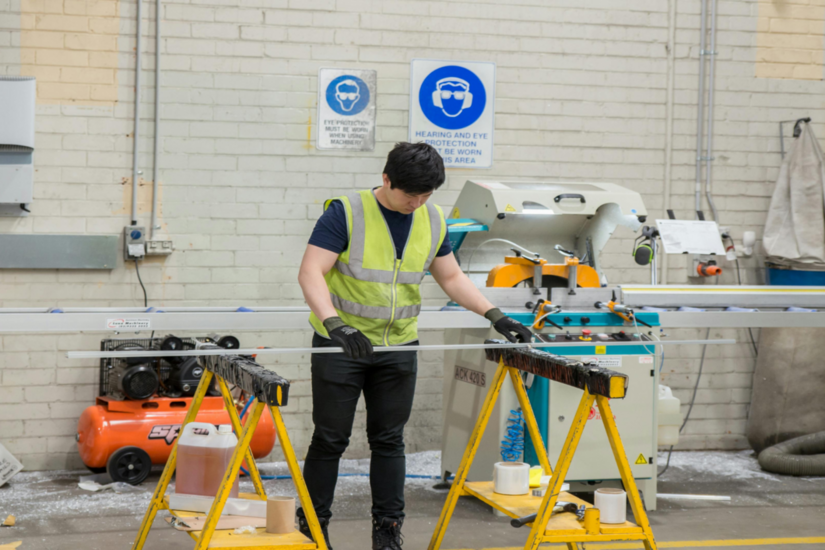
A few patterns turn up repeatedly on sites and in training rooms:
Buying on price alone. The cheapest SB-rated boot legally meets the minimum, but for almost any trade, S1P or S3 should be the realistic floor.
Confusing antistatic with insulating. They are different markings testing different things. If you work on or near live electrical systems, look for BS EN 50321-1:2018 certification, not the antistatic A marking.
Confusing WPA with waterproof. WPA is a water-resistance test on the upper only. Whole-boot waterproofing requires WR, S6 or S7.
Wearing boots well past their service life because they feel “comfortable now”. Comfortable usually means broken down. The protection has degraded along with the comfort.
Mixing aftermarket inserts. Unapproved insoles can compromise the EN ISO 20345 certification of the boot. Use the manufacturer’s footbed or a replacement they explicitly approve.
Ignoring sock choice. A thin cotton sock in a winter boot causes blisters and cold feet. A thick boot sock in summer causes overheating and reduced grip from sweat. Match the sock to the conditions. For more practical trade guidance like this, visit TradeFox and keep building the habits that make a real difference on site.
Réflexions finales
The right safety boots are the ones that match your trade’s hazard profile, fit properly, and carry the certifications that prove their protection. EN ISO 20345:2022 markings are not marketing fluff. They are the legal and technical evidence that a boot has been tested against specific risks.
Reading them properly, and matching them to the work you actually do, is the difference between PPE that protects and PPE that just ticks a box. For employers, the HSE PPE guidance is the starting point for risk assessment. For tradesmen, the inside label of the boot is where the real information lives. Read it, understand it, and choose accordingly.