

An insulation resistance test measures how well the insulation around live conductors resists current that tries to flow where it should not. Using a DC test voltage, usually 500 V on a standard 230 V or 400 V circuit, the tester pushes current against the insulation and reports the result in megohms (MΩ).
Under BS 7671, the minimum acceptable reading for most circuits is 1 MΩ, but a healthy installation should read far higher, often 200 MΩ or more. A reading sitting near the minimum is technically a pass, yet it usually points to deteriorating insulation that needs investigating.
Quick answer
This is one of the dead tests in the BS 7671 sequence, set out in Regulation 643.3 of BS 7671:2018+A2:2022 and carried out during initial verification and periodic inspection. (“Dead test” simply means the circuit is isolated and de-energised before testing.) It confirms that insulation between live conductors, and between live conductors and earth, is intact. That prevents leakage currents, short circuits, and the shock and fire risks that follow.
This work must only be carried out by a skilled or competent person, as required by Regulation 134.1.1, never by a DIYer.
Below we break down how to read your results and why moisture, age, and physical damage are the three things most likely to drag a reading down.
How Does An Insulation Resistance Test Work?
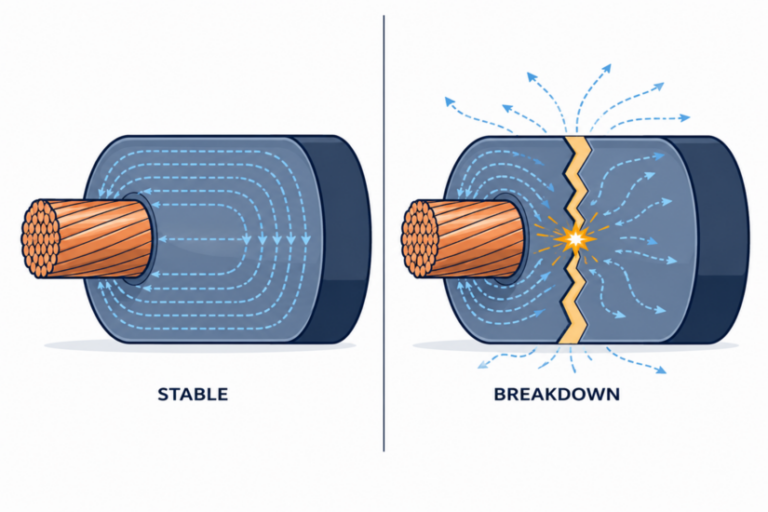
The principle is simple. Think of it as a pressure test for insulation. A controlled DC voltage, higher than the circuit’s normal operating voltage, is applied across the insulation. If the insulation is sound, almost no current flows and the resistance reads high. If the insulation is breaking down, current leaks across it and the resistance reads low.
Before anything else, the circuit must be dead and safely isolated. There are no exceptions to this. A few ground rules apply every time:
- Carry out a full safe isolation procedure first, and prove the circuit dead with an approved voltage indicator.
- Use an instrument that complies with BS EN 61557, in good condition and within calibration.
- Verify the installation is connected to a means of earthing before testing. The test is made to the protective conductor connected to the earthing arrangement, so that connection has to be present for the result to mean anything.
- Control the test area so nobody can bridge the test leads while the voltage is applied. A 500 V DC output can give a shock to anyone touching across the leads.
Where Does It Sit In The Test Sequence?
The insulation resistance test is the second test in the sequence, carried out after continuity of conductors. That order matters: continuity must be confirmed first so the test voltage reaches the full length of the conductor. Without verifying end-to-end continuity, the test might only be applied to part of the wiring. If continuity is not satisfactory, defects must be put right before any insulation testing begins.
One point of clarity. This fixed sequence is a Regulation 643 requirement for initial verification. For periodic inspection, BS 7671 does not mandate a rigid order, and the inspector applies professional judgment, though continuity-before-insulation remains good practice.
What Test Voltage And Readings Does BS 7671 Require?
Table 64 of BS 7671 sets out the test voltages and minimum values. The figures below are the ones you will use day to day:
- SELV and PELV circuits: Test at 250 V DC, minimum 0.5 MΩ.
- Circuits up to and including 500 V (excluding SELV and PELV): Test at 500 V DC, minimum 1 MΩ.
- Circuits above 500 V: Test at 1000 V DC, minimum 1 MΩ.
The Amendment 2 Two-Stage Test
There is an important practical point from Amendment 2 to the 18th Edition (A2:2022). Where connected equipment could be damaged by the test voltage, or could influence the result, the full Table 64 test is applied avant that equipment is connected.
After connection, a test at 250 V DC is applied between live conductors and the protective conductor connected to earth, and that result must still reach at least 1 MΩ. This protects sensitive electronics while still confirming the insulation has survived installation. The 250 V retest is not a substitute for the 500 V cable test before connection, both stages are required.
Reduced Voltage Where Equipment Cannot Be Disconnected
One more provision is worth knowing for periodic inspection work. Where surge protective devices (SPDs) or other equipment cannot reasonably be disconnected, the test voltage for that circuit may be reduced to 250 V DC, but the reading must still be at least 1 MΩ.
Which Conductor Combinations Should You Test?
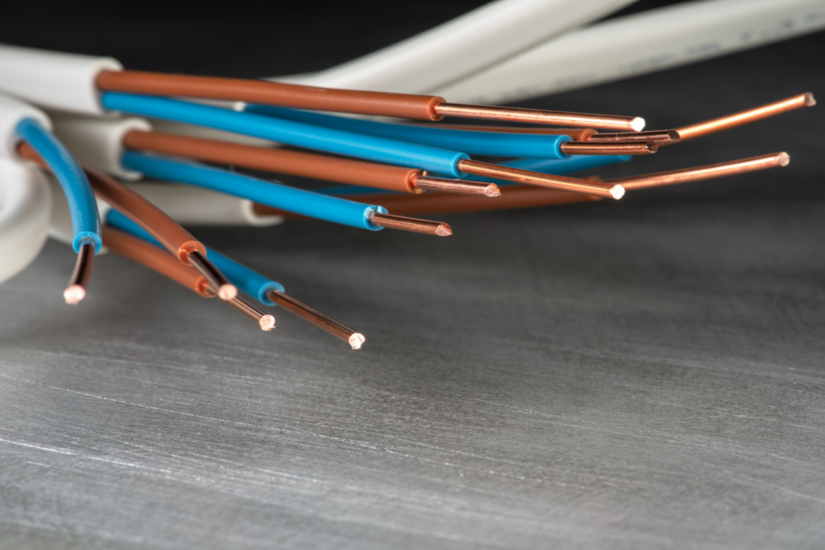
On a single-phase circuit, you test between line and neutral, and between each live conductor and earth. On three-phase work there are more combinations to cover:
- Line to line: L1-L2, L1-L3, and L2-L3.
- Each line to neutral: L1-N, L2-N, L3-N
- All live conductors to the protective conductor connected to the earthing arrangement. L1-E, L2-E, L3-E, N-E
Skipping a combination can hide an entire class of insulation fault, so work through them methodically and record the lowest reading for each group.
A warning on shared neutrals. Where a neutral is shared or borrowed, for example across the DNO network or between circuits, testing with that neutral still connected can produce artificially low readings and may even damage your instrument or a neighbouring installation. Make sure the circuit under test is properly separated before you apply the voltage.
What Do Your Insulation Resistance Test Results Mean?
Your reading falls into one of three broad bands, and knowing which band you are in tells you what to do next.
Healthy: A reading well above the minimum, often shown as hundreds of megohms or “>299 MΩ” on the display, indicates healthy insulation. This is what you want to see on a sound modern circuit. New wiring in good condition usually reads at the top of the instrument’s range.
Pass, but investigate: A reading between 1 MΩ and 2 MΩ technically passes the minimum, but it should not be waved through. A combined value of 2 MΩ or less across all circuits should be investigated to find the individual circuit causing it. Readings in this band often signal moisture, ageing insulation, or the early stages of a fault.
Fail: A reading below the minimum is a fail. The cause must be found and corrected before the circuit is energised or returned to service. A reading near zero generally means a direct short or severe insulation breakdown.
One common trap is worth flagging. A low reading does not always mean faulty cable. Connected loads, lamps left in circuit, voltage-sensitive equipment, a shared neutral, or a parallel path through accessories can all pull a reading down. Before condemning the cable, disconnect or account for everything connected to the circuit and retest. This is where method separates a competent tester from a guesser.
Insulation Resistance Test Results At A Glance
| Reading | BS 7671 status | What it usually means |
|---|---|---|
| 2 MΩ and above (healthy circuits often 200 MΩ+) | Pass | Sound insulation; expect far higher than 2 MΩ on a good circuit |
| 1 MΩ to 2 MΩ | Pass, but investigate | Deteriorating insulation, possible moisture or ageing |
| Below 1 MΩ (or 0.5 MΩ on SELV/PELV) | Fail | Insulation breakdown, must be found and corrected |
| Near zero | Fail | Direct short or severe breakdown |
Note: 2 MΩ is the investigate-below threshold, not the mark of “good” insulation. A genuinely healthy individual circuit reads far higher, commonly 200 MΩ or more.
Why Does Moisture Affect Insulation Resistance Readings?
Moisture is the single most common cause of unexpectedly low readings. Water provides a conductive path that bridges the insulation, letting current leak between conductors or to earth. That is why a circuit can read perfectly one day and fail after heavy rain or in a damp environment.
Moisture problems show up most often in:
- Outdoor circuits, garages, and bathrooms.
- Agricultural and rural installations.
- Anywhere cable enters a wet or condensation-prone area.
Water tracking into a junction box, a poorly sealed gland, or a damaged outdoor accessory will all drag the reading down. The insulation material itself may be sound; the water sitting on or around it is doing the damage.
If you suspect moisture, look for the obvious entry points first: damaged seals, cracked enclosures, condensation inside accessories, and cable run through standing water. Sometimes the reading recovers once the circuit dries out, which itself confirms moisture as the cause. Either way, the source of the water ingress must be dealt with, not just the symptom.
How Does Cable Age Affect Insulation Resistance?
Older cable tends to give lower readings because insulation degrades over time. Heat, UV exposure, mechanical stress, and the natural ageing of the insulating material all reduce its ability to resist current over the decades.
Rubber-insulated cables found in older properties are a clear example. As the rubber perishes it becomes brittle and crumbles, often falling away from the conductor when disturbed. Older PVC degrades more slowly but still loses performance with age and sustained heat. An installation that has run hot for years, perhaps from chronic overloading or poor ventilation, will often show the effects in its readings.
Age-related decline is one of the strongest arguments for periodic inspection and testing. A circuit that comfortably passed years ago can drift towards the 1 MΩ minimum as the insulation ages. Tracking values over successive inspections gives a useful picture of how an installation is holding up, which is why recording actual figures rather than just ticking a pass box matters.
Why Does Physical Damage Cause Low Insulation Resistance?
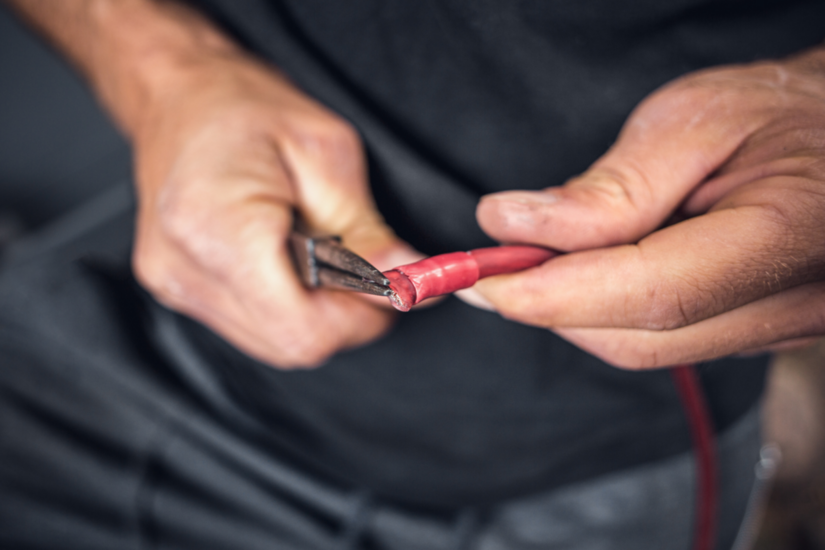
Physical damage breaks the insulation barrier directly, creating a path for leakage current. Common causes include:
- A nail or screw driven through a cable.
- A buried cable nicked during other trades' work.
- Rodent damage, crushing, or overheating at a loose connection.
Damage is often hidden. A cable buried in a wall or run through a floor void may have been compromised during building work months or years earlier, with no visible sign at the accessory. The insulation resistance test is frequently the first thing to reveal it. A sudden drop compared with a previous inspection is a strong clue that something has physically damaged the cable since.
When damage is suspected, the affected section of cable usually needs to be located and replaced. Patching over a damaged conductor is not acceptable. The whole point of the test is to confirm the installation is safe to energise, and a known point of insulation breakdown fails that test on its face.
Understanding insulation resistance problems takes more than reading test results. TradeFox helps learners build practical electrical knowledge with guided simulations that make fault finding, safe isolation, and inspection work easier to understand in real situations.
Get The Testing Right, Every Time
Reading these results well is a core competence for any electrician, and it rests on disciplined method: safe isolation first, the correct test voltage from Table 64, sensitive equipment accounted for, shared neutrals separated, and actual values recorded rather than a quick tick.
If you are building your inspection and testing skills, work directly from the current edition of BS 7671 (2018+A4:2026) and the IET’s published guidance so your practice stays compliant and your results stand up to scrutiny.