


Paint on workwear is part of the trade. Whether you’re cutting in a ceiling, rolling masonry, or finishing a kitchen with eggshell, sooner or later it lands on your overalls, t-shirt, or trousers. The cost of binning decorator’s whites or a branded polo every time it happens adds up fast, and there’s a right way and a wrong way to deal with it.
This guide walks tradesmen, apprentices, and anyone moving into the trades through how to get paint out of clothes properly. It covers what works, what doesn’t, and how to do it without breaching UK health and safety rules. The treatment depends entirely on whether you’re dealing with water-based or oil-based paint, and the two are not interchangeable.
Why the Type of Paint Determines Everything
Before you reach for any cleaner, you need to know what hit the fabric. The chemistry sets the method.
Water-Based Paint
Water-based paints use water as the carrier and form a polymer film as they dry. This category includes:
- Emulsion (matt, silk, soft sheen)
- Acrylic eggshell and acrylic gloss
- Vinyl matt and contract emulsion
- Most modern decorative trade paints sold in the UK
- Water-based gloss and water-based satinwood (Dulux Trade Diamond, Johnstone's Aqua, Crown Fastflow and similar). These behave like emulsion for stain removal even though the finish name suggests otherwise.
While wet, water-based paint is water-soluble and lifts with mild detergent. Once cured, the polymer film resists water and gets much harder to shift.
Oil-Based Paint
Oil-based paints use organic solvents as the carrier:
- Traditional alkyd gloss and undercoat
- Oil eggshell
- Some metal primers and red oxide
- Two-pack systems (epoxies, polyurethanes)
These will not come out with water at any stage. They need a compatible solvent (usually white spirit or a specialist remover) to break down.
Reaching for the wrong product wastes time and can drive paint deeper into the weave or set it permanently with heat from a tumble dryer.
Health and Safety First: What UK Rules Require
If you’re working as a tradesman, or employing one, paint and the solvents used to remove it fall under the Control of Substances Hazardous to Health Regulations 2002 (COSHH). The HSE is explicit that solvents found in paints, paint strippers, thinners and glues, including white spirit, acetone, toluene, xylene, and dichloromethane (DCM), can cause real harm. Exposure routes are the same whether you’re painting or cleaning up afterwards:
- Breathing vapours
- Skin contact (some solvents absorb through skin and can cause burns or dermatitis)
- Eye contact
- Ingestion from contaminated food, drink, or cigarettes
Painters and decorators are a recognised high-risk group. Spray painters are seven times more likely to develop dermatitis than the average working population, and brush hands handling solvent-contaminated rags daily aren’t far behind.
Practical Safety Rules Before Any Stain Treatment
- Ventilation. Work in a well-ventilated area. Open windows or use mechanical extraction. A garage with the door shut is not adequate ventilation for solvent work.
- Gloves. Wear chemical-resistant gloves rated for the solvent you're using. Nitrile is fine for water-based products and short white-spirit contact. For sustained solvent exposure, check the manufacturer's breakthrough data on the safety data sheet. Standard latex washing-up gloves are not suitable.
- RPE for larger jobs. For stain volumes beyond a small splash, or where ventilation is poor, respiratory protective equipment selected against the specific solvent is required under COSHH. The safety data sheet specifies the right filter type.
- Ignition sources. Keep solvents away from naked flames, pilot lights, hot tools, and electrical sparks. Solvent vapours are heavier than air and can travel along floors to find an ignition source.
- Skin. Never use solvent-soaked rags as wipes for skin. The HSE specifically warns against this. If you have product on your skin, wash with soap and water, then apply an emollient.
- DCM paint strippers. Using paint stripper containing dichloromethane (DCM) at work is prohibited unless the worker has completed and passed the HSE Competency Training Scheme and is certified.
For full duties, see the HSE COSHH guidance et le HSE construction solvents page.
Removing Water-Based Paint From Clothes
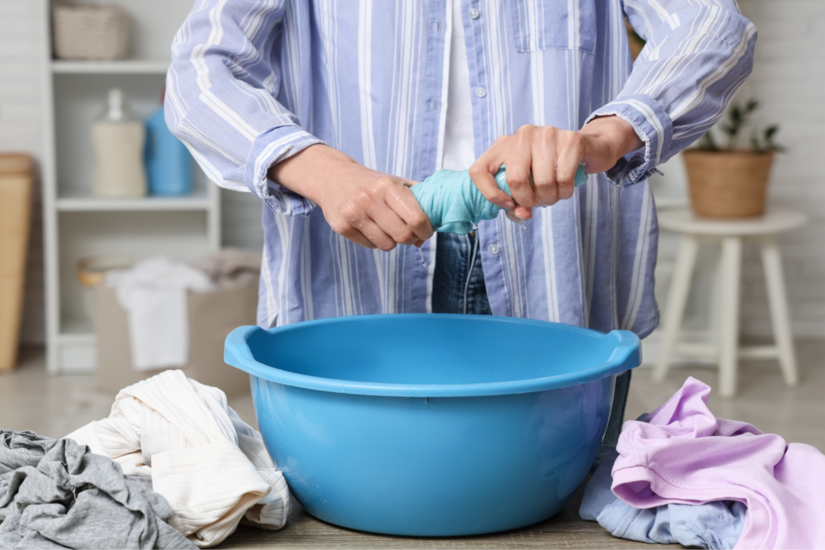
The single most important factor for water-based paint is time. Wet emulsion lifts in minutes. Dried emulsion, especially if it’s been heat-set in a dryer, is a much harder job.
Step 1: Scrape Off the Excess
While the paint is still wet or tacky, lift as much as possible off the fabric with the back of a knife, a stripping knife edge, or a stiff card. Work from the outside of the splash inwards so you don’t spread it further. Don’t rub. Rubbing pushes paint into the weave.
Step 2: Flush With Cold Water From the Back
Turn the garment inside out and run cold water through the back of the stain. The aim is to push the paint out the way it came in, not through the rest of the fabric. Hot water at this stage can start to set the polymer, so stick with cold.
Step 3: Apply Detergent and Work It In
Apply a small amount of liquid washing detergent or washing-up liquid directly to the stain. Work it in with your fingertips or a soft brush in a circular motion. Leave for ten to fifteen minutes. For tougher residues, an enzyme-based pre-wash works well on dried emulsion.
If you can still see the stain after pre-treatment, repeat the detergent step before washing. Heat plus residual paint equals a permanent stain.
Step 4: Machine Wash on the Right Temperature
Wash the garment on its own or with similar items, using your normal detergent. Use the hottest cycle the care label permits only after the stain has been physically lifted. Cotton workwear and most decorator’s whites tolerate 40 to 60 degrees comfortably. If you can still see colour, run the wash cold and re-treat afterwards.
Avoid the dryer until you’ve confirmed the stain is fully gone. Tumble drying will cross-link any remaining acrylic polymer above 130°C and lock the stain in.
Step 5: If the Paint Is Already Dry
- Soak the affected area in warm water for an hour to soften the film.
- Scrape gently with a blunt edge to lift the surface layer.
- Reapply detergent and repeat steps three and four.
- Persistent dried emulsion sometimes needs two or three wash cycles.
- For stubborn acrylic, isopropyl alcohol (surgical spirit) is the first-choice solvent. It breaks the polymer bonds without being too aggressive on dyes. Methylated spirits is a fallback for robust fabrics, but it contains methanol, which can shift dye on coloured cloth. Always patch test on an inside seam first.
Removing Oil-Based Paint From Clothes
Gloss, eggshell oil, alkyd undercoat, and traditional trim paints are oil-based. Speed still matters, but the method is fundamentally different. Every stage involves a flammable, skin-irritating solvent, so the safety considerations tighten up.
Step 1: Lift the Excess Without Spreading
Same principle as water-based: scrape the bulk off with a blunt edge, working inwards. Don’t blot with a clean rag in the middle of the splash, or you’ll widen the affected area.
Step 2: Check the Tin for the Recommended Solvent
The most reliable instruction sits on the side of the tin you’re using. Most UK alkyd trade paints specify white spirit. Some specialist coatings need specific thinners:
- Two-pack epoxies and polyurethanes
- Certain industrial enamels
- Cellulose finishes
Using the wrong thinner can make matters worse. The safety data sheet, which your employer is required to hold under COSHH, will confirm.
Step 3: Apply Solvent From the Back of the Fabric
- Place the stained area face down on a wad of clean white absorbent rag or kitchen paper.
- Apply white spirit (or the specified thinner) to the back of the stain, not the front.
- The solvent dissolves the paint and pushes it down into the absorbent material below.
- Replace the absorbent layer regularly as it picks up colour.
- Continue until the rag underneath stops taking on pigment.
Work in a ventilated space, away from any naked flame or hot surface, with chemical-resistant gloves and eye protection.
Step 4: Treat the Solvent Residue
You now have a stain that’s mostly removed but a fabric carrying solvent residue and oil. Apply washing-up liquid directly to the area, work it in, and rinse with warm water. The detergent helps emulsify any remaining oil so it lifts in the wash.
Step 5: Machine Wash Separately
Wash the garment alone, using a full detergent dose and the warmest cycle the care label allows. Don’t mix solvent-treated workwear with general laundry. Air dry rather than tumble dry until you’re certain the fabric no longer carries any solvent smell. Solvent residue in a hot dryer is a fire risk.
Disposing of Solvent-Soaked Rags Safely
This is the part most workers get wrong, and it has caused fires on sites and in vans.
Why It Matters
Solvent and paint-soaked rags can self-heat through oxidation and ignite without any external spark. The British Coatings Federation (BCF) is explicit on this: alkyd paints (both solvent-borne and water-borne) and any product containing more than 10% drying oils are a recognised spontaneous combustion hazard, alongside linseed-based products. That covers most traditional UK trade gloss and undercoat, not just exotic finishing oils.
Compliant Disposal Methods
The BCF recognises four valid options. Pick whichever fits the site:
- Metal container with a self-closing lid. Purpose-built for this and the safest end-of-day option on a busy site.
- Metal container of water. Soak the rags in water inside a metal container with a tight lid. Eliminates the oxidation reaction.
- Laid flat in a single layer. Spread rags out on a non-combustible surface outdoors, away from buildings, until fully dry. Then dispose of them.
- Washed out with warm soapy water before disposal.
Contaminated materials should be removed from the workplace at the end of each working day and stored outside.
Hazardous Waste Duty
Solvent waste in any meaningful quantity is classified as hazardous waste under the Hazardous Waste Regulations 2005 (England and Wales) and equivalent regulations in Scotland and Northern Ireland. Larger sites have a duty of care under the Environmental Protection Act 1990 to dispose through a licensed carrier, with consignment notes kept for the required period. Don’t tip solvent waste down a drain or into general site skips.
Specialist Cases on the Tools
A few situations come up regularly enough to be worth their own notes.
Spray Paint Overspray
Fine overspray often dries before you notice it.
- For water-based spray, a long warm soak with a biological detergent is your best first move.
- For solvent-based spray, the back-of-fabric solvent method applies, but expect lower success rates. The particles are tiny and well distributed across the weave.
Masonry and Exterior Paint
Usually water-based but heavily filled with pigment and binder. Treat as emulsion, expect to repeat the wash cycle, and pre-soak before any machine work.
Two-Pack and Epoxy Products
Once these have begun to cure, they’re effectively a plastic. No domestic process will remove them from fabric. The safest answer is to write off the garment. Don’t experiment with aggressive solvents on a partially cured stain at home; the fumes are significantly more hazardous than standard alkyd work, and many two-packs contain isocyanates or epoxy resins that cause occupational asthma and skin sensitisation.
Limewash and Mineral Paints
Brush off as much dust as possible when dry, then wash on a normal cycle. Don’t try to wet the stain in place, or you’ll spread the pigment.
Protecting the Garment Before You Need This Guide

The cheapest paint stain to deal with is the one that never reaches the fabric.
- Disposable coveralls cost a few pounds and pay for themselves quickly when you're cutting in oil-based gloss or working overhead.
- Cotton bib-and-brace overalls in proper decorator's drill take the hits and wash well.
- Aprons are sufficient for clean cutting-in work but won't protect you from drips while spraying or working from a ladder.
For employers, this also feeds back into COSHH duties. The Hierarchy of Controls and the HSE’s Schedule 2A Principles of Good Control Practice rank PPE as the last line of defence, not the first. Substituting solvent-based products with water-based equivalents where the specification allows, providing proper PPE rather than relying on workers to bring their own, and giving people somewhere clean to change at the end of the day are all controls that sit higher up the hierarchy than handing someone a bottle of white spirit and a rag.
The HSE’s skin at work guidance et HSG262 on managing skin exposure set out the expected approach in detail. TradeFox also supports safer trade learning with interactive programs that help build competence in a steady, practical way.
Quick Reference
Water-based paint: scrape, cold water from the back, detergent, work it in, hot wash only after the stain has lifted, air dry until confirmed clean.
Oil-based paint: scrape, white spirit (or specified thinner) applied from the back onto absorbent material, detergent rinse, separate hot wash, air dry, dispose of rags safely in a metal container.
Always: never tumble dry until the stain is verified gone, and never treat solvent work as casual cleanup. Knowing how to remove paint from workwear is part of the trade. Doing it safely is what keeps you working into next decade.