

Grab the wrong extinguisher and you can turn a small fire into a serious one. Put water on burning fat and it erupts. Aim foam at live wiring and you risk a shock straight back up the jet. Tradesmen work around all of it: hot cutting, flammable solvents, gas bottles, fuse boards, deep fryers on a kitchen fit-out. That is why every tradesman needs a solid handle on the fire extinguisher classes UK sites are required to follow, not a vague memory of the colours.
Before you pick up an extinguisher
Your first duty is people, not property. Raise the alarm, get everyone out, and call 999. Only tackle a fire yourself if it is small, you have been trained, and you have a clear escape route behind you. If there is any doubt, leave it, close the door behind you, and let the fire service deal with it. An extinguisher buys you time and covers a first-aid response, nothing more.
The six fire classes you'll meet on site
UK fire safety sorts fires by the fuel that feeds them, not by how they start. The fuel decides what will put the fire out, so this is where it begins. Six categories come up on real jobs:
- Class A: Solid materials like wood, paper, textiles, cardboard and most plastics. The everyday fire on almost any site.
- Class B: Flammable liquids such as petrol, diesel, paint, thinners, solvents and adhesives.
- Class C: Flammable gases including propane, butane, methane and LPG, common around heating rigs and gas cutting.
- Class D: Burning metals like magnesium, titanium and aluminium swarf. Niche, but real in fabrication and machining.
- Class F: Cooking oils and fats in deep fryers, which burn far hotter than ordinary liquids. Relevant on any catering job.
- Electrical: Fires in live electrical equipment. This is not a lettered class in the UK, because the surrounding material is what actually burns once the fault ignites it, but it is handled separately because live current changes how you fight it.
Fire extinguisher colours and the BS EN 3 code
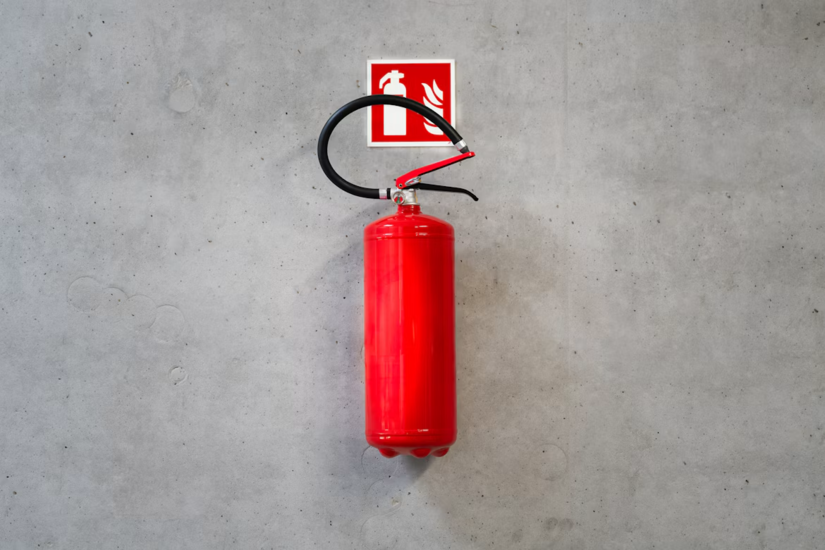
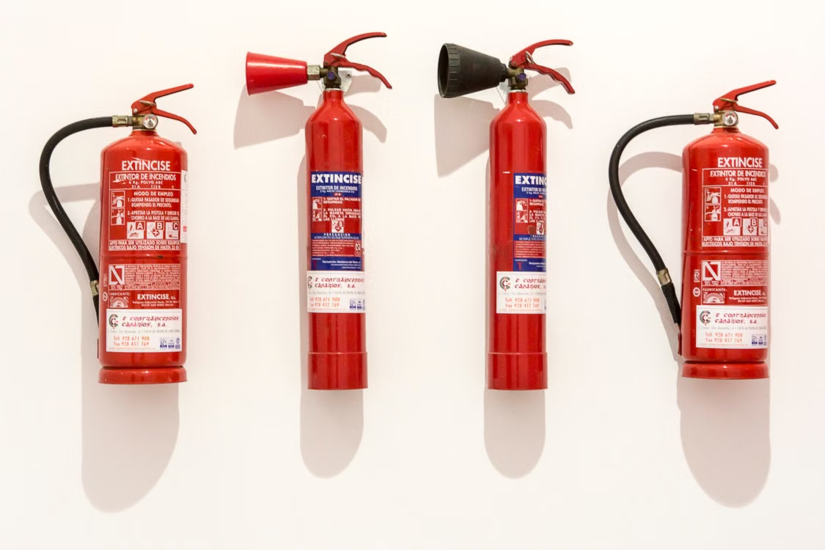
Every extinguisher sold here is built to the British Standard BS EN 3, which is why they all share a signal red body with a coloured block marking the contents. The colour tells you the medium inside at a glance. Learning the fire extinguisher classes UK colour system takes five minutes and can save a life.
- Red label, water: Class A only.
- Cream label, foam (AFFF): Class A and Class B.
- Blue label, dry powder: Classes A, B and C, plus safe on live electrical equipment.
- Black label, CO2: Class B and electrical.
- Yellow label, wet chemical: Class F, and usually Class A as well.
Water mist units also carry a red label and cover several classes thanks to a fine deionised spray, though you should always check the rating printed on the unit. One more thing: if you ever find a green Halon extinguisher, it has been banned from use in the UK for years and needs proper disposal.
Which fire extinguisher to use on each fire
This is the part of the fire extinguisher classes UK system that actually protects people and property. Each class pairs with specific media, and a few pairings are genuinely dangerous.
Class A fires (solid materials)
Water, foam, dry powder, wet chemical and water mist all work. Water and foam are the cheap, effective choice on timber-heavy sites.
Class B fires (flammable liquids)
Foam smothers the surface and stops reignition in a way water cannot. CO2 and dry powder also knock it down. Never put water on a flammable liquid, because it spreads the fuel and the flames with it.
Class C fires (flammable gases)
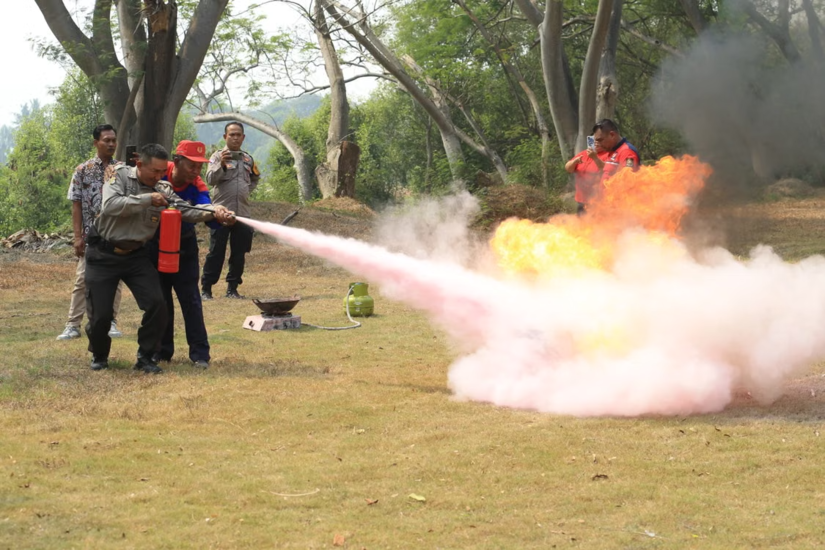
Gas fires are the exception to everything above. Current fire and rescue service guidance is clear that gas fires should not normally be tackled with an extinguisher, because putting out the flame while gas keeps flowing can create an explosive mixture that is a greater hazard than the original fire. Isolate the supply at the valve if you can reach it safely, get out, and call 999. Dry powder only comes into it for a trained responder dealing with a small flame once the gas is already off.
Class D fires (metals)
Burning metals need a specialist Class D powder matched to the metal, used by someone trained for it. Standard extinguishers make them worse, and water reacts violently with burning metal. Watch one trap: a lithium-ion battery fire, like a failed power-tool pack, is not a Class D metal fire, and a Class D powder is not built for it. Move anything flammable away if you safely can, get clear, and call 999.
Class F fires (cooking oils)
Wet chemical is the one. It cools the oil and lays a soapy seal over the surface. Water and ordinary foam are dangerous here, and CO2 can blast burning oil out of the pan. Any kitchen job wants a wet chemical unit and a fire blanket within reach.
Electrical fires and live equipment
Electricians hit this most, but any trade can run into it: an overloaded board, a failing motor, scorched cabling. Isolate the power first if you can do it safely, because once the supply is dead you may be dealing with a plain Class A fire. Two media suit live equipment:
- CO2: The usual indoor pick, since it leaves no residue and will not wreck the kit. Hold the handle, never the horn, because it gets severely cold in use.
- Dry powder: Effective and non-conductive, but it kills visibility and leaves corrosive residue, so keep it for outdoor and vehicle use where you can.
In a small or poorly ventilated space, CO2 pushes out oxygen, so ventilate and get clear once the fire is down.
Dangerous mismatches to avoid
- Water or foam on live electrics: Risk of a shock back up the jet.
- Water on burning oil or fat: A violent steam explosion that throws flames outward.
- CO2 on a chip-pan fire: The blast can scatter the burning oil.
- Dry powder indoors: Visibility drops to nothing, and the residue gets into everything.
What UK law expects from the responsible person
Extinguisher provision is not optional on commercial premises. Under the Regulatory Reform (Fire Safety) Order 2005, the responsible person for a workplace must equip it with appropriate fire-fighting equipment, keep it easy to reach, and mark it with signs. Scotland works under the Fire (Scotland) Act 2005 and Northern Ireland under its own fire safety regulations, but the practical duty is the same across the UK: the right extinguishers, in the right places, properly maintained.
- Selection and siting: These follow BS 5306-8, with no more than 30 metres of travel to reach a Class A extinguisher.
- Position: Units belong on escape routes and beside specific risks, mounted so they stay visible and reachable.
- Servicing: An annual basic service by a competent person under BS 5306-3, an extended service on water, foam, powder and wet chemical units around every five years, and a longer overhaul on CO2 units at about ten years.
- Full duties: The government's workplace fire safety guidance sets out the testing, maintenance and training obligations in detail.
Working around electrical equipment also means understanding safe isolation. Explore TradeFox’s safe isolation training and follow guided simulations at your own pace, with feedback to help you review what you have learned along the way.
Picking cover for your trade
The right mix depends on what you do and what is around you:
- Electricians: CO2 as the core unit for live work, backed by water or foam for the surrounding Class A materials.
- Welders, grinders and hot works: Dry powder or CO2 to hand while cutting, plus a fire watch afterward, since hot works can start a fire long after you have packed up.
- Plumbers on blowtorches: Same hot-works thinking, with CO2 or powder within arm's reach.
- Catering and kitchen fit-outs: Wet chemical plus a fire blanket, every single time.
- Vans and site vehicles: A 2kg dry powder as the practical minimum for a mobile all-rounder across Classes A, B and C and live electrical.
- General building sites: Water or foam for the bulk timber and packaging, with CO2 stationed near temporary power.
Fire extinguisher classes: UK rules reward one simple habit: read the label, match the colour to the fuel, and never aim a jet at anything that will react to it. Get that right and a small fire stays small. Learn the classes now, check what is actually on your site, and confirm every unit is in date and in reach before the day you need it.