

A gurgling toilet is rarely a standalone fault. For the tradesman on site, that bubbling sound is a diagnostic gift: it tells you air is being pulled or pushed through a trap seal that should be holding steady. The skill is reading what the sound is actually saying before you reach for the drain rods or quote a stack repair.
This guide breaks down the mechanics, the UK regulatory framework that governs corrective work, and the drain warning signs that separate a quick clear from a notifiable drainage job. It is written for working tradesmen and those training into the trade, not for DIYers.
What Toilet Gurgling Actually Means
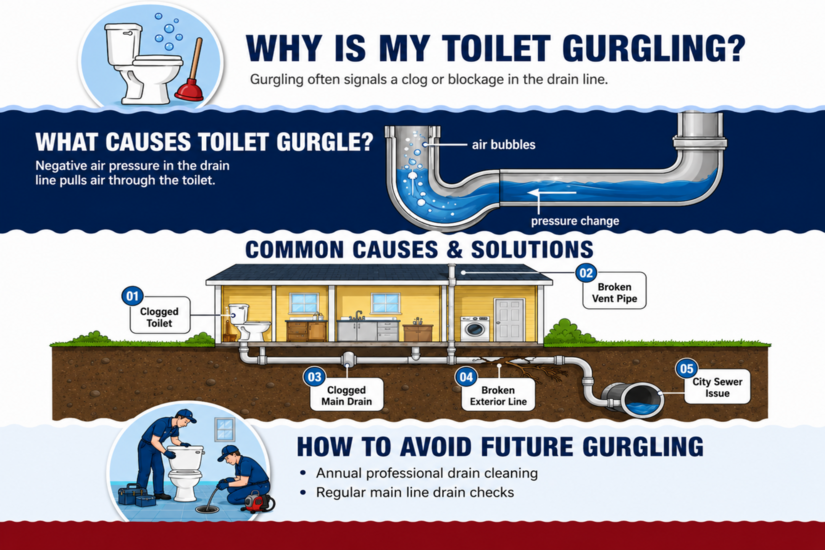
When a WC is flushed, water moving through the branch and into the discharge stack displaces air. In a correctly designed system, that air is relieved through ventilation so the trap seal stays intact. Toilet gurgling happens when air cannot move freely. Instead of venting away, pressure forces its way back through the nearest water seal, dragging air bubbles up through the pan.
The sound is the symptom. The pressure imbalance is the fault.
Two broad causes sit behind almost every case:
- A partial blockage somewhere downstream, restricting flow and creating negative pressure as water tries to pass.
- A venting defect, where the system cannot draw in replacement air to balance the pressure swings caused by discharge.
Distinguishing between the two on site saves hours and prevents the classic mistake of rodding a drain that was never blocked.
Why The Trap Seal Matters
Under UK guidance, trap seals are not optional comfort features. Every trap should maintain a water seal of at least 25mm under working and test conditions, as set out in Approved Document H and supported by BS EN 12056-2.
One point worth holding in mind: 25mm is the minimum the seal must never drop below under pressure, not the design depth at installation. Part H Table 1 specifies deeper design seals for most appliances, typically 50mm for a WC pan and up to 75mm for sinks and basins. When that seal is threatened, foul air enters the occupied space, which is both a nuisance and a health concern.
Blockages: Reading The Flow
A blockage-driven gurgle usually comes with corroborating evidence. Slow draining elsewhere in the property, water backing up in a lower-level appliance when an upstairs WC is flushed, and inconsistent flush performance all point downstream. The lower the gurgling appliance sits in the building, the further down the system the obstruction is likely to be.
Work the system logically:
- A single gurgling WC with everything else draining cleanly suggests a localised branch restriction.
- Multiple appliances gurgling together, particularly across floors, points to the main stack or the underground drain.
- A ground floor WC bubbling when the bath empties almost always means a shared drain obstruction rather than a venting issue.
Common Causes Of Drain Blockages
Common culprits in domestic systems include:
- Compacted wipes and non-flushable products.
- Scale build-up in older pipework.
- Root ingress at joints in below-ground clay drains.
- Displaced or collapsed pipe sections.
For commercial sites, fat, oil, and grease accumulation and high-traffic loading change the picture considerably. CCTV drain inspection is the professional standard for confirming the nature and position of an obstruction before excavation or no-dig repair is specified. Guessing wastes money and erodes client trust.
The Flush Volume Factor
Modern water-efficient WCs add a variable. Part H notes that flush volumes below 5 litres carry an increased risk of blockage, because there is less water to carry solids along the branch. On a recurring blockage callout, check the flush volume before assuming the pipework is at fault. Guidance on pipework suitable for flush volumes as low as 4 litres sits in BS EN 12056.
Venting Problems: The Quieter Culprit
Where flow is clearly fine but the gurgling persists, ventilation is the prime suspect. The job of the soil and vent pipe is to allow air to enter and leave the drainage system so pressure stays balanced and trap seals survive. When ventilation fails, every discharge becomes a contest between water and trapped air.
Several venting faults recur on site:
- A blocked vent terminal at roof level, often from leaves, frost, or bird nesting, stopping the stack breathing.
- A failed or badly positioned air admittance valve that cannot draw air when needed.
- An undersized or poorly routed branch that self-siphons, where discharging water pulls its own trap seal out behind it.
Each of these produces toilet gurgling without any true blockage in the flow path, which is exactly why rodding never fixes them.
Air Admittance Valves And Their Limits
Air admittance valves, sometimes called Durgo valves, are mechanical one-way devices that let air into the pipework while preventing foul gas escaping. They are widely used where routing a vent to open air is impractical, and they are commonly fitted in the roof space or on a stub stack.
They have firm limits worth knowing:
- BS EN 12056-2 and BS EN 12380 govern their correct positioning, sizing, and certification.
- At least one open vent to the atmosphere is generally still required on a system so foul gases can be relieved safely. An AAV alone cannot vent gas out.
- In England and Wales, statutory guidance states AAVs should not be used outside buildings. Scotland allows external use only under certified conditions.
A seized AAV, or one fitted in the wrong location, is a frequent cause of recurrent gurgling that no amount of rodding will resolve.
Ventilation Strategy On Larger Jobs
For larger and high-rise installations, the ventilation strategy becomes more demanding:
- Primary ventilation relies on air flow in the main stack.
- Primary and secondary ventilation introduces a separate ventilating stack or branch ventilation pipe to control pressure.
Where you are working on anything beyond a simple domestic layout, the design data in BS EN 12056-2 governs the sizing decisions, not assumption.
Drain Warning Signs Worth Acting On
A gurgling toilet sits within a wider set of drain warning signs that a competent tradesman should never dismiss. Treat the following as escalation triggers rather than minor nuisances:
- Recurring gurgling that returns shortly after clearing, suggesting a structural defect, persistent venting fault, or root ingress.
- Foul odours indoors, indicating trap seals are failing and foul air is entering habitable space.
- Slow drainage across multiple appliances, pointing to a main line restriction rather than isolated branch issues.
- Waste water backing up into a lower appliance, signalling the system is surcharging and cannot cope with normal flow.
- Damp, staining, or smell around a soil stack base, which can indicate a failed joint or cracked pipe leaking foul water.
Any of these justifies proper investigation. CCTV survey, manometer testing, and visual inspection of vent terminals form the backbone of a credible diagnosis. Clearing the immediate symptom and moving on is tempting on a busy day, but the callback that follows costs more than doing it once.
Working Safely On Drainage
This matters as much as the diagnosis. Approved Document H is explicit that laying and maintaining drains are hazardous operations, and the work carries real risk the moment you go below ground.
Keep the following front of mind:
- Confined spaces such as manholes, inspection chambers, and deep drainage runs fall under the Confined Spaces Regulations 1997. Safe systems of work and permits to work may be required.
- Excavation work must follow the Construction (Design and Management) Regulations and recognised shoring practice. Unsupported trenches collapse without warning.
- Foul drainage carries biological hazards. Appropriate PPE, hygiene controls, and gas awareness are not optional on foul systems.
None of this is paperwork for its own sake. It is the difference between a routine job and a serious incident.
The UK Regulatory Framework
Corrective drainage work in England is governed by the Building Regulations 2010, with practical guidance set out in Approved Document H (Drainage and Waste Disposal), which took effect in its current form on 1 October 2015. The supporting technical standards are BS EN 12056 for gravity drainage systems inside buildings and BS 8000-13 for workmanship on above-ground drainage. Compliance can be demonstrated either by following Approved Document H directly or by adhering to these standards.
Devolved Nations
Part H applies to England. The other UK nations run their own equivalent regimes, so confirm which applies before you quote or start:
- Wales: broadly aligned building regulations with separate administration.
- Scotland: the Technical Handbooks 2022 (domestic and non-domestic).
- Northern Ireland: Technical Booklet N.
Test Figures You Should Know
The performance requirements are specific and testable:
- Above-ground sanitary pipework should withstand an air test of at least 38mm water gauge (3.8 millibar) held for three minutes without the pressure dropping.
- Every trap should retain its minimum 25mm seal under working conditions.
- A soap solution can locate leaks under pressure. Smoke testing is an option but is not recommended for PVC-U pipework.
Where your work involves new drainage, alterations to existing drainage, or building over or near a sewer, it may be notifiable and subject to inspection by Building Control before any backfilling. Confirm the notification position before you start rather than after.
Knowing the warning signs and the test figures is one thing, but reading them with confidence comes from practice. TradeFox builds that confidence through safe, hands-on plumbing simulations you can work through at your own pace. Give it a go today.
A Practical Diagnostic Sequence
For the tradesman approaching the job methodically, a clear sequence pays off:
- Confirm whether flow is actually restricted by observing how quickly the pan and other appliances drain.
- Establish whether the gurgling is isolated to one appliance or shared across several, and across floors.
- Inspect the vent terminal and any air admittance valve before assuming a blockage.
- Use CCTV to confirm the position and nature of any obstruction below ground.
- Apply the correct test procedure and pressure figures to verify the integrity of any repair.
Diagnosing the fault correctly the first time is the difference between a reputation built on solved problems and one undermined by repeat visits. The sound is simple. The system behind it rewards the tradesman who understands the mechanics, respects the regulations, and tests the work properly.