

The statistics surrounding historical building materials in the United Kingdom present a sobering reality for modern tradesmen. According to the Health and Safety Executive, asbestos-related diseases claim the lives of over five thousand workers each year. A significant proportion of these casualties are not factory workers from the mid twentieth century. They are carpenters, plumbers, and electricians who were exposed to hidden fibres during routine renovation, maintenance, and installation work.
Relying on assumptions is a dangerous game for professionals operating on-site today. Prioritising Asbestos Awareness in Construction is not merely a regulatory box to tick. It is a fundamental survival skill. Understanding exactly where these hazardous materials remain concealed is vital. Recognising the warning signs before work begins separates competent tradesmen from those putting themselves and their colleagues at severe risk. Adhering strictly to UK safety legislation is non-negotiable.
The 1999 Ban and the Legacy of UK Buildings
Workers must grasp the timeline of material usage in the United Kingdom to understand the current threat level. The importation, supply, and use of blue asbestos (crocidolite) and brown asbestos (amosite) were banned in 1985. White asbestos (chrysotile) continued to be actively used in the construction industry until a total ban was enacted late in 1999.
The critical takeaway for any tradesperson is clear. Any commercial, industrial, or residential building constructed or refurbished before the year 2000 must be treated as a potential hazard zone. Because the material was cheap, highly durable, fire resistant, and an excellent insulator, it was integrated into thousands of different building products. It is woven into the very fabric of twentieth-century British architecture. The risk did not disappear with the 1999 legislation. The hazard became locked inside the walls, ceilings, and floors of millions of properties, just waiting for a drill bit or a wrecking bar to disturb it.
Hidden Hazards: Where Risk Still Shows Up
One of the most dangerous misconceptions on site is that hazardous fibres are always obvious. In reality, these fibres are microscopic and completely invisible to the naked eye when airborne. The materials containing them often look identical to modern, safe equivalents. Different trades face entirely different exposure profiles based on the specific tasks they carry out.
Electricians and Cabling Specialists
Electrical contractors frequently work in the hidden voids of a building. Electricians are at high risk of encountering Asbestos Insulating Board (AIB) when routing new cables or replacing old systems. AIB was routinely used to line electrical cupboards, form ceiling tiles, and create firebreaks in ceiling cavities. Older fuse boards and switchgear often contain internal flash guards to prevent electrical fires.
Plumbers and Heating Engineers
Thermal insulation presents a massive threat for those working with pipework and boilers. Old pipes routed through lofts, basements, and airing cupboards were often wrapped in lagging. This material is particularly dangerous because it is highly friable. Friable means it crumbles easily under light pressure, releasing millions of deadly fibres into the air. Plumbers must also be extremely cautious around old water tanks, toilet cisterns, and the rope seals inside historic boiler units.
Carpenters, Joiners, and Roofers
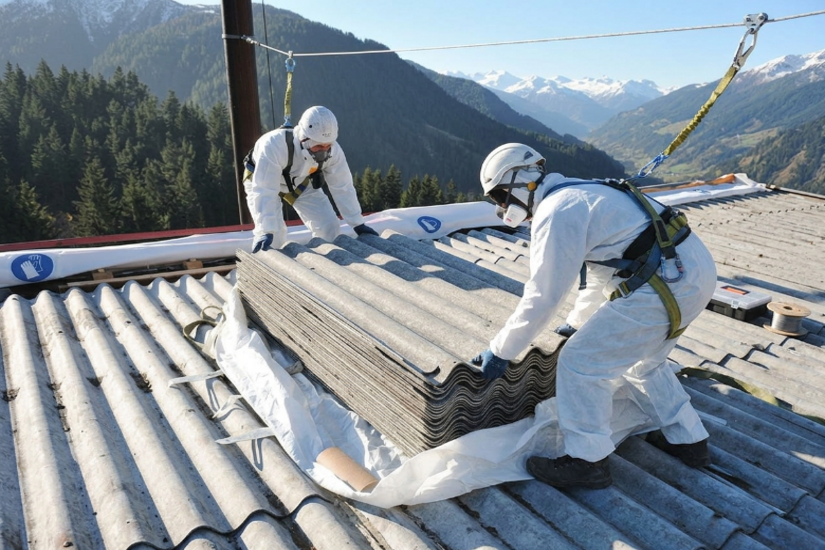
Woodworkers and roofing contractors face a broad spectrum of Asbestos Containing Materials (ACMs). Corrugated roofing sheets on garages and industrial sheds are frequently made from asbestos cement. Cement is generally less friable than lagging, but cutting or breaking these sheets instantly releases fibres. Carpenters replacing fascia boards must be aware that older soffits are often constructed from AIB. Inside the property, vinyl floor tiles and the adhesive used to secure them frequently contain chrysotile.
Tradesmen must also be vigilant regarding textured decorative coatings, commonly known by the trade name Artex. Artex is considered lower risk when completely intact and left alone. Sanding, scraping, or drilling into Artex for replastering instantly makes it highly hazardous and releases deadly fibres into the breathing zone.
What Workers Must Recognise Before Starting a Job
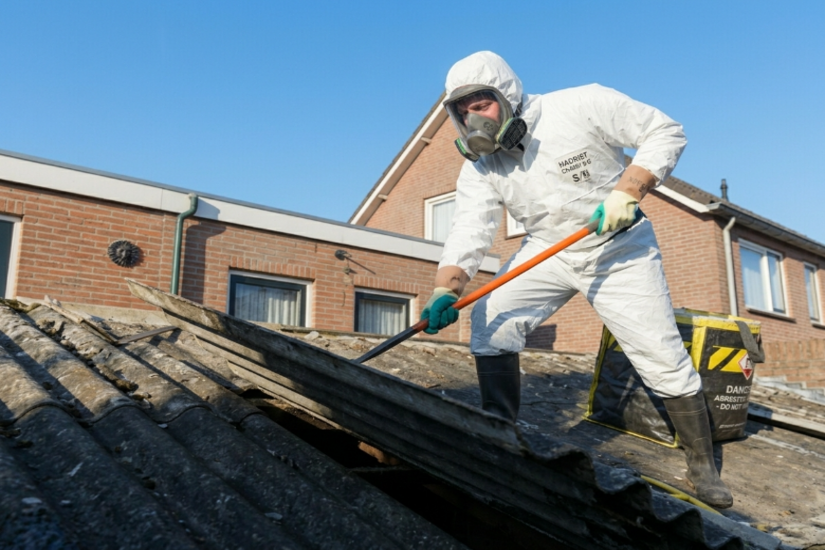
You cannot identify hazardous fibres by smell. Visual inspections alone are never conclusive. Proper Asbestos Awareness in Construction means questioning the age and history of the building before taking a single tool out of the van.
Every tradesperson must recognise the vital importance of proper surveys. Under UK law, specifically the Control of Asbestos Regulations 2012, there is a strict ‘Duty to Manage’ asbestos in non-domestic premises. The duty holder is usually the building owner or the facility manager. They are legally obligated to locate the presence of ACMs, assess their condition, and maintain an up to date register.
Before a worker commences any task in a pre-2000 commercial building, they must request and review this register. However, there is a massive difference between everyday management and invasive building work.
- Management Surveys : The standard Asbestos Register is usually based on a Management Survey. This only covers surface level, everyday use of the building.
- Refurbishment and Demolition (R&D) Surveys : If your work is invasive, such as knocking through walls, lifting floorboards, or drilling into ceiling voids, you must ensure a Refurbishment and Demolition Survey has been completed. Relying solely on a standard management register for invasive work is a dangerous trap and entirely non compliant.
The Danger in Domestic Properties
Tradesmen must be acutely aware of domestic properties. A homeowner does not hold a legal ‘Duty to Manage’ under the regulations. Your employer, or you if you are self employed, still has a strict legal obligation under Regulation 5 of CAR 2012 to assess the risk and identify hazards before beginning work. You cannot simply assume a domestic property is safe just because there is no duty holder to provide a register. You must ask questions about the age of the property and request testing if suspicious materials are present before cutting into a pre 2000 home.
UK Regulations and Strict Compliance
The Control of Asbestos Regulations 2012 (CAR 2012) forms the backbone of occupational safety regarding this material in the UK. The legislation strictly dictates how the material must be managed, who is allowed to remove it, and what training is legally required for those who might accidentally disturb it.
CAR 2012 requires that employers ensure their workers receive adequate information, instruction, and training. This means mandatory annual awareness training for general tradesmen. This training does not qualify a carpenter or a plumber to remove the material. It equips them with the knowledge to avoid disturbing it.
The regulations clearly divide work into three distinct categories.
- Licensed work.
- Notifiable non-licensed work.
- Non-licensed work.
The vast majority of high risk removal, such as stripping AIB or lagging, requires a specialist contractor holding a license issued by the Health and Safety Executive. General site workers must recognise these boundaries and never attempt to clear or remove high risk materials themselves.
The Crucial Role of Asbestos Awareness in Construction
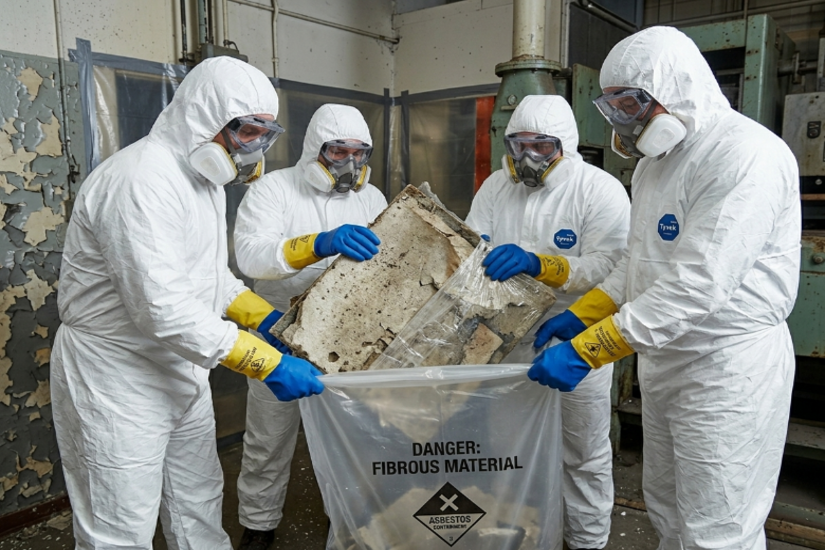
Understanding the long-term health implications is a core component of site safety. Diseases caused by inhaling these fibres have a notoriously long latency period. It can take anywhere from fifteen to sixty years between the initial exposure and the onset of symptoms. This delayed reaction often lulls inexperienced workers into a false sense of security. Because there is no immediate pain or coughing fit when inhaling the fibres, some individuals mistakenly believe the danger is exaggerated.
The reality is uncompromising. Conditions such as mesothelioma, an aggressive cancer of the lung lining, are almost exclusively caused by this specific type of exposure and are entirely incurable. Asbestosis is a severe scarring of the lung tissue that causes progressive and debilitating shortness of breath. By embedding strict Asbestos Awareness in Construction into daily site routines, the industry can actively prevent the next generation of tradesmen from falling victim to these entirely preventable diseases.
This is why asbestos awareness must be treated as part of everyday site behaviour rather than occasional training. Recognising potential risks, following proper procedures, and avoiding unnecessary exposure are all essential steps in protecting long-term health. TradeFox helps learners understand these risks through guided training that builds awareness of safe working practices and reinforces the importance of handling hazardous materials correctly.
Action Plan: Steps to Take When You Suspect a Hazard
Even with meticulous planning and thorough R&D surveys, hidden pockets of ACMs can be uncovered during demolition or deep renovation work. Every tradesperson must know exactly how to react when they encounter a suspicious material.
- Stop Work Immediately : The moment you suspect you have uncovered an ACM, power down your tools. Do not attempt to drill, cut, sweep, or move the material.
- Clear the Area : Evacuate the immediate vicinity. Ensure that colleagues and other site workers are moved away from the potential exposure zone.
- Prevent Access : Close doors, put up temporary barrier tape, and clearly signpost the area to prevent accidental entry by others.
- Report the Discovery : Notify the site manager, the principal contractor, or the client immediately.
- Wait for Professional Assessment : Work must only resume once a UKAS-accredited surveyor has taken samples of the material under controlled conditions and a laboratory has confirmed the results. A licensed removal contractor will need to be engaged if the results are positive.
Establishing a strong foundation of safety knowledge is non-negotiable for anyone entering the trades. The risks embedded in our older building stock are permanent. The consequences of ignorance are fatal. By respecting the history of the materials, adhering rigidly to the HSE regulations, and refusing to compromise on site safety protocols, tradesmen can ensure they protect both their own lives and the lives of those working alongside them.