

Working around buried utilities presents one of the most serious hazards in construction, utilities maintenance, and civil engineering. Underground electrical cables, telecom lines, and service infrastructure are often hidden beneath roads, pavements, and development sites. Striking these assets during excavation can cause serious injury, service outages, legal consequences, and costly delays.
A cable locator is one of the most widely used tools for detecting underground electrical services before excavation begins. Professional tradesmen rely on these devices to help identify the approximate route of buried cables so work can proceed safely.
However, detection equipment does not eliminate risk on its own. Locating equipment can produce inaccurate depth estimates, misleading signals, and false positives under certain conditions. Safe excavation requires a structured process that combines detection tools, utility records, and careful verification.
Guidance from the UK Health and Safety Executive emphasises the importance of proper planning, locating buried services, and using safe digging practices before excavation begins. For authoritative guidance, consult HSE’s publication HSG47 Avoiding Danger from Underground Services.
What A Cable Locator Does
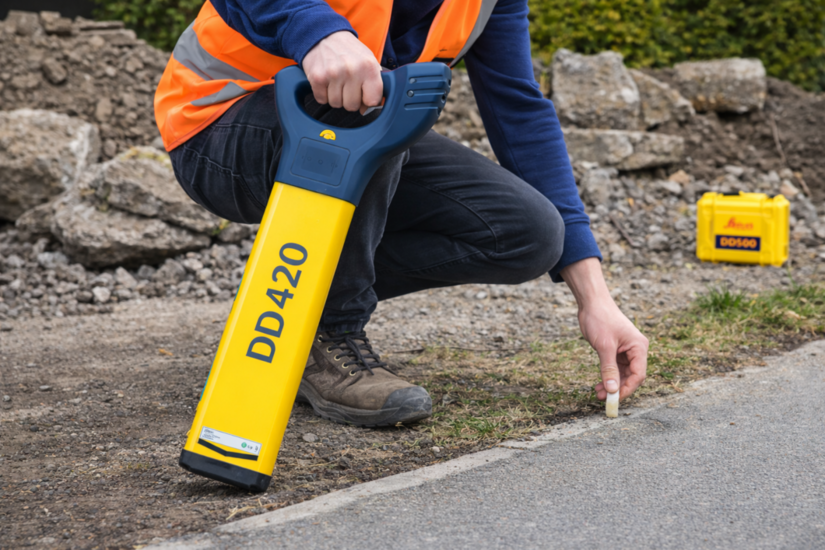
A cable locator is an electronic detection instrument used to trace underground metallic utilities, particularly electrical cables. These tools are commonly used by groundworkers, utility contractors, and civil engineering teams before excavation.
Most professional locating systems include two components.
- Signal Transmitter : The transmitter introduces an electrical signal onto a cable or pipe.
- Receiver : The receiver detects that signal from above ground and allows the operator to trace the route of the buried service.
When used correctly, the equipment helps operators identify the likely path of underground infrastructure and mark its route on the ground before excavation begins.
Cable locating equipment is typically used during:
- Utility installation projects
- Maintenance and repair work
- Ground investigation surveys
- Infrastructure upgrades
- Fault detection and service tracing
Despite their importance, locating devices should always be treated as part of a wider safety process rather than a standalone solution.
Failure Point Two: Gland Seal Or Spindle Packing Leakage
Many stopcocks include sealing material around the spindle to prevent water escaping along the valve stem.
This seal can deteriorate over time due to age, pressure changes, or repeated valve movement. When the seal begins to fail, water may appear around the handle or spindle area.
Common signs include:
- Moisture around the valve spindle
- Mineral deposits forming near the handle
- Leakage that becomes visible when the valve is operated
A small leak from the gland area may sometimes be reduced by carefully adjusting the gland nut. However, persistent leakage can indicate internal wear that requires further assessment or valve replacement.
Failure Point Three: Corrosion Inside The Valve Body
Internal corrosion is a frequent issue in older brass stopcocks that have been exposed to decades of water flow and mineral deposits.
Corrosion can damage the valve seat or create rough surfaces inside the valve body. When this happens the sealing components cannot form a proper seal.
Indicators of corrosion related failure include:
- Continuous dripping even when the valve appears closed
- Rough or stiff movement when operating the valve
- Visible corrosion around threaded sections
Corrosion within the valve body is often a strong indication that replacement may be the most reliable long term solution.
Accuracy Limits Of Cable Locating Equipment
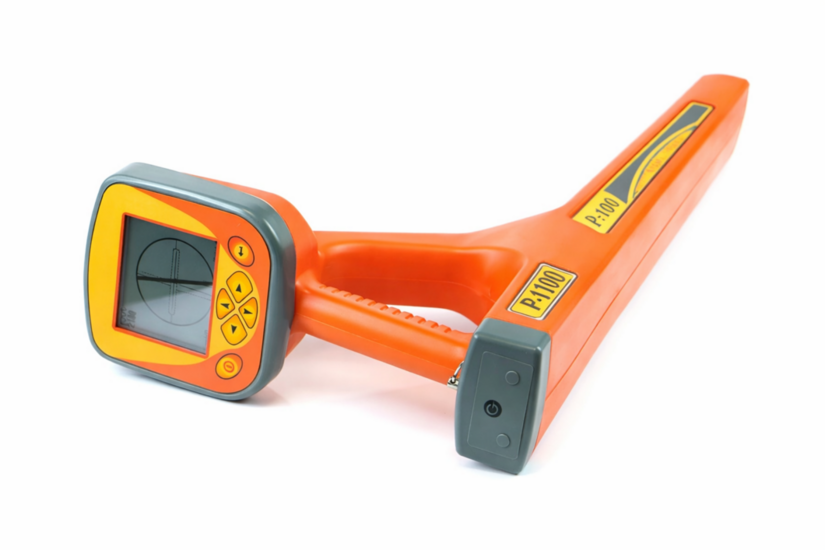
A cable locator can provide valuable information about the route of underground services, but results must always be interpreted carefully. Depth readings from locating equipment should be treated as indicative estimates rather than exact measurements. Signal distortion, ground conditions, and interference can affect accuracy.
Several factors influence locating performance.
Ground Conditions
Soil composition can affect electromagnetic signals. Clay soils, mineralised ground, and high moisture levels can distort signals and make cable routes harder to trace accurately.
Utility Congestion
Urban environments often contain many buried services in close proximity. Signals can transfer between nearby cables, creating confusion about which service is being detected.
Depth Of Burial
Signals weaken as cables are buried deeper underground. Very deep utilities may produce unreliable or inconsistent readings.
Signal Interference
Nearby power lines, electrical equipment, and metallic structures can interfere with signals and affect readings on the receiver.
Operator Skill
The quality of results depends heavily on correct technique. Improper transmitter setup, incorrect frequency selection, or misinterpretation of signals can lead to inaccurate locating results. Operators must be properly trained to use locating equipment safely and effectively.
Understanding False Positives
False positives occur when a locator detects a signal that does not correspond to the intended utility. This can happen for several reasons.
Signal Coupling
Signals applied to one cable can transfer to nearby cables running parallel underground. The receiver may detect the adjacent cable instead of the original target.
Metallic Structures
Buried metal objects such as reinforcement bars, fences, drainage systems, or scrap materials may carry electromagnetic signals.
These objects can appear on the receiver as if they were buried utilities.
Signal Spread During Induction
Induction signals can spread through the ground and energise multiple utilities at once. This can make it difficult to determine which line is actually being traced.
Abandoned Infrastructure
Old or unused cables may still carry induced signals. These services may appear active during detection even though they are no longer connected. For these reasons, locating results should always be verified using additional methods before excavation begins.
UK Safety Guidance For Underground Service Detection
Work near underground utilities in the United Kingdom is guided by safety legislation, employer procedures, and official guidance documents. One of the most important references is HSE publication HSG47 Avoiding Danger from Underground Services.
This guidance emphasises three key stages:
- Planning the work
- Locating and identifying buried services
- Carrying out excavation safely
Cable locating equipment forms part of the locating stage. However, HSE guidance makes clear that detection tools must be combined with other information sources.
These sources include:
- Utility company service drawings
- Site surveys
- Detection equipment
- Careful excavation practices
Further information is available through the Health and Safety Executive guidance on underground cables and safe working practices.
Why A Cable Locator Should Not Be Used Alone
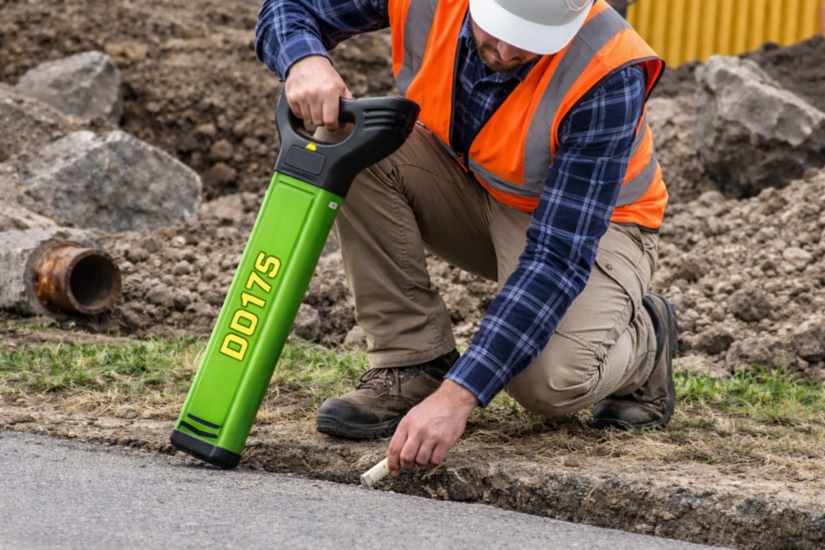
A cable locator plays an important role in detecting underground utilities, but it cannot identify every buried service. Underground infrastructure is often complex, poorly documented, or installed over many decades. Some services may not carry detectable signals at all. For this reason, safe excavation requires several layers of verification.
Professional teams typically combine:
- Utility record searches
- Electromagnetic locating
- Careful site inspection
- Trial holes
- Controlled excavation methods
Using multiple sources of information significantly reduces the risk of striking buried services.
Additional Verification Methods Used By Professionals
Professional contractors often use additional methods to confirm the location of underground utilities before excavation.
Ground Penetrating Radar
Ground penetrating radar uses radio waves to scan below the ground surface.
This technology can assist in identifying both metallic and some non-metallic utilities depending on soil conditions, material contrast, and depth.
Radar interpretation requires trained operators and may not perform well in all ground types.
Vacuum Excavation
Vacuum excavation removes soil using air or water combined with suction equipment.
This method allows buried services to be exposed carefully while reducing the risk of mechanical damage.
Trial Holes
Trial holes are small inspection excavations used to confirm the exact position and depth of a service.
Excavation near suspected utilities should always follow safe digging practices and controlled procedures.
Utility Records And Service Drawings
Infrastructure drawings from utility companies provide an important starting point for locating buried services.
However, these records may not always be fully accurate or up to date. On-site detection and careful verification remain essential.
Best Practices For Using Cable Locating Equipment
Trained operators follow several practical steps to improve locating reliability.
Perform Multiple Detection Passes
Scan the site using passive detection first. Follow this with active detection using a transmitter. Multiple scans help identify services that might otherwise be missed.
Mark Detected Routes Clearly
Detected service routes should be marked clearly using paint, flags, or markers so excavation teams understand where services may exist.
Always Assume Additional Services May Be Present
Even after detection, unidentified utilities may still exist underground. Excavation should always proceed cautiously using safe digging techniques.
Training And Competence For Tradesmen
Using a cable locator safely requires proper training and competence. Detection equipment must be operated by workers who understand both the technology and the risks associated with underground services.
Many employers require training in areas such as:
- Utility detection techniques
- Cable avoidance equipment operation
- Excavation safety procedures
- Street works and underground services awareness
Competent training helps workers interpret detection signals correctly and understand the limitations of locating equipment. Building these habits is part of basic trade competence, and Tradefox reinforces the step-by-step approach so work is planned and controlled rather than rushed.
Conclusion
Underground utilities present serious risks during construction and groundworks. Striking a buried cable can cause severe injury, equipment damage, and major disruption to infrastructure.
A cable locator is an essential tool for identifying underground electrical services and helping workers avoid accidental strikes. However, locating equipment has limitations and must never be relied upon as the only safety measure.
Accurate utility detection requires a combination of planning, locating equipment, service records, and careful excavation practices. Following guidance such as HSE publication HSG47 helps ensure underground services are identified and managed safely.
When used correctly as part of a structured detection process, cable locating tools play an important role in protecting workers, infrastructure, and public safety.