

A flue gas analyser takes the guesswork out of combustion. Instead of relying on assumptions about how an appliance is burning, it gives you hard data on carbon monoxide, carbon dioxide, oxygen and flue temperature. For any gas engineer, or anyone training towards the trade, reading and maintaining this instrument correctly is central to compliant, safe work.
This guide covers what the readings mean, how calibration keeps your results trustworthy, and the safety checks that should surround every analysis. It is written for working tradespeople and those entering the profession. It is not a DIY guide. Combustion work is competency-based, notifiable work that belongs in qualified hands, and it should only be carried out by a Gas Safe registered engineer.
What a Combustion Gas Analyser Measures
At its core, the instrument samples the products of combustion through a probe placed in the flue, then passes that sample across a set of electrochemical sensors. The technical name is an electronic portable combustion gas analyser, and its use is covered by BS 7967:2015, the guide for the use of these instruments in dwellings.
The primary readings you will work with are:
- Carbon monoxide (CO): measured in parts per million (ppm). CO is the toxic, colourless and odourless product of incomplete combustion. High readings are a direct safety concern.
- Carbon dioxide (CO2): expressed as a percentage. CO2 is a normal product of complete combustion and helps show how efficiently fuel is being burned.
- Oxygen (O2): the analyser measures residual oxygen, which feeds into efficiency and ratio calculations.
- The CO/CO2 ratio: this is the headline figure. It compares poisonous CO against normal CO2 to tell you whether combustion is clean.
Modern instruments also calculate flue gas temperature, net and gross efficiency, and excess air. Together, these let you judge whether an appliance is operating within the manufacturer’s stated parameters.
Understanding the CO/CO2 Ratio
The ratio is where the instrument earns its keep. Under BS 7967:2015, the combustion-ratio action level for domestic gas appliances is 0.004. A reading at or below this figure generally indicates safe, complete combustion. Once the ratio climbs above it, you investigate.
Common causes of a high ratio include:
- Burner adjustment: a poorly set or drifting burner.
- Flue obstruction: a blocked or partially obstructed flue.
- Gas pressure: incorrect operating or burner pressure.
- Heat exchanger faults: fouling or damage affecting combustion.
- Air supply: inadequate ventilation or combustion air.
A high ratio is never something to sign off and monitor. It calls for investigation, correction, and where appropriate, action under the Gas Industry Unsafe Situations Procedure.
Read the Numbers Together
The ratio matters more than any single CO figure in isolation. A high CO reading with proportionally high CO2 may still fall within an acceptable ratio, while a modest CO figure against low CO2 can breach it. Reading them together is what separates a competent analysis from a surface-level one.
One firm rule: the 0.004 action level is a screening figure, not the final word. Always work to the appliance manufacturer’s commissioning data, because that data sets the specific pass and fail limits for each boiler model.
When You Use the Analyser
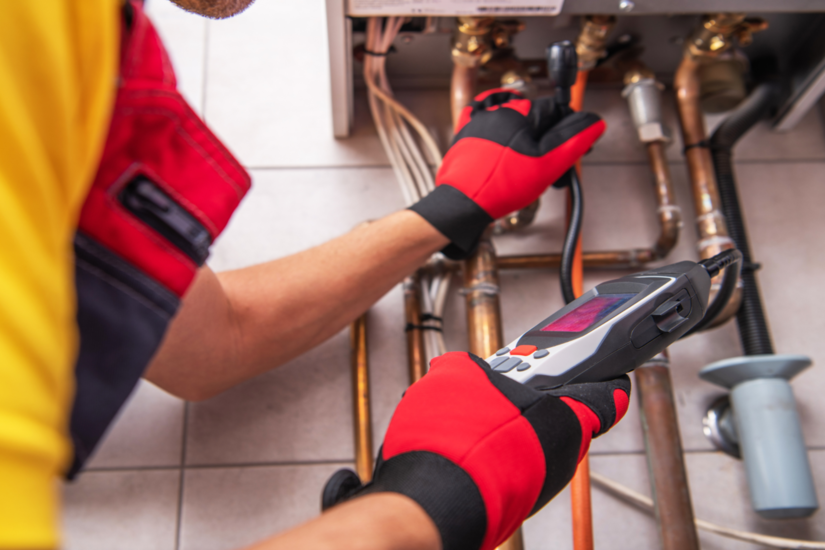
Combustion analysis is carried out during commissioning of new appliances, servicing, fault diagnosis, and after any work that could affect combustion.
Manufacturers increasingly require a recorded combustion analysis to validate warranty, especially on modern condensing boilers where the air-gas ratio is finely balanced. Many of these appliances are now set using the analyser rather than a manometer alone. Working on them without a flue gas analyser means you cannot confirm the appliance is set correctly, and you cannot demonstrate compliant, evidence-based work.
Calibration: Keeping Your Readings Honest
An analyser is only as reliable as its last calibration. The electrochemical sensors inside degrade over time, and their accuracy drifts with age, gas exposure and general use. A reading you trust today could mislead you in twelve months if the instrument has not been maintained.
Annual Manufacturer Calibration
British Standards BS 7967 and BS EN 50379 require flue gas analysers to hold a current calibration certificate, and the industry standard is professional calibration and recertification every year. During this service, the instrument is returned to an approved centre, where sensors are tested against certified reference gases, adjusted or replaced, and the unit is recertified.
A few points worth building into your routine:
- UKAS traceability: your calibration certificate should be traceable to UKAS-accredited reference standards, which is what makes the readings defensible.
- Keep the certificate: store proof of calibration with the instrument, as it shows any readings you recorded came from a verified analyser.
- Do not use it expired: an analyser with a lapsed calibration date should not be relied on for safety-critical decisions.
Field Checks Between Calibrations
Between formal services, sensible practice includes a fresh-air purge before each use, letting the analyser zero its sensors in clean air away from the appliance. Some engineers also run periodic checks using a known gas to confirm the sensors respond correctly. These do not replace annual calibration, but they help you catch a failing sensor early.
Signs an Analyser Needs Attention
Watch for:
- Slow response: sensors that take too long to settle.
- Unstable readings: figures that will not hold steady.
- Start-up errors: fault codes when the unit powers on.
- Contradictory data: readings that do not match what the appliance is physically doing.
Never record a result you do not trust. An analyser giving false reassurance is more dangerous than no analyser at all.
Safety Checks Around Combustion Analysis
The instrument is one part of a wider safe system of work. Before the probe goes anywhere near the flue, confirm the basics.
- Visual inspection: check the appliance and installation are sound.
- Ventilation: confirm air supply is adequate for the appliance.
- Flue integrity: make sure the flue is sound and correctly routed.
- Flue flow and spillage: carry out the assessment where one is required, as the analyser does not replace it.
During analysis, let the appliance run and stabilise before recording anything, following the manufacturer’s warm-up period. Sample at the correct point, and record the readings accurately. Rushed sampling produces unreliable data.
Practise safer gas engineering routines with TradeFox through guided simulations that help you review preparation, equipment checks and testing steps at your own pace alongside proper technical training and supervision.
Classifying Unsafe Situations
Where combustion results reveal a danger, classify the situation under the Gas Industry Unsafe Situations Procedure (GIUSP). The two unsafe classifications are Immediately Dangerous (ID) and At Risk (AR), and in both cases the message to the customer is the same: Danger, Do Not Use. Not to Current Standards (NCS) was removed from the unsafe-situations procedure in 2015, so it should no longer form part of a warning notice, though you may still record it as advisory best practice.
Record Your Readings
Combustion readings belong on the paperwork, not just in your head. Record them on the appliance record and the Benchmark logbook, and on the CP12 (Landlord Gas Safety Record) for rented properties. Documented readings protect the customer and protect you.
Protect Yourself
- Personal CO alarm: wear a working alarm, and never rely on smell to detect a colourless, odourless gas.
- Clean probe and trap: empty the water trap, since a saturated trap can damage sensors and distort readings.
Choosing and Caring for Your Instrument
For those newer to the trade, a few practical pointers.
- Buy established: choose manufacturers with a UK service network so calibration and repair are straightforward.
- Check the standard: confirm the analyser conforms to BS EN 50379, the specification for portable combustion flue gas instruments.
- Mind the sensors: CO and O2 sensors have a limited service life, typically a couple of years, so replace them when the unit indicates.
- Store it well: protect the probe, replace filters as needed, and store the unit properly.
A quality flue gas analyser is a significant investment, but it sits at the centre of compliant, safe and efficient work. Looked after and calibrated on schedule, it will serve you reliably for years.