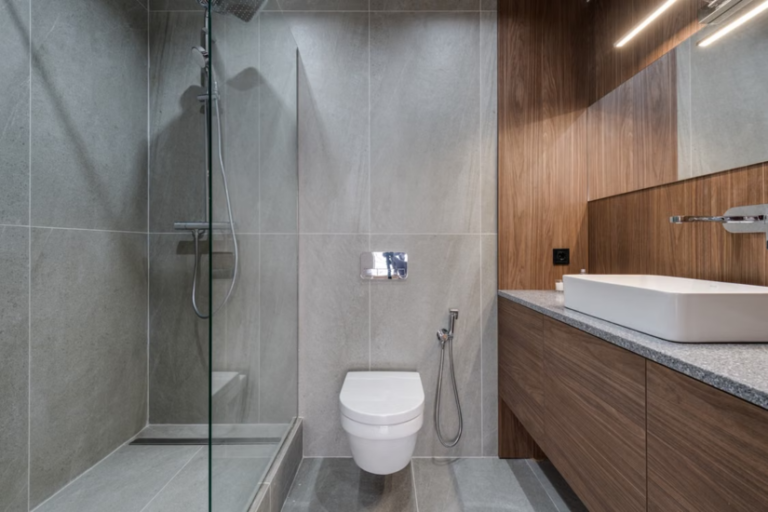


Designing a bathroom that feels comfortable and works well takes more thought than just choosing tiles and taps. Good bathroom layout ideas focus on how people move around the space, how fixtures relate to each other, and how to avoid that “feel cramped” sensation many small rooms have. Planning clearances, understanding door swings, and avoiding layout traps can transform a room so it feels practical, even in modest homes.
In this guide, we explore what you need to know to plan a bathroom layout that works for everyday use and still looks good.
Why A Thoughtful Bathroom Layout Matters?
A well-planned bathroom doesn’t just look better; it feels better. It gives you enough floor space to move around, avoids awkward clashes between doors and fixtures, and makes the most of what you have.
Bathrooms that feel congested often come from sketching a plan without thinking about how people will actually use the space. You might fit a basin, toilet and shower into a room, but if there’s no space to stand in front of them, the room will always feel tight. Careful bathroom layout ideas help prevent that “feel cramped” room feeling by prioritising comfort and movement first, and style second.
Understanding Your Space Before You Start
Before you sketch your plan, measure the room accurately. Include the length, width and door positions. Also note where the existing fixing plumbing is located – moving drains and supplies later can add cost and complexity.
Planning begins with knowing what you must fit in (toilet, basin, bath or shower), then working out how much usable floor space you have left. Sketching floor plans on paper or with simple tools helps you try different ideas without committing to a build yet.
Recommended Clearances Around Fixtures
When working out your bathroom layout ideas, consider clear space for each fixture. Here are recommended guidelines:
- At least 700–760 mm of clear floor space in front of toilets, basins, baths and showers so you can use them without bumping into other items.
- For toilets, aim for around 600 mm in front and about 200–400 mm to either side to avoid feeling closed in.
- Basins should have at least 550–700 mm of space in front so you aren’t crowded when brushing your teeth or washing your face.
These clearances help ensure bathrooms feel usable rather than tight – and they are a good cornerstone for all effective bathroom design planning.
Big Impact of Door Swings and Movement Flow

Often overlooked, door swings determine how much usable space you have. Inward-opening doors can hit basins or toilets if they’re too close, cutting valuable floor space.
Best practice advises that doors:
- Do not swing into the route between the entrance and key fixtures.
- Ideally open outward where space is tight.
- Or are replaced with a pocket door to eliminate swing space entirely.
Planning door movement early avoids one of the most common layout traps that make bathrooms feel small and obstructed.
Planning For Small Bathrooms: Clever Solutions
Small rooms (under about 1.8 × 2.4 m) are common in UK housing, and achieving a good layout here requires careful decisions.
Some helpful ideas include:
- Wall mounted toilets and basins to expose more of the floor and make the bathroom feel more open.
- Floating vanities that give the impression of more floor space beneath and reduce visual clutter.
- Corner shower enclosures or compact shower trays to make the most of unused areas.
- Glass shower screens instead of opaque curtains to avoid visually breaking the room.
- Choosing a pocket door or sliding door to avoid conflicts with fixtures.
These layout ideas do more than fit fixtures; they help bathrooms feel more open and avoid the “closed in” sensation that comes with poor planning.
Fixture Placement and Circulation Flow
Good bathroom layout ideas always consider how people move in the room. It’s not enough to fit a basin, toilet and shower – there must be an easy, unobstructed route between them.
Place fixtures so they:
- Don’t face each other directly in narrow rooms, which can block pathways.
- Allow easy access without weaving around obstacles.
- Leave clear lines of sight from the door into the room to improve the bathroom feel.
For more comfort, plan longer clear routes (at least 750–900 mm) in front of the bath and shower areas so you can step in and out without bumping into other features.
Avoiding Layout Traps That Make Rooms Feel Cramped
Several common pitfalls sidetrack even thoughtful designs:
- Placing fixtures too close to each other leaves no floor space to move forward comfortably.
- Ignoring plumbing positions leads to late design changes and compromises.
- Door swing arcs that cut through the main floor plan circle.
- Positioning storage, towel rails or mirrors in ways that interrupt circulation or crowd clearances.
Avoiding these traps early means your bathroom won’t just “fit” but will retain a sense of openness and usability.
Design Tricks To Help Bathrooms Feel More Open
Some design decisions support layout ideas by enhancing light, perception and usability:
- Use big mirrors and well-placed vanity lights to reflect light and expand the sense of space.
- Combine good overhead light with task lighting over basins so dark corners don’t make the room feel smaller.
- Light colour schemes and consistent materials make the room feel breezier and larger than it is.
- Wall-hung fixtures create a visible floor area that helps a small bathroom feel less “tight.”
These techniques support your practical layout choices, making the space enjoyable and comfortable.
Practical Measurement And Planning Tips
Accurate measurement and planning are central to creating effective layouts:
- Take a tape measure around the room, marking fixing plumbing points so fixtures can be positioned without costly rework.
- Sketching to scale or using planning tools allows you to test different arrangements before buying fixtures.
- Always check planned clearances - like at least 700 mm in front of a shower or basin - against your actual space.
Planning now saves headaches once work begins. If you want layouts that work first time and fewer mistakes on site, build strong planning habits early. Learn how professionals measure, plan, and think through layouts properly with Tradefox before work begins and costs start adding up.
Final Thoughts

Good bathroom layout ideas make everyday routines easier and spaces more pleasant to use. By planning for adequate clearances, paying attention to door swings, and avoiding common layout traps, you can organise fixtures so the room feels open and functions well.
Start with accurate measures, think about clear routes, and use practical choices like wall mounted fittings, a glass shower screen, and thoughtful lighting to support a better bathroom feel.
With careful planning and attention to how space will be used, your bathroom layout ideas can combine practicality with style and make bathrooms feel more open than their size suggests.