

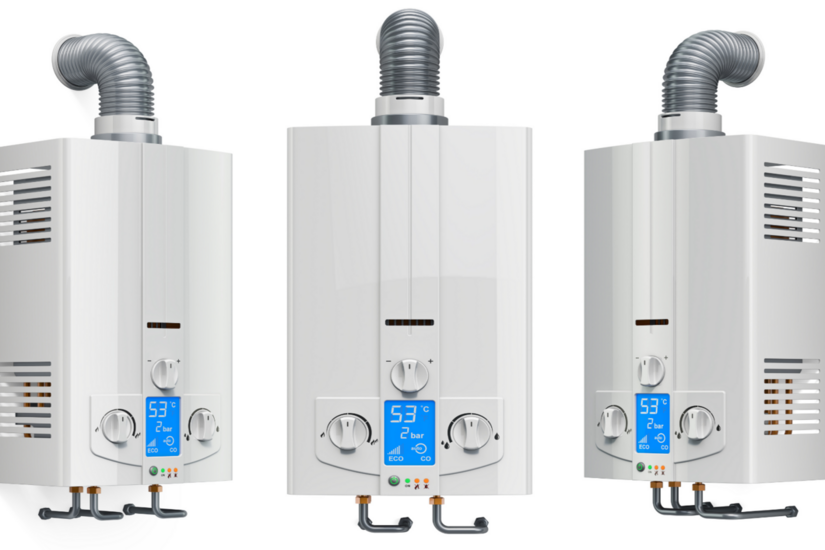
A combi boiler heats your home and supplies hot water on demand from a single wall-mounted unit. It suits most one-bathroom UK homes with good mains pressure, and is the wrong choice for properties with multiple simultaneous bathrooms, weak mains supply, or large stored hot water demands.
That answers what most customers want to know at the doorstep. The longer answer, which any competent installer needs to understand, is where the value sits. The sections below cover the working principle, the regulatory framework, sizing fundamentals, and the property scenarios where this type of unit is the wrong specification.
What a Combi Boiler Actually Is
The term “combi” is short for combination. The unit combines two functions in one heat exchanger arrangement:
- A central heating circuit feeding radiators or underfloor pipework
- A domestic hot water (DHW) circuit feeding taps and showers on demand
There is no separate cold water cistern in the loft and no hot water cylinder in an airing cupboard. Cold water enters the unit directly from the mains and is heated as it flows through. This is the defining feature and the source of both the strengths and the limitations.
A typical wall-hung domestic unit in the UK runs on natural gas, although LPG and oil-fired variants exist for off-grid properties. Most current models from major manufacturers are voluntarily produced as hydrogen-blend ready (compatible with up to 20% hydrogen by volume), in line with the gas network’s existing tolerance for hydrogen blending. There is no UK statutory requirement at the time of writing forcing this, despite the government’s 2022 consultation on the subject.
How a Combi Boiler Works
Operation runs on two distinct cycles, controlled by a diverter valve that prioritises hot water over heating.
Central Heating Cycle
When the room thermostat or programmer calls for heat, the gas valve opens and the burner ignites. Heat from combustion is transferred through the primary heat exchanger to water circulating in the heating loop. A built-in pump moves this water through the radiators or underfloor circuit and back to the boiler. Modern condensing units recover additional heat from the flue gases, which is why their ErP efficiency ratings sit at 92% or higher under Boiler Plus.
Hot Water Cycle
When a hot tap is opened, a flow sensor detects movement in the cold mains feed. The diverter valve switches priority away from heating and routes the burner’s output to the secondary heat exchanger, typically a plate-type design chosen for its compact footprint and rapid heat transfer. Mains-pressure cold water passes through this exchanger and emerges at the set temperature. The heating circuit pauses for the duration of the draw-off.
This priority switching is why running a hot tap can briefly cause radiators to cool. It is also why DHW flow rate is directly tied to boiler kW output and incoming mains conditions.
Key Internal Components
- Primary heat exchanger – transfers combustion heat to the heating circuit
- Secondary (plate) heat exchanger – heats incoming mains water on demand
- Diverter valve – switches priority between heating and hot water
- Expansion vessel – absorbs pressure changes in the sealed heating system
- Pressure relief valve (PRV) – protects against over-pressurisation
- Flue and condensate trap – removes combustion products and acidic condensate
- PCB and modulating gas valve – control firing rate and modulation ratio
Modulation ratio matters more than peak output in real-world operation. Mid-range units typically modulate at 5:1 or 6:1, while premium models such as the Worcester Bosch 8000 series and Viessmann Vitodens 200 reach 10:1. A wider modulation range reduces short cycling and extends component life.
UK Regulatory Framework
Any tradesperson installing, commissioning, or servicing a combi boiler must work within a layered set of legal and technical requirements. The headline obligations are below.
Gas Safe Registration
Under the Gas Safety (Installation and Use) Regulations 1998, anyone working on a gas appliance must be on the Gas Safe Register and hold the relevant ACS qualifications. The standard combination is CCN1 (core domestic gas safety) plus CENWAT (central heating boilers and water heaters). Working on gas without registration is a criminal offence under HSE enforcement.
Boiler Plus
In force in England since April 2018 under Approved Document L of the Building Regulations, Boiler Plus requires:
- A minimum 92% ErP efficiency rating on all new gas boiler installations in existing dwellings
- Time and temperature controls (a programmer plus a room thermostat as standard)
- For combination units specifically, one of four additional measures: weather compensation, load compensation, flue gas heat recovery (FGHR), or smart controls with automation and optimisation
Scotland operates under the Scottish Building Standards Technical Handbooks (Section 6 Energy), and Wales under its own Building Regulations. Both achieve broadly similar outcomes through different statutory routes. Northern Ireland follows its own building control framework. Boiler Plus itself, as a named standard, applies to England only.
Building Regulations
- Approved Document L – Conservation of Fuel and Power, sets the efficiency baseline
- Approved Document J – combustion appliances, flue terminations, ventilation, and clearances
- Approved Document G – hot water safety, including unvented systems and scalding risk
Water Regulations and WRAS
The Water Supply (Water Fittings) Regulations 1999 apply to any plumbing work on a property’s water supply. All fittings used must be WRAS-approved or hold an equivalent regulatory approval. Backflow prevention via the inlet check valve and correct categorisation of fluid risk are particular concerns for any mains-fed appliance.
Unvented G3 Qualification
Where a system boiler with an unvented hot water cylinder is being recommended as an alternative (common in larger properties), the installer must hold the Unvented Hot Water Storage Systems qualification, often referred to simply as G3. This is a separate competence stream from gas qualifications and is required under Approved Document G3 of the Building Regulations.
Notification
Gas boiler installations must be notified to Building Control, normally through the Gas Safe Register’s notification system, within 30 days of completion. Gas Safe then issues the Building Regulations Compliance Certificate to the homeowner shortly afterwards.
Future Direction
The Future Homes Standard prevents new-build properties from being fitted with gas boilers as primary heating from its full implementation. The government’s stated ambition to phase out new gas boiler installations in existing homes by 2035 remains conditional on infrastructure readiness. Replacement installations in existing housing stock continue without restriction at the time of writing.
Sizing a Combi Boiler Correctly

Oversizing is the most common error in domestic boiler specification. An oversized unit short-cycles, wastes gas, and stresses components. Undersizing leaves the property cold and the customer unhappy.
Heating Output
Heating output must match the property’s calculated heat loss. Use BS EN 12831-1:2017 for the room-by-room heat loss calculation. Rules of thumb based on bedroom count are not a substitute for a proper survey, particularly in older or extended properties.
Hot Water Output
Hot water output is governed by the boiler’s kW rating at the secondary exchanger and the DHW flow rate it can deliver at a 35°C temperature rise. Indicative figures from manufacturer data:
- 24 kW unit – approximately 9.8 litres per minute
- 28 to 30 kW unit – approximately 12 litres per minute
- 35 to 37 kW unit – approximately 14 to 15 litres per minute
- 40 kW unit – approximately 16 litres per minute
These figures are ceilings, not guarantees. Actual delivered flow rate is capped by the lower of the boiler’s capability and the incoming mains flow rate. A 40 kW unit on a 10 litre per minute supply delivers 10 litres per minute, no more.
The 35°C temperature rise also assumes a specific inlet temperature. In summer, mains water enters at around 15°C, giving roughly 50°C output. In winter, mains can drop to 5°C, requiring a 45°C rise to hit the same outlet temperature. Real winter flow rates at usable temperatures are therefore lower than the headline figures suggest.
Mains Supply Testing
Always check static and dynamic mains pressure and flow rate before quoting. A bucket and stopwatch test on the kitchen tap with all other outlets closed is the minimum due diligence. Document the readings in your quotation.
When a Combi Boiler Is the Wrong Choice
This section protects your reputation. Specifying the wrong appliance leads to call-backs, complaints, and avoidable disputes. The following scenarios are red flags.
Multiple Bathrooms in Simultaneous Use
The unit delivers a fixed flow rate. When two showers run at once, that flow is shared, halving the performance at each outlet. For homes with two or more bathrooms used at the same time, a system boiler with an unvented cylinder is almost always the correct specification. A property with three or more bathrooms should not be on a combi at all.
Low Mains Flow or Pressure
If the incoming mains delivers less than around 12 litres per minute at acceptable pressure, the appliance will struggle regardless of its kW rating. Common causes include:
- Shared supply pipes
- Long rural connections
- Lead service pipes due for replacement
- Properties at the end of a distribution main
Solutions include an accumulator tank or break tank with booster pump, but these add cost and space that may make a system boiler the more sensible answer.
High Stored Hot Water Demand
Filling a large bath from this type of appliance is slow because flow rate is the limiting factor. Customers used to the rapid fill from a vented cylinder often find the performance underwhelming. Where bath filling speed matters, or where multiple high-volume draw-offs are routine, stored hot water is the better solution.
Large Properties with High Heat Loss
Although models are available up to 40 kW and beyond, the practical ceiling for combi specification is around the 35 to 40 kW mark. Larger properties with extensive radiator circuits, high heat losses, or underfloor heating across multiple zones are usually better served by a system or regular boiler with appropriate cylinder sizing.
Solar Thermal or Heat Pump Integration
A combi boiler cannot easily integrate with solar thermal pre-heat or as a top-up to a heat pump cylinder. Properties with renewable energy ambitions are better suited to a system boiler with an unvented cylinder, or a hybrid arrangement.
Properties Without Suitable Flue Routes
Approved Document J flue clearance distances must be met. Where no compliant flue route exists, or where the only available route would compromise neighbouring properties, the boiler position needs reconsidering before specification.
Hard Water Areas Without Treatment
Plate heat exchangers are particularly vulnerable to limescale fouling. In hard water areas without scale reduction, secondary exchanger life can be shortened significantly. More seriously, scale build-up on the primary heat exchanger can cause kettling, localised overheating, and in extreme cases pressure-relief operation. Specifying a scale inhibitor or installing a water softener is sensible practice.
Practical Guidance for Tradespeople
A few habits separate competent installers from those who create call-backs.
Carry out a heat loss calculation on every job. Bedroom-counting is not a substitute. Software based on BS EN 12831 takes minutes once you are familiar with it, and creates a defensible record of your sizing decision.
Test the mains supply before quoting. Static pressure, dynamic pressure, and flow rate all matter. Document them on the job sheet so the customer cannot later claim they were never told.
Match modulation range to the property. A high-output unit in a small flat will short-cycle constantly. The minimum output figure on the data badge is as important as the maximum.
Specify Boiler Plus controls properly. Load and weather compensation deliver real efficiency gains. A basic programmable thermostat alone does not satisfy the standard for combi installations in England.
Notify the work. A Gas Safe Building Regulations Compliance Certificate is the customer’s evidence that the job was done legally. Failing to notify exposes both you and the homeowner to enforcement.
Hand over properly. Walk the customer through the controls, the pressure gauge, the filling loop, the condensate route, and the position of the gas isolation valve. A well-briefed customer creates fewer service calls and fewer warranty disputes.
TradeFox can support learners and working tradespeople with easy-to-follow online training in plumbing, electrics, safe isolation, and other trade skills, using practical simulations that can be revisited at your own pace.
Final Word
A combi boiler is the right answer for the majority of UK homes, but it is not a universal answer. The decision rests on a proper heat loss calculation, a measured mains supply, an honest assessment of hot water demand patterns, and current knowledge of the Gas Safety (Installation and Use) Regulations 1998, Boiler Plus, the Water Regulations 1999, and Building Regulations Approved Documents L, J, and G.
For tradespeople, the discipline lies in matching the appliance to the property rather than to the price point or the available cupboard space. That is what keeps installations safe, keeps customers warm, and keeps your name on jobs that hold up over the long term.