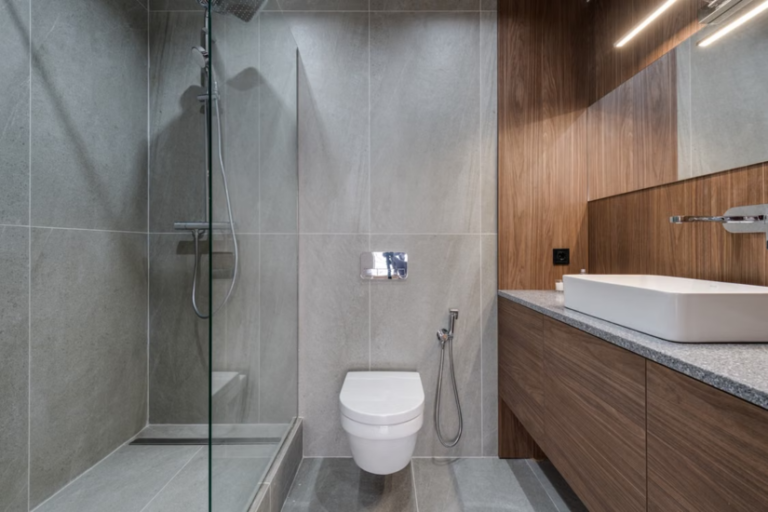


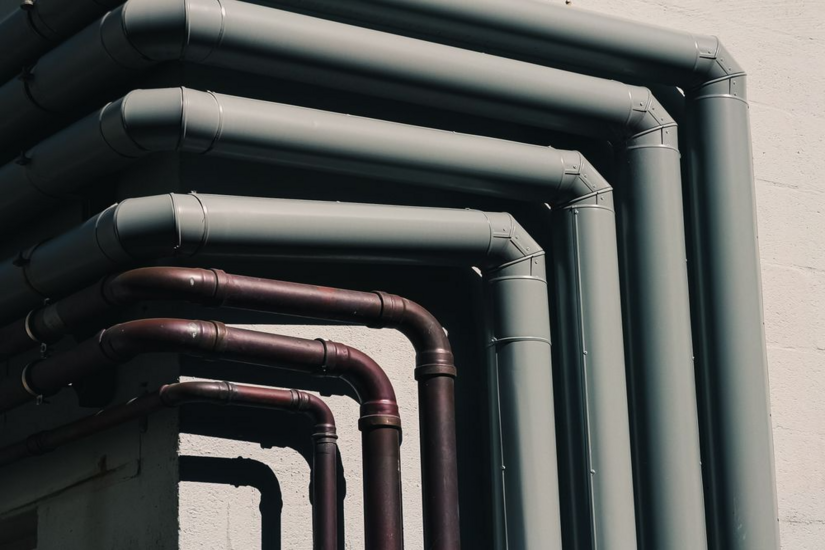
A soil pipe carries foul discharge from soil appliances, meaning WCs, urinals, and anything discharging human waste, and moves it safely to the below-ground drainage. Getting the terminology, sizing, and venting right is not optional under UK Building Regulations. It is the difference between a system that performs for decades and one that pulls water out of traps and vents foul air back into a building. This guide covers what the pipe carries, how venting works, the correct falls, and where blockages tend to form, all aligned to Approved Document H.
Who is this for
This is written for tradespeople and anyone training toward the trade. It assumes you are installing or diagnosing a system, not attempting DIY. Every figure below traces back to Approved Document H, BS EN 12056, or BS 5572, so treat those as the primary references and always confirm against the current editions before you commit on site.
What Does a Soil Pipe Carry?
A soil pipe carries foul discharge: solids and the water that moves them. That is the distinction people get wrong on site.
- Soil pipe: Handles WC and urinal discharge, meaning waste containing sewage.
- Waste pipe: Handles wastewater from baths, basins, showers, sinks, and washing machines. Dirty, but no sewage.
In most modern UK domestic work these combine into a single stack, known as a single stack system, which is permitted under Approved Document H. Stub stacks and separate arrangements are also common, so do not assume every job is a single stack.
Diameter: 100mm nominal, 110mm outside
The soil stack for domestic work is a nominal 100mm bore, which in standard uPVC is sold as 110mm outside diameter. Both numbers refer to the same pipe. Approved Document H specifies 100mm for a WC branch, so when you order 110mm pipe you are buying the correct nominal 100mm foul size.
A note on materials
- Cast iron is still specified on heritage, commercial, and acoustic-sensitive jobs for its sound-deadening quality. It is also non-combustible, which can reduce fire-stopping work at floor penetrations compared with plastic, though all stack materials must still meet Approved Document B at compartment lines.
- uPVC and HDPE:more common on new domestic builds. Whatever the material, the function stays the same: move foul discharge to the drain without letting gases back into the property.
Venting Basics: Balancing the Pressure
Every soil pipe system must be ventilated to balance pressure. When a WC discharges, it sends a slug of water down the stack, creating positive pressure below it and negative pressure above it. Without adequate ventilation, that negative pressure siphons water out of nearby traps, breaks the seal, and lets foul air into the room.
Open vent to outside air
The traditional route is an open vent that terminates above the roofline. Under Approved Document H:
- The terminal must finish at least 900mm above any opening window, door, or air inlet within 3 metres.
- It must be fitted with a cage or perforated cover that does not restrict airflow.
- In rodent-control areas, the terminal cover must be metallic.
- The dry vent portion above the highest branch may be reduced in one and two-storey houses, but not below 75mm.
These are common inspection failure points, so commit them to memory.
Air admittance valves (AAVs)
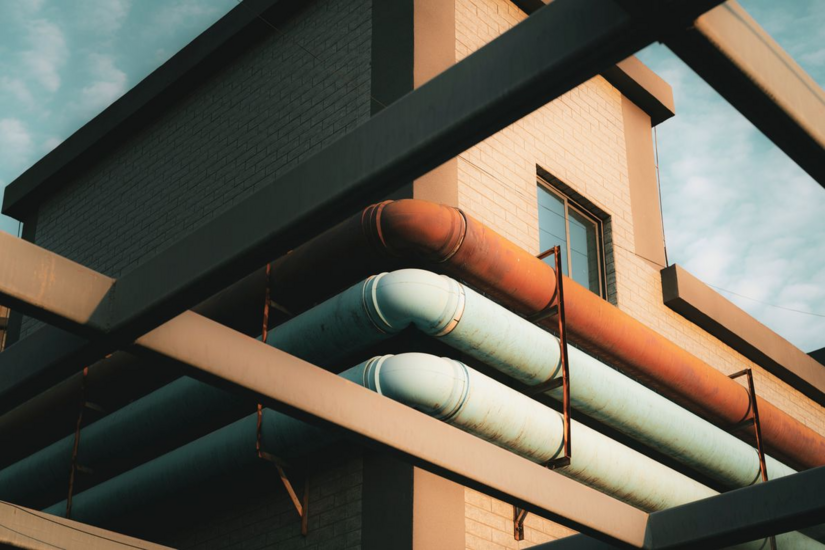
Where running a full vent to the roof is impractical, an air admittance valve, sometimes called a Durgo valve, can be used internally. An AAV lets air in to relieve negative pressure, then closes to stop foul air escaping. To install one correctly:
- The valve must comply with BS EN 12380.
- Its air flow rate should be at least eight times the peak flow rate on the stack.
- It must sit above the highest flood level of any appliance on that stack.
- At least one stack on the system must still vent to open air to release positive pressure. You cannot valve off an entire system.
What Are the Correct Falls for a Soil Pipe?
Fall, or gradient, is the slope that lets a drain self-clean using the flow of the discharge. Too shallow and solids settle and build up. Too steep and the water runs away faster than the solids, stranding them. Both cause blockages. The self-cleansing target is a flow velocity of roughly 0.75 m/s at peak flow.
Minimum gradients under Approved Document H
| Pipe size | Condition | Minimum gradient | Fall per metre |
|---|---|---|---|
| 100/110mm foul | Carrying at least 1 WC | 1:80 | 12.5mm |
| 100/110mm foul | Peak flow under 1 l/s | 1:40 | 25mm |
| 150mm foul | Serving at least 5 WCs | 1:150 | 6.7mm |
The key correction most people need: 1:80 is the standard minimum for a 100/110mm drain carrying a WC. The steeper 1:40 is the minimum only where peak flow is under 1 l/s, and it doubles as the preferred self-cleansing figure if you have the fall available. Do not treat 1:40 as the default working fall for every domestic drain.
There is an old trade rule of thumb, pipe diameter divided by 2.5, which gives 1:40 for a 100mm pipe. It is useful for a quick sanity check, but it is not in any official document, so it never overrides the Approved Document H figures above.
Branch connection falls
Branch falls depend on what the branch serves, and the WC soil branch is not the same as a small-bore waste branch:
- WC soil branch (100mm): minimum fall around 18mm per metre. It runs shallow. Do not lay it steep.
- Waste branches (32mm to 50mm): the wider 18mm to 90mm per metre range applies to basins, baths, and sinks, not to the WC branch.
Connections into the stack should be swept in the direction of flow. Sharp, square entries into a soil pipe are a frequent cause of nuisance blockages.
Where Do Soil Pipes Commonly Block?
Knowing where systems fail saves diagnostic time on a call-out. The usual suspects:
- Bends and offsets: Any change of direction slows flow. Where an offset is unavoidable in the wet portion of the stack, form it with two 135-degree bends rather than a single 90-degree elbow. Better still, avoid offsets in the wet section entirely.
- Branch connections: Poorly swept or overloaded junctions collect debris. Long branch runs without adequate fall are a recurring problem.
- The base of the stack: The bottom, where the vertical stack turns horizontal into the drain, sees the highest turbulence. Approved Document H requires a large-radius bend here, not less than 200mm at the centre line. A tight bend at the base is a classic siphonage and blockage cause.
- Lowest branch too low: In buildings up to three storeys, the lowest branch must connect at least 450mm above the drain invert. Too low and you get backflow and cross-flow.
- Pan connectors: Damaged or concertina-style flexible connectors restrict flow and catch waste. A straight rigid connector is preferable where the geometry allows.
- Foreign objects: Wipes, sanitary products, and fat accumulate at all the points above. The system design decides how forgiving it is.
Testing and Compliance
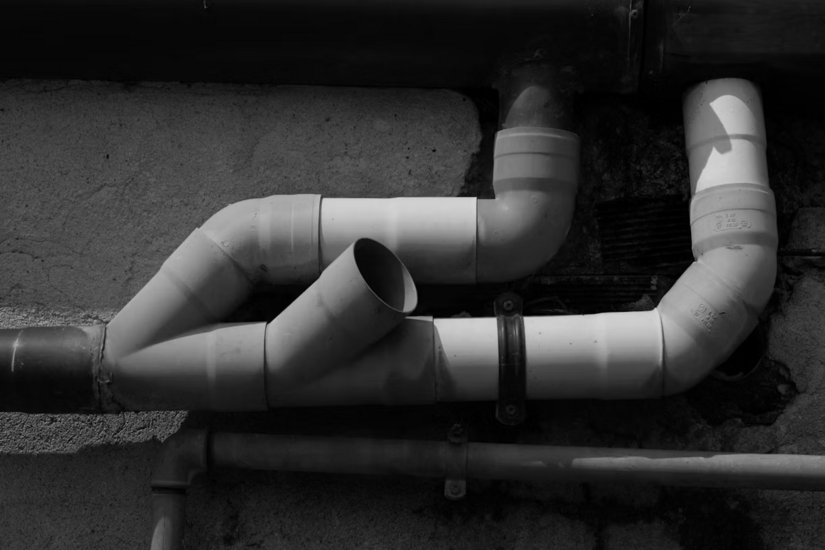
Any soil pipe installation in the UK should be designed and installed in line with Approved Document H (Drainage and Waste Disposal), BS EN 12056 (gravity drainage inside buildings), and BS 5572 (sanitary pipework).
- Trap seals: a WC uses a 50mm seal; most other appliances use a 75mm seal (50mm for a bath or shower discharging to a gully).
- On completion, an air or water test confirms the system holds pressure. Under working and test conditions, traps must retain a minimum 25mm seal.
Never skip the test. For anyone learning plumbing, understanding why each measurement and fitting requirement exists is just as important as remembering the figure. TradeFox supports this type of skills development through guided plumbing simulations that learners can revisit at their own pace while building confidence in a safe setting.
Working to the Standard
The regulations exist because every requirement here traces back to a real failure. If you are specifying or installing, keep the current Approved Document H, BS EN 12056, and BS 5572 to hand, confirm the falls against the flow the drain will actually carry, and test before you sign it off.