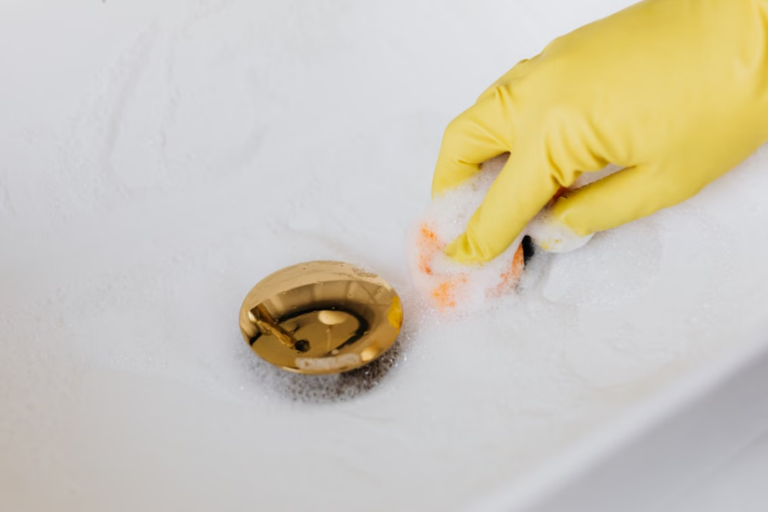


Blocked kitchen sinks remain one of the most frequent reactive call-outs in domestic and commercial plumbing. The cause is rarely mysterious. Fat, oil and grease (FOG) accounts for a substantial share of UK sewer obstructions, and Water UK reports around 366,000 sewer blockages annually across the network, with FOG-related deposits driving up to three quarters in some catchments. Add hair, soap scum, food solids and the occasional foreign object pulled from a U-bend, and the trap becomes the single most predictable failure point in any waste system.
This guide is written for working tradespeople and apprentices entering the plumbing trade. It covers what is actually happening inside the trap, how to diagnose grease build-up correctly, and how to unblock a sink using safe first-step interventions that align with UK regulatory expectations. It does not cover homeowner shortcuts, and it does not endorse the casual use of corrosive drain products without proper controls.
Why the Trap Is Where the Job Begins
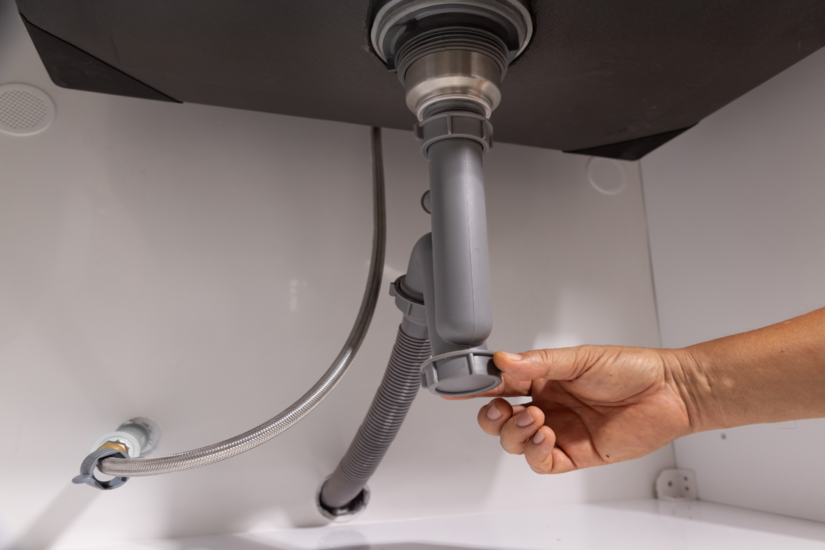
Every sanitary appliance discharging into a UK foul system must be fitted with a water-seal trap. Under Approved Document H of the Building Regulations, kitchen sinks, dishwashers, washing machines and food waste disposal units require a 40mm diameter trap with a minimum 75mm water seal. The seal depth is not arbitrary. It is engineered to retain water against pressure fluctuations in the stack and to resist displacement when solids pass through the fitting.
Approved Document H, paragraph 1.3, also requires that under working and test conditions all traps retain a minimum seal of 25mm of water or equivalent. When you understand how to unblock a sink properly, you start at the trap because that is where regulation, design and physics converge.
How Grease Builds Up Inside the Trap
Wastewater leaving a kitchen sink is rarely just water. It carries dissolved fats, emulsified oils, suspended food particles, calcium and magnesium ions from hard water, and surfactants from washing-up liquid and dishwasher detergent. Once that mixture cools and slows in the trap, three things happen in sequence:
- The fats begin to congeal on the pipe wall.
- Free fatty acids react with calcium and magnesium ions to form insoluble metal soaps through a process called saponification.
- Food solids bind into the matrix and harden the deposit.
Peer-reviewed research published in Water Research (Williams et al., University of Portsmouth, 2012) has demonstrated that saponification, not simple cooling, is the dominant mechanism behind the hardened deposits often described in the press as fatbergs.
For the working plumber, that mechanism explains why hot water alone never resolves a true grease blockage. It softens the surface, displaces a portion of the deposit downstream, and reseats the obstruction further into the branch pipe or stack where it is harder to access.
Diagnosing the Blockage Before You Touch a Tool
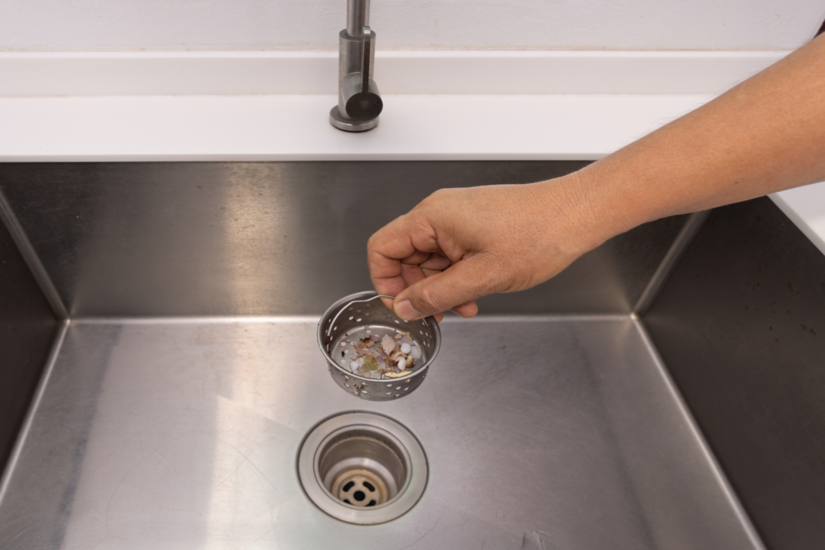
A structured diagnosis saves time and avoids unnecessary dismantling. Run through the following on arrival.
Confirm the Scope
Is the blockage isolated to one appliance, or are multiple appliances on the same branch slow or backing up? A single slow sink points to the trap or the immediate branch pipe. Multiple appliances point to the stack or a downstream blockage in the underground drainage.
Check the Discharge Behaviour
Standing water that drains slowly indicates partial obstruction, typically grease or soap scum lining the pipe wall. Complete stoppage with gurgling at adjacent appliances suggests a fully occluded trap or a stack-level issue with disrupted air movement.
Inspect for Foul Air
A persistent drainage smell with otherwise normal flow can indicate a depleted or breached water seal rather than a blockage, often caused by siphonage from undersized or poorly vented branch pipework. The fix here is not unblocking; it is correcting the installation.
Ask the Occupier or Facility Manager
In commercial kitchens, a history of grease trap servicing intervals tells you most of what you need to know. In domestic settings, ask how cooking oil and pan fats are disposed of. The answer is frequently the diagnosis itself.
Safe First Steps: PPE, COSHH and Site Control
Before any physical intervention, the workplace controls expected of a competent tradesperson apply. The Health and Safety Executive’s COSHH guidance is the governing framework for any chemical agent used in drain cleaning, and it applies to self-employed contractors as it does to employed staff under the Control of Substances Hazardous to Health Regulations 2002.
PPE and Site Preparation
Standard kit for a sink unblocking job should include:
- Nitrile gloves rated for chemical exposure.
- Splash-rated eye protection (BS EN 166 compliant).
- A barrier between the work area and adjacent surfaces to contain any discharge.
- A clean bucket, rags and a solid waste bag for trap contents.
Caustic and acid-based drain products commonly stocked in the trade can cause severe skin burns and permanent eye damage on contact. Reactive heat generation in a partially blocked trap can produce splash-back. If a chemical product is being considered, the safety data sheet must be on site and the COSHH assessment must justify its use over mechanical methods.
Hidden Hazards Worth Flagging
A few risks tend to catch operatives out:
- Residual hot water in the trap. Sinks recently used with a dishwasher discharge or hot wash can hold scalding water in the U-bend. Open compression nuts slowly with the bucket positioned and gloves on.
- Asbestos in older properties. Pre-2000 commercial premises and some older domestic conversions may have asbestos cement waste pipework or ACMs in service ducts. Disturbance triggers obligations under the Control of Asbestos Regulations 2012. If condition is unknown, stop and arrange a survey.
- Foul air at stack level. Long-standing organic blockages in stacks or underground drainage can produce hydrogen sulphide and methane in confined sections. This is a stack and drain concern rather than a typical sink-trap concern, but if you progress to opening up a stack or chamber, treat it as confined-space work.
Chemical Mixing: What Actually Happens
Never combine drain chemicals. The genuine hazards are worth understanding precisely:
- Sodium hydroxide (caustic) products mixed with sulphuric acid (acidic) products produce a violent exothermic reaction. The reaction generates intense heat, can cause boiling splash-back from the drain, and can deform or fail plastic pipework. There is no chlorine release in this combination, but the thermal and corrosive risk alone is severe.
- Bleach-containing products (sodium hypochlorite) mixed with any acid-based cleaner release chlorine gas. This is the classic chlorine-gas hazard cited by the HSE and water utilities. Even short exposure causes respiratory injury.
- Bleach-containing products mixed with ammonia-based cleaners produce chloramine gas, which is similarly toxic.
Ventilation matters in all cases. Open windows, run extraction, and never assume a “small splash” of mixed product is safe.
Mechanical Methods First, Always
For domestic kitchen sinks, mechanical clearance should be the default approach. It is faster, more reliable on grease deposits, and avoids the regulatory and waste-disposal burden of chemical use.
Plunger Work
A flat-faced cup plunger creates hydraulic pressure that physically displaces soft grease and dislodges food matter from the trap. Block the overflow with a damp cloth to prevent pressure loss, fill the bowl with enough water to cover the plunger cup, and work in firm, sustained strokes rather than rapid pumping. This is often sufficient for partial grease obstructions in the U-bend.
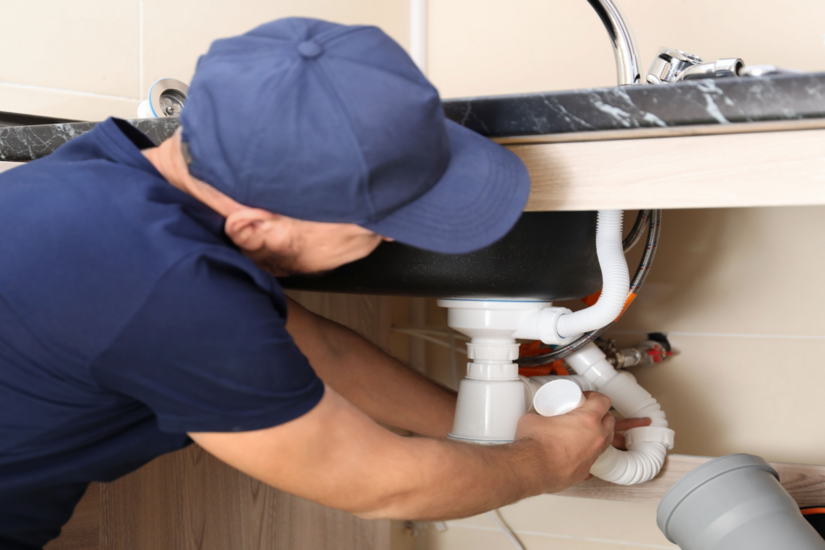
Trap Removal and Manual Clearance
The reliable fix for most kitchen sink blockages. Work through it in order:
- Place a bucket beneath the trap with rags layered underneath.
- Loosen the compression nuts by hand where possible, working slowly to control the discharge of standing water.
- Remove the trap fully and inspect the interior. A grease blockage typically presents as a pale, waxy or chalky deposit lining the bend, often with embedded food particles.
- Clean it out mechanically with a stiff brush. Dispose of the waste as solid food waste, not back down the drain.
- Inspect the seals and washers. Replace any that are perished or compressed.
- Reassemble hand-tight plus a quarter turn with grips. Avoid over-tightening, which crushes seals.
- Test under running water with the trap visible for any weeping joints.
Drain Augers for Branch Pipes
When the obstruction sits beyond the trap in the branch pipe, a flexible hand auger introduced through the trap connection or an accessible cleanout will reach further into the system. Rotate the cable to engage with the deposit rather than simply pushing it deeper.
For obstructions further into the foul stack or underground drainage, you are now beyond a sink-level intervention and into drain-clearance work, with the corresponding equipment, jetting standards and confined-space considerations. Drain rods, by contrast, are designed for underground drainage accessed via inspection chambers and are not the right tool for sink-branch work.
When and How to Use Chemical Cleaners
There is a narrow set of circumstances where a chemical agent is appropriate, typically light grease and soap scum maintenance in inaccessible runs where mechanical access is poor. Even then, the choice of product matters.
Enzymatic and Biological Treatments
Enzymatic and bacterial drain treatments work by digesting organic matter rather than dissolving it through corrosive reaction. They are markedly safer for older pipework, plastic traps and the user. They do, however, take time to act and are unsuitable as an emergency unblocker.
Caustic and Acid-Based Products
These should be the last resort, used in line with the manufacturer’s instructions, the safety data sheet, and the COSHH assessment for the job. Several practical points follow:
- Heat-reactive products generate exothermic responses that can soften and deform plastic traps, particularly older ABS fittings.
- Repeated use on the same fitting accelerates degradation and can cause leaks at compression joints weeks after the apparent fix.
- Operatives need to advise customers when chemical use has occurred so the failure mode is anticipated.
- Never decant drain chemicals into unmarked containers.
- Never carry them in vehicles without secure, upright storage. Spillage in a works van can write off the vehicle interior and cause respiratory injury during recovery.
Grease Build-Up in Commercial Settings
Commercial kitchens are a different category of work. Food service establishments are the largest single contributor to FOG entering the public sewer, and their wastewater discharge is regulated under the Water Industry Act 1991 and the trade effluent provisions enforced by the regional water and sewerage company.
Section 111 in Plain Terms
Section 111 makes it a criminal offence to discharge into any public sewer any matter likely to injure the sewer or drain, to interfere with the free flow of its contents, or to affect prejudicially the treatment and disposal of those contents. Water companies enforce this provision in respect of FOG, and prosecutions have resulted in substantial fines and cost-recovery orders against food businesses.
Grease Management Standards
The British Standard governing grease separator design and installation comes in two parts:
- BS EN 1825-1 covers principles of design, performance and testing.
- BS EN 1825-2 covers selection, sizing, installation, operation and maintenance.
Competent specification or sign-off for new commercial installations should reference both. For premises without a properly sized and maintained grease management system, repeat sink and drain blockages are a symptom, not the disease. The competent operative identifies the absence of a passive grease interceptor or biological dosing system, advises on the regulatory exposure, and where appropriate refers the matter to the building owner or duty holder.
Clearing the blockage without addressing the upstream cause is short-term work and, in some catchments, may breach the conditions of the customer’s trade effluent consent.
What Not to Do
Several practices remain in circulation despite being either ineffective or actively damaging.
- Boiling water poured down a sink to clear grease does not work. The fat liquefies, travels a short distance, cools in the branch or stack, and reforms the blockage further from access. Northumbrian Water, Severn Trent and other utilities have issued explicit public guidance against the practice.
- Improvised mixtures of bicarbonate of soda and vinegar produce a small volume of carbon dioxide and sodium acetate. The reaction is mechanically too weak to clear a real grease deposit. Recommending it on a paid call is not a credible professional response.
- Pouring used cooking oil into a hot drain to "flush" it through is a direct contributor to downstream blockages and is contrary to every UK water company's published guidance on customer waste disposal.
- Mixing two different drain chemical brands to "boost" effectiveness. Covered above. The reactions are unpredictable, exothermic, and in some combinations release toxic gas.
Reinstatement and Customer Handover
Once the sink is clear, the job is not finished. A competent handover protects both the customer and the contractor.
What to Test Before You Leave
- Run both taps to full flow for at least one minute.
- Fill and release the bowl to test the trap under a full discharge.
- Visually confirm no weeping at any joint disturbed during the work.
- Listen for gurgling at adjacent appliances on the same branch.
A trap that holds against a slow flow can still fail under a full sink discharge, and that failure will surface as a leak the customer finds at the worst possible moment.
What to Document
- Cause identified at the trap or branch.
- Method of clearance and any chemical used (with product name and SDS reference).
- Condition of the trap, seals and visible pipework.
- Recommendations for the occupier on disposal practice or, in commercial settings, on grease management.
For trade clients, a written report supports their own compliance records under COSHH, the Water Industry Act and food hygiene regulations.
Building Competence in This Area
For apprentices and those entering the trade, sink and trap work is foundational because it touches almost every regulated element of domestic plumbing in a single job: water seal integrity, pipework gradients, jointing, COSHH, waste disposal and customer communication. Knowing how to unblock a sink to a professional standard is less about a single technique and more about applying the right method, in the right order, with the right controls.
Qualifications and Trade Recognition
The standard route into the trade in England and Wales runs through City & Guilds or EAL Level 2 and Level 3 plumbing diplomas, supported by an apprenticeship. Beyond formal qualifications, professional recognition typically comes through:
- APHC (Association of Plumbing & Heating Contractors), a trade association operating member registration and quality schemes.
- CIPHE (Chartered Institute of Plumbing and Heating Engineering), the professional body for the sector, offering individual professional grades.
- SNIPEF for operatives working in Scotland.
- Gas Safe Register for any work involving gas, which is a separate statutory requirement.
Specific Competent Person Schemes exist for particular regulated tasks, such as unvented hot water systems under Part G. These should not be confused with general trade body membership.
Mastery of the basics is what separates the operative who clears a blockage in twenty minutes and leaves a clean handover from the one who creates a callback two weeks later. The trap, the grease, and the safe first steps are the foundation everything else rests on.
Keep sharpening the basics with TradeFox. Learn at your own pace, practise the right steps, and build the kind of plumbing competence that helps you work cleanly, safely, and with confidence on site.