

A flame supervision device is a safety component that automatically shuts off the gas supply to a burner when the flame it monitors goes out. Without one, unburnt gas would keep flowing into the appliance, the flue, or the room, building toward a fire, explosion, or carbon monoxide risk. For any gas engineer, knowing how these devices sense a flame and cut the supply is core knowledge, not background reading.
This guide covers what the device does, the main sensing technologies you meet in the field, why they fail, and where they sit within UK gas safety law. It is written for working tradespeople and for anyone training toward Gas Safe registration. It is not a DIY guide, and nothing here replaces manufacturer instructions or formal ACS assessment.
What is a flame supervision device?
A flame supervision device (FSD) is any device designed to stop gas reaching a burner if the flame is extinguished. You will also hear it called a flame failure device (FFD), and on a thermoelectric system the sensing element itself is the thermocouple. FSD and FFD are used interchangeably across the trade and by manufacturers, and they describe the same job: monitor the flame, and close the gas valve the moment that flame is lost.
The principle matters because a lit burner is only safe while it is actually burning. If gas keeps flowing to an unlit burner, it accumulates. Common causes of flame failure include:
- Chimney downdraught: A gust back down the flue can blow a flame out.
- Supply interruption or under-pressure: A drop or break in gas pressure can starve the flame.
- Liquid boilover: A pan boiling over onto a hotplate can douse the burner.
- Oven door draught: Opening and closing an oven door can disturb the flame.
The job of the safety device is to react to any of these automatically, without relying on anyone being in the room.
How does a flame supervision device work?
The most common type is the thermoelectric device, built around a thermocouple. When the tip of the thermocouple sits in the flame, the heat generates a small voltage through the thermoelectric (Seebeck) effect. That voltage energises an electromagnet inside the gas valve, holding the valve open against a spring. As long as the flame is present, the voltage holds and gas flows.
When the flame goes out, the thermocouple cools. The voltage falls away, the electromagnet releases, and the spring closes the valve, cutting the gas to the burner. Thermoelectric systems are not instant, because the couple has to physically cool before the valve shuts, which is why there is a short delay on this type rather than a snap response.
This cooling behaviour also explains a job you do every day:
- Why you hold the button in when lighting: You are manually holding the gas valve open until the thermocouple heats up enough to take over.
- What happens if you release too soon: The thermocouple has not generated enough voltage yet, so the valve simply closes and the pilot drops out.
Response time and correct positioning are everything. The thermocouple tip must sit correctly within the flame to generate a reliable voltage. A tip that is out of position, sooted, or worn will give a weak or intermittent signal, and the appliance will drop out or refuse to stay lit.
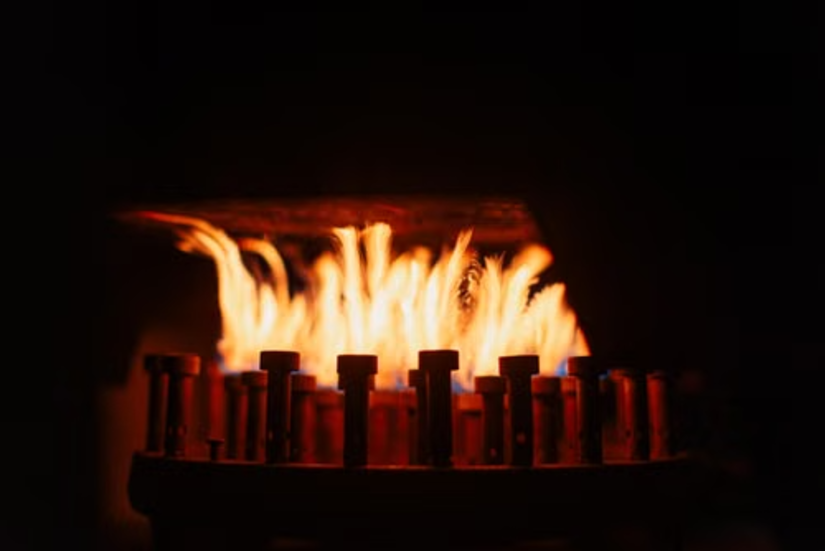
Types of flame supervision device
Not every device uses a thermocouple. The main technologies you will meet are:
- Thermoelectric (thermocouple) devices: The workhorse of pilot-light appliances, gas fires, water heaters, and much commercial catering equipment. Simple, robust, and self-powered by the flame.
- Flame rectification (ionisation) systems: Common on modern boilers and mains-powered appliances. A probe in the flame detects the electrical conductivity of the burning gas, and responds very quickly.
- Ultraviolet (UV) sensing devices: Positioned to detect the ultraviolet light a flame emits, used on certain commercial and industrial burners.
- Flame conductance and liquid expansion types: Less common, but still found on some equipment.
Each technology needs its sensor in the right place. Thermocouples and ionisation probes sit in the flame, while UV sensors need a clear line of sight to it. Positioning faults are a frequent cause of nuisance shutdowns.
A note on multiple burners
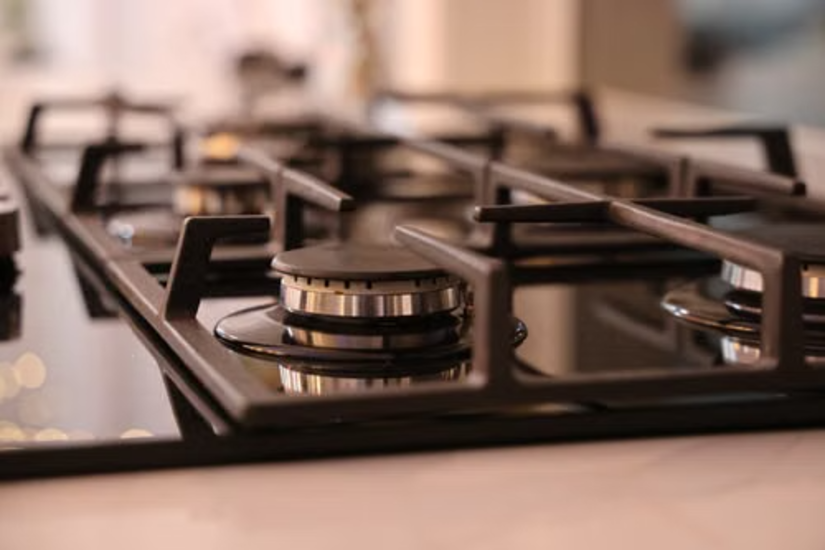
On some appliances, each burner needs its own flame supervision device rather than one shared unit. This matters on hotplates and in multi-occupancy premises, where every burner should be individually protected. Always work to the appliance manufacturer’s instructions and the relevant British Standard for the appliance type.
Why flame supervision devices fail
An FSD usually fails in one of a few predictable ways. Recognising the pattern speeds up diagnosis:
- Thermocouple degradation: Age, heat cycling, and oxidation weaken the output until the electromagnet can no longer hold in. The classic symptom is a pilot that lights but drops out when the button is released.
- Poor tip positioning: A sensor knocked out of the flame, or a weak pilot, will not heat the thermocouple properly.
- Contamination: Soot, corrosion, or debris on the sensing element or pilot injector reduces the signal.
- Electrical faults: On ionisation systems, a poor earth, cracked probe, or wiring fault can mimic flame loss and lock the appliance out.
- Valve or electromagnet faults: The sensing side can be healthy while the electromagnet or valve seat has failed.
Diagnosis should always follow the manufacturer’s instructions and the correct test procedure, including measuring thermocouple output where appropriate, rather than swapping parts on a hunch.
Where flame supervision devices sit in UK gas safety law
In Great Britain, work on gas appliances and fittings falls under the Gas Safety (Installation and Use) Regulations 1998 (GSIUR). These regulations place legal duties on those who install, service, maintain, and repair gas appliances, and they require that appliances are not left in a dangerous condition. The Health and Safety Executive publishes the Approved Code of Practice and guidance, L56, which gives practical direction on complying with GSIUR. Following L56 is normally enough to show compliance, and failing to follow it can be used as evidence in legal proceedings.
By law, anyone carrying out gas work on these appliances in Great Britain must be on the Gas Safe Register. That applies fully to inspecting, testing, or replacing any flame supervision device. A faulty or bypassed FSD is one reason an appliance may be classified as At Risk or Immediately Dangerous during a safety check, and it must be handled under the Gas Industry Unsafe Situations Procedure. This is exactly why the work is out of scope for DIY: an incorrectly fitted device can leave a gas leak or an unsafe appliance that looks perfectly normal.
For the underpinning standards, note the following:
- Product safety framework: New appliances placed on the UK market are governed by the retained Gas Appliances Regulation (Regulation (EU) 2016/426), enforced through the Gas Appliances (Enforcement) and Miscellaneous Amendments Regulations 2018, which replaced the older Gas Appliances (Safety) Regulations 1995 for products placed on the market on or after 21 April 2018.
- Thermoelectric device standard: BS EN 125 covers thermoelectric flame supervision devices specifically. It does not cover ionisation or UV systems, so cite it only for the thermocouple type, and always to the current edition.
- Installation standards: Domestic cooking appliance work references BS 6172, catering appliance work references BS 6173, and flueing and ventilation reference the BS 5440 series. Always work to the current edition of the applicable standard.
Always follow the current edition of any standard and the manufacturer’s data, since standards are revised and reissued over time.
Understanding how flame supervision devices work is an important part of gas engineering. TradeFox provides practical learning simulations to help you build your skills and confidence safely.
Working with flame supervision devices safely
The flame supervision device is one of the most important safety components on a gas appliance, and it is also a common source of nuisance faults. Getting comfortable with the sensing technologies, the failure patterns, and the correct test procedures will make you faster and safer on the tools.
If you are training toward Gas Safe registration, treat FSD diagnosis as a skill to master, and always work to the manufacturer’s instructions, the current British Standards, and the Gas Safe Register’s guidance.