

When specifying materials for residential and commercial developments, understanding the exact technical differences between tiling materials is essential. The debate regarding Porcelain vs Ceramic Tiles is common. Professional tradesmen know the decision relies purely on scientific composition, British Standards, and the specific environmental demands of the installation area.
This guide breaks down the structural differences, regulatory requirements, and practical application standards for both materials.
Composition and Manufacturing Variables
To evaluate performance, you must first look at how these materials are manufactured. Both fall under the category of ceramics. Their production processes yield entirely different physical properties. Ceramic tiles consist of coarser, darker clays mixed with various minerals and water. Manufacturers fire them at lower temperatures. This process results in a softer, more porous tile. Ceramic tiles usually feature a glazed surface that provides the colour and pattern. This glaze protects the porous body underneath.
Porcelain tiles use finely ground kaolin clay, feldspar, and quartz. Factories press this mixture at much higher pressures and fire it at significantly higher temperatures. The result is a highly dense, vitrified material.
Water Absorption Classification
| Classification Group | Material Type | Water Absorption Rate |
|---|---|---|
| Group BIII | Ceramic Wall Tiles | Greater than 10 percent |
| Group BIIa & BIIb | Ceramic Floor Tiles | Between 3 percent and 10 percent |
| Group BIa | Porcelain Tiles | Less than or equal to 0.5 percent |
The European standard EN 14411 categorises tiles by their water absorption rate. This fundamental difference in density and porosity dictates where each tile type can be safely installed.
UK Regulatory Compliance: BS 5385
Professional tilers in the UK must adhere to British Standard BS 5385. This standard outlines the specific requirements for substrates, adhesives, movement joints, and material selection. Recent updates to BS 5385 Part 1 effectively banned the use of plywood as a direct substrate for wall tiling. Wood-based sheets are simply too unstable when exposed to moisture. Tile backing boards or suitably prepared cement renders are now the standard.
When choosing between Porcelain vs Ceramic Tiles for a project, the weight of the tile becomes a critical factor regarding the substrate. Porcelain is significantly heavier than ceramic. Substrates must always be checked for their maximum weight-bearing capacity. Standard plasterboard can hold 32kg per square metre. Specialized cement boards can hold up to 60kg per square metre.
Bathroom Installations: Managing Moisture and Slip Resistance
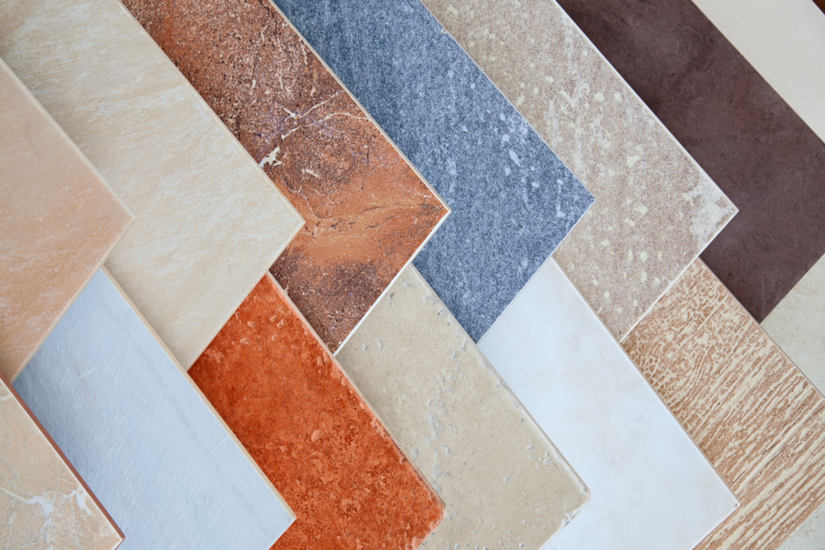
Bathrooms present a challenging environment characterised by high humidity, direct water exposure, and slip hazards.
Water Resistance
Porcelain is inherently waterproof. Its dense nature means it will not absorb water. This makes it the superior choice for wet rooms, shower enclosures, and bathroom floors. Ceramic tiles are perfectly suitable for bathroom walls. They just require the glaze to be intact and must be installed with appropriate waterproof grouts and tanking systems.
Slip Resistance and Safety
Safety is the primary concern for flooring in wet environments. In the UK, slip resistance is measured using the Pendulum Test Value (PTV) in accordance with BS 7976. Bathroom floors legally require a PTV of 36 or higher in wet conditions to classify the floor as low slip potential.
Porcelain tiles come in a vast array of textured, anti-slip finishes that easily achieve a PTV of 36+. Ceramic floor tiles with a matte, anti-slip glaze can also achieve this standard. While high-PTV ceramic floor tiles exist, porcelain remains the overwhelmingly most reliable and highly recommended choice for professional wet room installations.
Kitchen Environments: Thermal Shock and Impact
Kitchens are high-traffic areas subjected to dropped utensils, heavy appliances, spills, and frequent temperature fluctuations. Evaluating Porcelain vs Ceramic Tiles in this context requires a focus on impact resistance and thermal stability.
Impact and Scratch Resistance
Porcelain has an incredibly high breaking strength. If a heavy cast-iron pan drops on a porcelain floor, the tile is highly likely to withstand the impact without chipping. Through-body porcelain masks any minor chips that might occur because the colour runs all the way through the tile.
Ceramic tiles are considerably softer. A similar impact on a ceramic floor is likely to shatter the glaze. This exposes the distinctly different coloured clay body beneath and requires a complete tile replacement.
Thermal Shock and Underfloor Heating
Modern kitchens frequently incorporate underfloor heating systems. The flooring material must possess high thermal conductivity. It must withstand constant heating and cooling cycles without expanding excessively or cracking. Porcelain tiles excel in this area. Their density allows for rapid heat transfer.
Ceramic tiles can work with underfloor heating. Their higher porosity simply makes them slightly more susceptible to thermal shock over long periods. Tradesmen must specify a suitable decoupling membrane over screeds with underfloor heating. They also need to use highly flexible S1 or S2 classified adhesives regardless of the tile choice.
Floor Tiling: High Traffic and Load Bearing Considerations
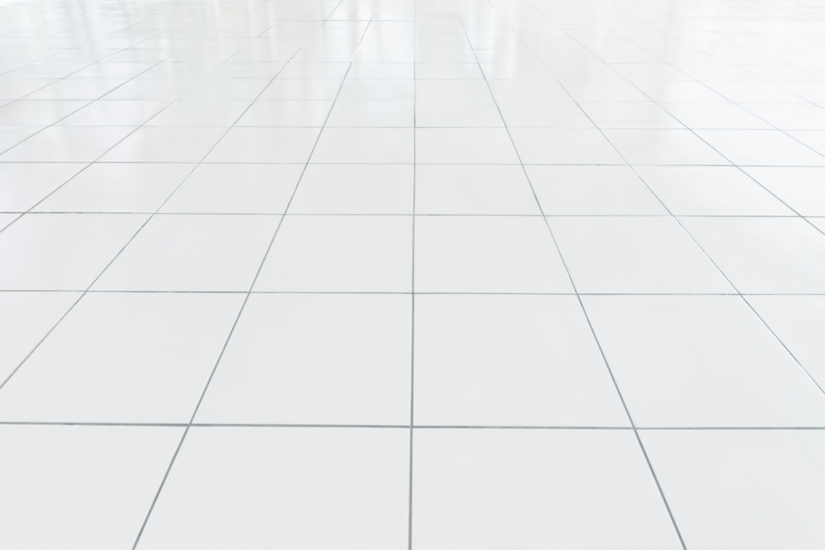
Durability is non-negotiable when specifying flooring for hallways, commercial spaces, or busy residential living areas. The Porcelain Enamel Institute (PEI) rating system is the industry standard for measuring a glazed tile’s resistance to surface abrasion.
| PEI Rating | Recommended Usage | Typical Tile Match |
|---|---|---|
| PEI 1 | Suitable only for walls | Ceramic Wall Tiles |
| PEI 2 | Light residential traffic (bathrooms) | Ceramic Floor Tiles |
| PEI 3 | Moderate residential traffic | Ceramic Floor Tiles |
| PEI 4 | Moderate to heavy traffic (kitchens, hallways) | High-Grade Ceramic / Porcelain |
| PEI 5 | Heavy commercial traffic | Glazed Porcelain |
Ceramic floor tiles generally max out at a PEI rating of 3 or 4. This makes them suitable for light to moderate residential use. Glazed porcelain tiles frequently achieve a PEI of 5. Unglazed porcelain is so durable it does not even require a PEI rating. Porcelain is the structurally sound specification for any floor expecting significant footfall or heavy static loads.
Adhesive and Tooling Requirements
The technical differences between these materials dictate the installation methods and materials required by the tradesman.
Adhesives (BS EN 12004)
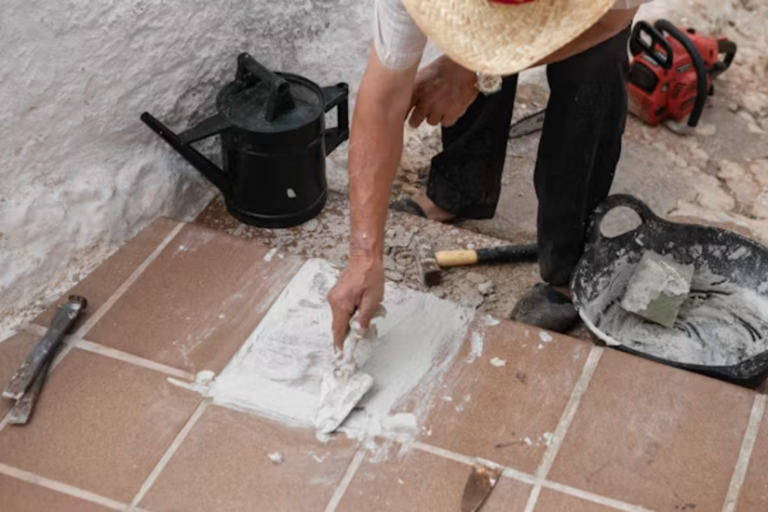
Ceramic tiles are porous. Installers can often fit them using standard C1 classified adhesives. The adhesive mechanically locks into the pores of the tile.
Porcelain tiles have near-zero porosity. They require a chemical bond. Tradesmen must use C2 classified polymer-modified adhesives. Attempting to install porcelain with a basic C1 adhesive will inevitably lead to debonding and project failure.
Cutting and Drilling
Ceramic tiles are easy to score and snap using manual tile cutters. Drilling holes for pipes or fixtures is a quick job with standard carbide-tipped tile drill bits.
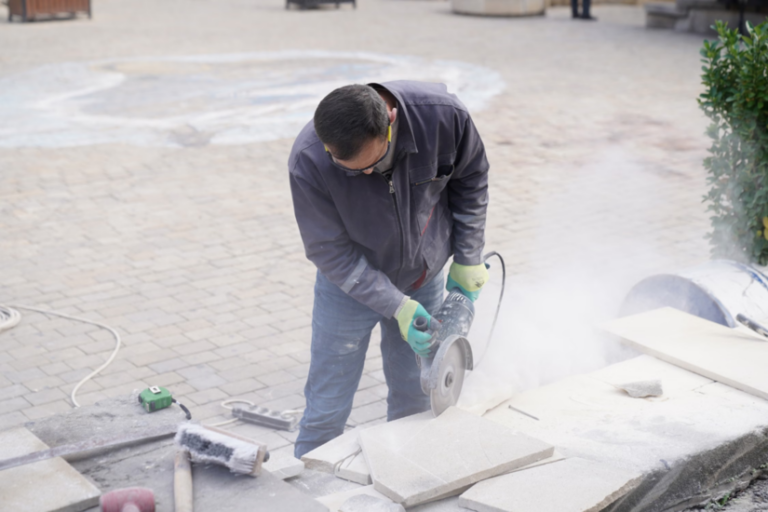
Porcelain requires specialized tooling. Professional diamond-bladed wet saws are necessary to prevent the dense material from shattering during complex cuts. Drilling requires diamond-core drill bits and a constant water feed to stop the bit from burning out.
If you want to make better construction choices and improve how you handle real installation work, TradeFox offers practical training that helps you build skills safely, clearly, and at your own pace.
Conclusion
When finalizing the specification for a project, the decision of Porcelain vs Ceramic Tiles is not just a matter of aesthetic preference. It is a matter of technical suitability and long-term performance. Ceramic tiles remain an excellent, cost-effective choice for decorative wall applications where load-bearing and impact resistance are not factors. They are easier to cut and perfectly adequate for standard bathroom walls.
For floors, high-traffic areas, and areas subjected to underfloor heating, porcelain is the top recommendation for a professional installation. Its extreme density and superior durability guarantee compliance with UK building standards and ensure a safe finish for the client.