


Ask ten bricklayers about the frog in a brick and most will give you a firm answer, though not always the same one. The debate over which way a frog should face has run on building sites for decades. This guide sets out what the frog actually does, the correct orientation for laying, and why filling it matters for the strength and durability of the wall.
What Is a Frog in a Brick?
A frog is the indentation pressed into one or both bedding faces of a brick during manufacture. Most commonly, you will see a single frog on one face, though double-frogged bricks exist. The term has nothing to do with the amphibian. It refers to the recess formed by the kick, or “frog”, in the mould used to shape the brick.
The frog serves several practical purposes:
- It reduces the weight and volume of clay needed per brick, which lowers material cost and firing energy.
- It provides a key for the mortar, helping to lock the brick and the bed joint together.
- It carries the manufacturer's mark in many cases, since the raised part of the mould often holds branding.
Modern frogs are typically between 10mm and 20mm deep.
Not every brick has a frog. Wire-cut (extruded) bricks are usually frogless, sometimes carrying perforations instead. Pressed and soft-mud moulded bricks are where you will most often meet a frogged brick on site.
Which Way Should the Frog Face: Up or Down?
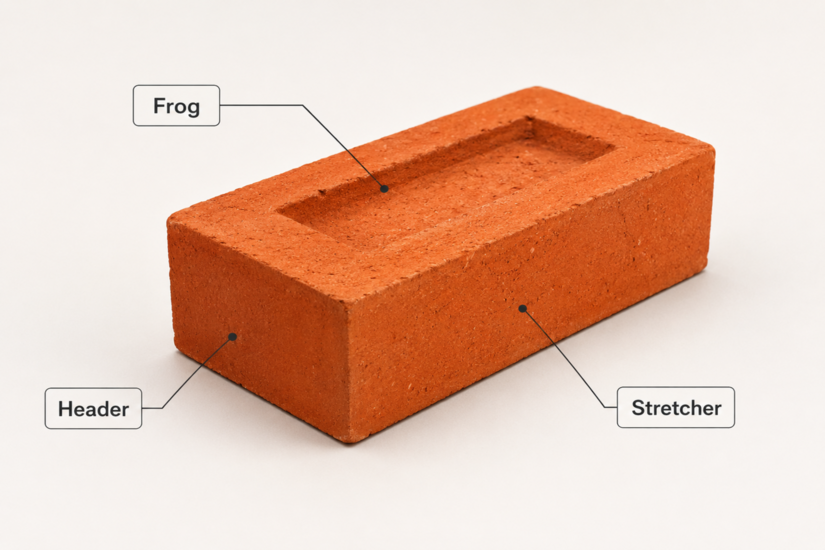
This is the question that starts arguments in the site canteen. The accepted UK default, and the one supported by workmanship guidance, is frog up.
Why Frog Up Is the Standard
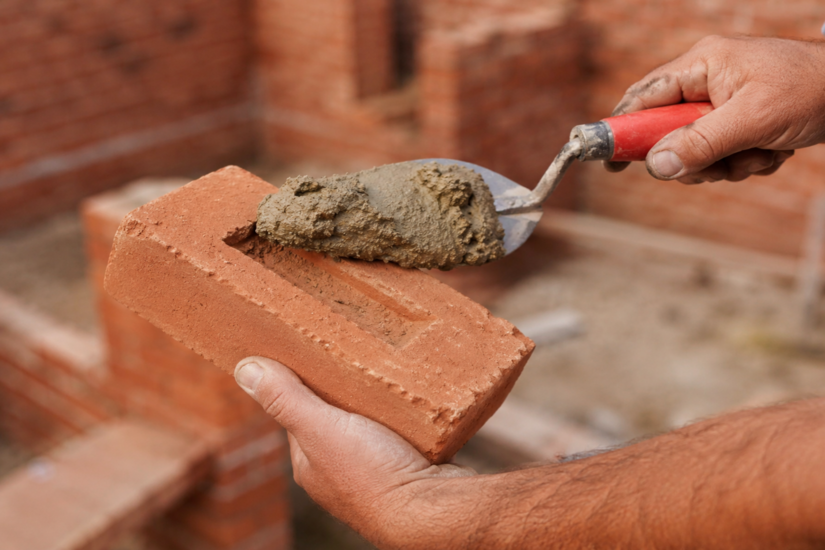
Laying a brick frog up allows the recess to fill with mortar as the bricklayer beds and presses the brick down. When the frog faces upward, mortar sits in and fills the void, producing a solid, fully bedded joint. That gives maximum contact area between the mortar and the brick, which delivers better compressive strength, improved load distribution and stronger bonding between courses.
BS 8000-3:2020, the current workmanship standard for masonry on site, sets out the position clearly. Unless otherwise advised, single-frog bricks are laid with the frog uppermost, and double-frogged bricks with the deeper frog uppermost, with all frogs filled with mortar.
Is Frog Down Ever Acceptable?
Yes, in certain cases. Frog down is not automatically defective work. Testing carried out by the London Brick Company decades ago concluded that frog down is acceptable for domestic brickwork up to two storeys, and a large amount of housing has been built this way. Some bricks with very high suction are also difficult to lay frog up while keeping to gauge in hot weather.
The key point for any tradesman is this: frog down should be a specified or advised decision, not a shortcut taken to save mortar or speed up the job. Where the specification or manufacturer’s guidance calls for frog down, follow it. Where it does not, lay frog up and fill. If in doubt, seek advice before condemning or laying a wall frog down.
For a double-frogged brick, the deeper frog goes up and the shallower one down, with both filled where advised.
Why the Frog Should Be Filled
Filling the frog is not optional busywork. It directly affects how the wall performs. A properly filled frog contributes to four things.
Compressive Strength
Structural masonry relies on solid, continuous bed joints to carry vertical load. An unfilled frog reduces the mortar bearing area and lowers the effective bearing surface, which can reduce the compressive capacity of the wall. Compressive strength testing generally requires the frog to be fully filled, because the mortar helps distribute and transmit load down the wall to the foundations. Where a wall is load bearing, this matters a great deal.
Sound Insulation
Separating walls and party walls between dwellings must resist the passage of sound under Approved Document E of the Building Regulations. Density is central to acoustic performance. Laying bricks frog up and filling with mortar increases the overall mass of the wall and reduces air paths for sound to travel through. On these walls in particular, hollow joints undermine the result.
Fire Resistance
Continuous, void-free masonry performs better against fire spread. Hollow bed joints can create weaknesses in the line of defence that a separating wall, built to satisfy Approved Document B, is meant to provide.
Water and Durability
A hollow frog can hold water that penetrates the joint. Trapped moisture raises the risk of frost damage over freeze-thaw cycles and can speed up deterioration. A filled frog leaves nowhere for water to pool.
Filling the frog is a mark of proper workmanship and is generally expected under NHBC Standards and good site practice. Cutting this corner to lay faster is a false economy that shows up later as a weaker, wetter, noisier wall.
Practical Tips for Laying Frogged Bricks
Getting this right comes down to method and consistency:
- Lay frog up as standard so the recess fills as you press the brick home.
- Use a full, even mortar bed and pack the frog rather than bridge it. A skin of mortar over the top of an empty frog is not a filled frog.
- Keep your mortar workable enough to flow into the recess but stiff enough to hold. A correctly gauged mix to BS EN 998-2 supports this.
- On double-frogged bricks, seat the deep frog uppermost and fill both where advised.
- Check your first few courses for consistency. Once a bad habit sets in across a wall, it is expensive to correct.
For learners working towards a bricklaying qualification, this is a small detail with a big effect. Guided training from TradeFox can help learners review bricklaying methods, build practical understanding, and work through essential construction skills at their own pace.
Regulations and Standards to Reference
UK tradesmen should be familiar with the standards and regulations that touch on masonry workmanship and materials:
- BS 8000-3:2020 for workmanship on building sites, including frog orientation and filling.
- BS EN 1996 (Eurocode 6) for the design of masonry structures. Note that the older BS 5628 suite was withdrawn on 31 March 2010 and should no longer be treated as current.
- BS EN 771-1 for clay masonry units.
- BS EN 998-2 for masonry mortar.
- Building Regulations Approved Documents, particularly Part A (structure), Part B (fire safety) and Part E (sound).
- NHBC Standards for workmanship expectations on new homes.
Always work to the project specification and the manufacturer’s data sheet for the specific brick being used, as these can carry particular requirements.