

High voltage networks cannot be measured or protected using equipment wired directly to conductors running at 11kV, 33kV, 132kV or above. The instruments would be destroyed, and no one could work safely nearby. This is where the voltage transformer earns its place on every substation and switchgear installation across the UK. It takes an unusable high voltage and produces a small, standardised, accurate signal that meters and protection relays can actually use.
This guide explains how the device works, the types you will meet on site, how they are wired, and the UK safety rules that apply. It is written for working electricians, switchgear engineers, and anyone training toward a career in high voltage work. It is not a guide for DIY activity. No one should work on HV apparatus without the correct training, authorisation, and safety documentation.
What This Device Actually Does
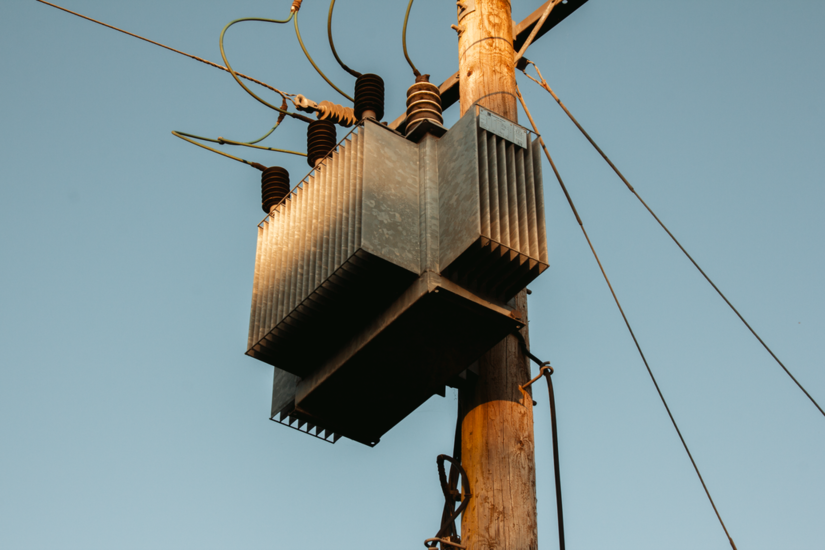
An instrument transformer of this kind, often shortened to VT and historically called a potential transformer (PT, a term used chiefly in North America), steps a high primary voltage down to a low, standardised secondary voltage. In the UK the most common secondary output is 110V line to line. The phase-to-neutral value of that same system is 110/√3, which is about 63.5V, so both figures describe one standard rather than two.
The unit works on the same electromagnetic principle as a power transformer, but the purpose is different:
- Power transformer: Moves energy from one part of the network to another.
- Instrument transformer: Moves information by reproducing the voltage waveform at a safe, scaled level.
The turns ratio sets the scaling. A 33,000/110V unit gives a ratio of 300:1, so a nominal 33kV primary produces 110V at the secondary terminals. Because accuracy matters far more than power throughput here, the device is a low-burden component with a defined accuracy class.
Why Stepping Down Is Non-Negotiable
There are three core reasons the industry relies on this method rather than any direct connection:
- Safety: Secondary circuits run at low voltage, so meters, relays, panels, and the people near them are isolated from lethal primary potentials.
- Standardisation: Instruments are built to accept standard inputs such as 110V. One relay or meter design then works across an 11kV, 33kV, or 132kV site simply by pairing it with the correct ratio.
- Accuracy and protection performance: Metering needs tight accuracy for billing, while protection needs a reliable response during faults. A correctly specified unit delivers both.
Types You Will Meet On Site
There are two main construction types, and knowing the difference matters.
Electromagnetic (Wound) Types
These are conventional wound units with a primary and secondary winding on a magnetic core. They are the standard choice up to around 33kV and are used for both metering and protection. They are accurate, robust, and straightforward to work with. Most units a distribution electrician meets in HV switchgear fall into this group. The governing standard is BS EN 61869-3, which covers inductive voltage transformers.
Capacitor Voltage Transformers (CVTs)
At transmission voltages of 132kV and above, a fully wound unit becomes large and costly. A CVT uses a capacitive divider to bring the voltage down to an intermediate level before an electromagnetic stage completes the step down. CVTs are common on the transmission system and are often combined with power line carrier communication equipment. The relevant standard is BS EN 61869-5, which applies at system voltages of 72.5kV and above.
Metering Versus Protection Applications
The requirements differ sharply between the two functions.
For metering: Accuracy under normal operating conditions is everything. Metering classes such as 0.1, 0.2, 0.5, and 1.0 define how closely the secondary voltage tracks the primary across the normal voltage range. Revenue metering demands the tightest classes, because errors turn straight into billing errors.
For protection: The priority shifts to performance across a wider voltage range, including during faults and voltage collapse. Protection classes carry a “P”, such as 3P (3% ratio error) and 6P (6% ratio error), and hold accuracy up to the voltage factor, typically 1.9 times rated voltage. Many units carry separate secondary windings or cores so that one core serves metering and another serves protection independently.
How The Device Is Connected
Connection arrangements depend on the network and what needs to be measured.
- Single phase: Connected phase to phase or phase to earth.
- Star (wye): Common in three phase systems, giving phase-to-neutral voltages and allowing residual voltage measurement.
- Open (broken) delta: Three single phase secondaries connected in series. The output is near zero during balanced conditions but rises significantly during an earth fault, which makes it a reliable method of earth fault detection.
Critical Safety Rules
Working with any voltage transformer on an HV installation carries specific hazards that every tradesman must respect.
Prove Dead Before Any Work
The primary side sits at full network voltage. All work must follow the site safety rules, with the apparatus proven dead, isolated, earthed, and covered by a permit to work before any hands-on activity begins. Never open the primary circuit expecting the secondary to be safe.
Earth The Secondary At One Point Only
The secondary winding is earthed at a single point to fix its potential and prevent dangerous voltages building up through capacitive coupling. This earth must never be duplicated, because multiple earth points create circulating currents and measurement errors.
Remember The Opposite Rules
This is the failure that catches people out, so it is worth committing to memory:
- Voltage transformer: Must never be short circuited. A short draws heavy current and can damage the unit or operate its fuses. Secondaries are protected by MCBs or fuses for exactly this reason.
- Current transformer: Must never be open circuited. An open CT secondary develops a dangerous high voltage.
Treating one like the other is the most dangerous mistake in this field. Keep the two rules clearly separate.
Only Competent, Authorised Persons Work Here
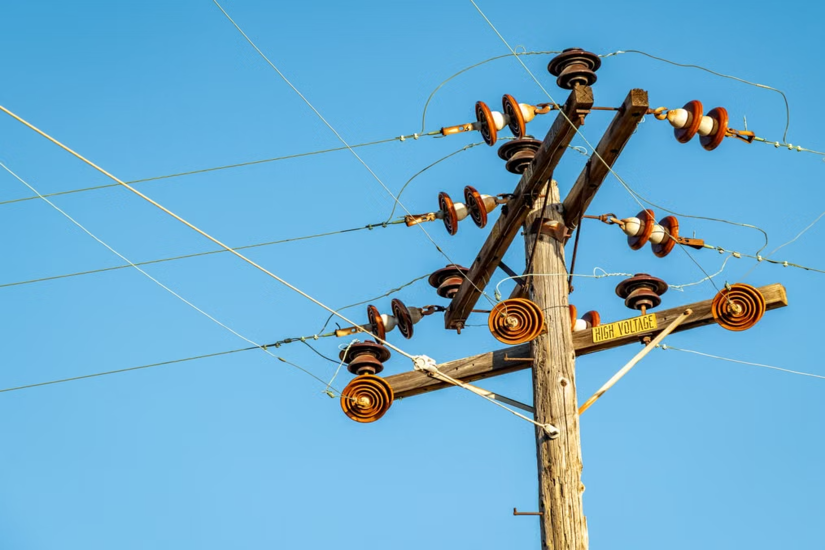
Under the Electricity at Work Regulations 1989, no person should work on or near HV apparatus unless they are competent and authorised. The relevant duties include Regulation 13 (precautions on equipment made dead), Regulation 14 (work on or near live conductors), and Regulation 16 (competence). HSE guidance in HSR25 sets a strong preference for dead working. Formal authorisation itself comes from the site or network operator safety rules, such as the Distribution Safety Rules or your DNO equivalent, rather than from the Regulations directly.
Ratings And Selection
Specifying the right unit means matching several parameters to the installation:
- Primary voltage and system: The nominal voltage and the earthing arrangement.
- Secondary voltage: Commonly 110V in the UK.
- Accuracy class: Separate figures for metering and protection duties.
- Rated burden (VA): The load the secondary can supply while holding its accuracy.
- Voltage factor: Both the magnitude of overvoltage the unit must withstand during earth faults and the time it must hold, for example 1.9 times rated voltage for a defined period.
Getting the voltage factor right matters on networks where earth faults raise the voltage on healthy phases, because an undersized unit can overheat and fail.
Once you understand the basics of voltage transformers and HV safety, keep strengthening your electrical skills with TradeFox. Practice safe isolation and electrical techniques through guided simulations you can revisit whenever you need.
Building A Career Around HV Instrumentation
For anyone moving from general electrical work toward high voltage engineering, understanding this equipment is a real milestone. It sits at the meeting point of metering, protection, and safety, and competence here marks someone ready to progress into authorised HV roles. The path runs through recognised electrical qualifications, HV-specific training, and formal authorisation by the site or network operator.
The voltage transformer will stay fundamental to how the grid is measured and protected, and skilled people who understand it properly are always in demand.