

A gas isolation valve is one of those components every gas operative handles routinely, yet it carries legal weight that catches out the careless. Knowing exactly which valve you are turning, who is permitted to turn it, and what happens downstream is the difference between a clean commissioning job and a reportable incident.
This guide is written for working tradesmen and for those training toward Gas Safe registration. It is not a DIY resource, and nothing here authorises unqualified work on a gas installation, which is illegal in Great Britain.
What A Gas Isolation Valve Actually Is
In plain terms, the device shuts off the flow of gas to a defined section of an installation so that work, testing, or emergency response can happen safely. The term covers several distinct components, and treating them as one is where errors creep in.
The primary point of isolation for most domestic properties is the Emergency Control Valve (ECV), located at the meter. The Gas Safety (Installation and Use) Regulations 1998 (GSIUR) define an emergency control as a valve for shutting off the supply of gas in an emergency, intended for use by the consumer. HSE guidance adds that the ECV must be within reach and situated as near as reasonably practicable to the point where the pipe supplying gas enters the premises.
Sitting downstream of that, you will encounter several other types:
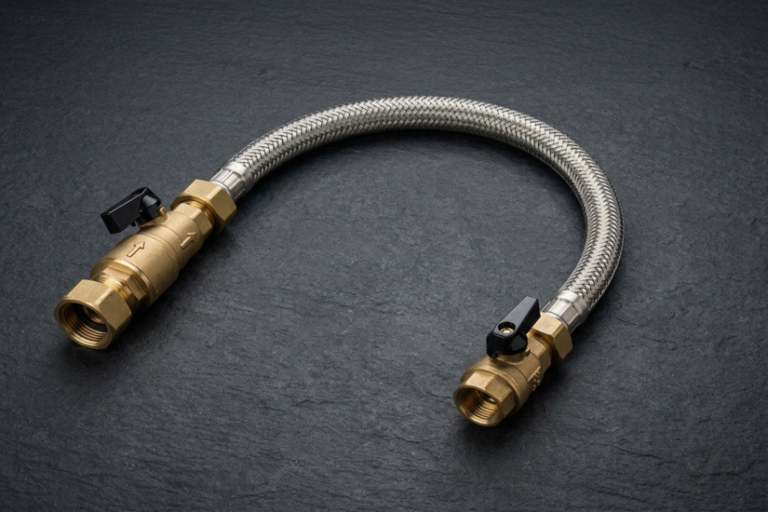
- Appliance isolation valves, fitted immediately upstream of each appliance.
- Service valves, controlling a supply of gas other than the emergency control.
- Additional Emergency Control Valves (AECVs), used where the ECV is set well back from the entry point.
- Automatic isolation valves (AIVs), driven by gas or smoke detection on larger and commercial sites.
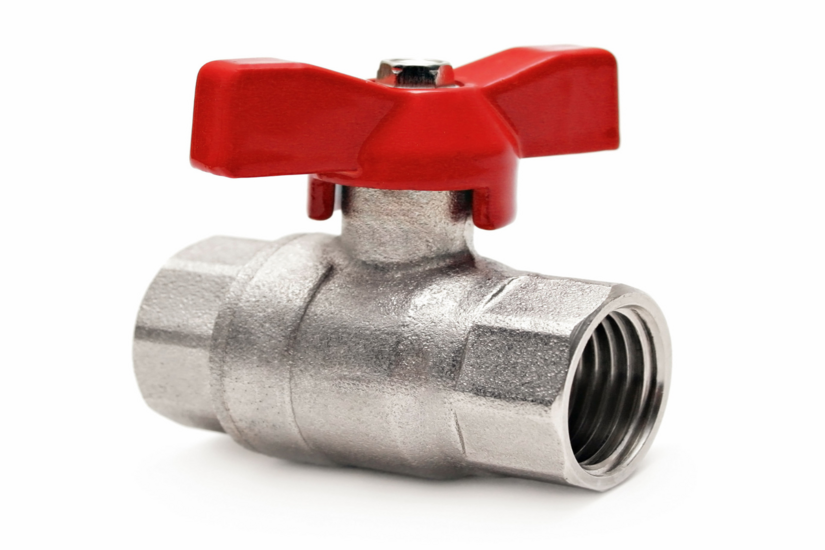
The operating principle for most manual types is consistent. The handle in line with the pipe means the gas is on. The handle at a right angle, a quarter turn to ninety degrees, means it is off.
Where Each Valve Sits
Position matters because it determines both function and permission to operate.
The ECV
The ECV is found at or immediately adjacent to the meter, typically with a yellow, red, or maroon handle. HSE recommends ECVs are also fitted at factory premises, and in rented property the landlord should make sure the tenant knows where it is.
Under commercial and LPG guidance, where the ECV is three metres or more from the point of entry, an AECV must be fitted with appropriate labelling so the supply can be shut off quickly without crossing a building.
Appliance Isolation Points
Appliance isolation valves sit immediately upstream of each appliance. Where several appliances share a gas line, each one should have its own valve. This lets you isolate a single faulty appliance without dropping the supply to everything else on the run, which is both a practical convenience and a safety requirement on multi-appliance installations.
Commercial And Catering Sites
On commercial and catering work the picture expands. AECVs should be readily accessible, clearly identified as gas control valves, and selected for the maximum operating pressure of the pipework, the flow capacity, pressure drop, speed of operation, and the type of gas. On and off tape indicating valve position should accompany the label.
Automatic isolation valves, driven by gas or smoke detection, are not required as standard. They appear where a fire risk assessment or an insurer calls for them.
What It Does, And What It Does Not Do
A gas isolation valve isolates. That is its entire job. It is not a regulator, and it is not a pressure safety device. Confusing isolation with pressure protection is a conceptual error worth stamping out early in any apprenticeship.
The valves that handle pressure faults are separate, and HSE sets out the distinctions clearly:
- OPSO (over-pressure shut-off): trips on over-pressure and must be reset only by the gas supplier.
- UPSO (under-pressure shut-off): trips on low pressure and may be reset by the gas user once the cause is resolved.
- PRV (pressure relief valve): fitted to a bulk LPG tank to vent internal pressure if it climbs dangerously, for example under thermal load from a nearby fire.
None of these is an isolation valve, and none should be treated as one.
Appliance Isolation Points
Industry technical guidance is firm on what is unacceptable:
- A butterfly valve is not acceptable as an ECV or AECV.
- A lubricated plug valve cannot be used buried underground.
- A non-lubricated plug valve used as an ECV cannot exceed 50mm nominal bore.
- Drop weight valves held open by fusible links or solenoid latches are not normally suitable for gas, because they are held open by interference and are prone to sticking open.
Commit these to memory before you specify anything.
Who Is Permitted To Operate Which Valve
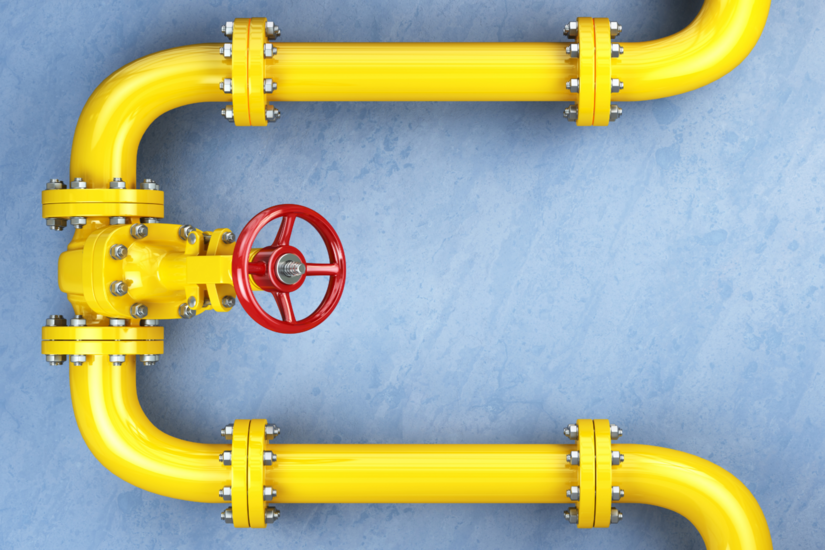
This is the part that protects your registration, so read it carefully.
All gas work in Great Britain must be carried out by a Gas Safe Registered engineer under GSIUR 1998. As a registered engineer, you may operate the ECV to isolate the supply for commissioning, testing, or before working on downstream pipework. You may operate downstream isolation valves freely as part of that work.
Where the line is drawn is the meter and everything upstream of the ECV outlet. You may operate the ECV, but you must not break into, work on, or replace the primary meter or the service installation upstream of it. That is the responsibility of the gas transporter and its network engineers. For LPG, the storage tank and its valves belong to the storage company such as Calor or Flogas. Do not interfere with the tank.
When Not To Touch A Valve
There are clear situations where the correct professional response is to stop, not to operate.
- Do not reset a tripped OPSO. That reset belongs to the gas supplier.
- Do not work on the primary meter or anything upstream of the ECV outlet. That is network territory.
- Do not interfere with an LPG bulk tank or its valves.
If You Suspect A Gas Escape
The procedure is well established:
- Turn off the gas at the ECV, only if it can be reached safely and is accessible.
- Extinguish naked flames and do not smoke.
- Do not operate electrical switches, as a spark can ignite a leak.
- Ventilate by opening doors and windows, and evacuate if necessary.
- Call the National Gas Emergency Service on 0800 111 999, which is free and staffed 24 hours a day.
Immediately Dangerous Appliances
Where you find an Immediately Dangerous (ID) appliance, your obligation under the Gas Industry Unsafe Situations Procedure (GIUSP) is to make it safe. Disconnection is carried out with the customer’s permission.
If you can disconnect it safely and consent is given, do so. If the occupier refuses, warn them clearly in writing, complete a Gas Safe warning notice, turn off and label where appropriate, and consider whether the situation warrants reporting to the Gas Safe Register or the HSE. The valve is a tool in that process, not a substitute for the paperwork and the duty to warn.
Accessibility And Labelling
A gas isolation valve is only useful if it can be found and operated under stress. Good practice is straightforward:
- Identify all valves clearly as gas control valves.
- Label an AECV "Additional Gas Emergency Control" or similar.
- Display emergency advice and the emergency service provider's contact number nearby.
For consumers who would struggle with a standard ECV handle, the gas networks offer assisted devices such as the EasyAssist ECV, activated at the push of a button, with some versions tripping automatically in a house fire. Any such device, like any gas valve, should be installed, tested, or repaired only by a Gas Safe Registered engineer.
If you want to build confidence with gas safety procedures and other core trade skills, TradeFox offers interactive training that lets you practise step by step in a safe learning environment before applying those skills on site.
The Takeaway For Working Operatives
Treat every valve as a device with a defined owner. Know whether the one in front of you is yours to operate, the network’s, or the storage company’s, and act strictly within that boundary.
Get the on and off positions right, never mistake an isolation valve for a pressure safety device, and let the regulations rather than convenience set your limits. That discipline is what keeps installations safe and keeps your registration in good standing.