

Constructing masonry that meets United Kingdom standards requires precision, strict adherence to building regulations, and a clear understanding of material properties. Knowing how to build a brick wall that stays straight, stable, and weather-resistant is the foundational skill every professional bricklayer and apprentice must master.
This comprehensive guide outlines the technical requirements, structural preparations, and laying techniques necessary to produce high-quality, regulation-compliant brickwork.
Regulatory Framework And Standards
Before any trowel touches mortar, site operatives must ensure the planned work complies with the relevant regulatory frameworks. In the United Kingdom, this primarily involves the Building Regulations.
Structural Integrity And Moisture Resistance
Part A of the Building Regulations covers the structural integrity of the wall, ensuring it can safely bear expected loads. Part C dictates site preparation and resistance to moisture, which is critical for the longevity of the masonry. Furthermore, all materials and practices should align with BS EN 1996, also known as Eurocode 6, for the design of masonry structures.
Failure to adhere to these standards can result in structural failure, damp penetration, and failed site inspections. For apprentices entering the trade, understanding these regulations is just as important as manual dexterity.
Site Preparation And Foundation Specifications
A wall is only as stable as the foundation it sits upon. Ground conditions dictate the depth and type of foundation required to support the masonry load safely.
Excavation Depth And Soil Types
For a standard garden wall or single-skin boundary wall, a concrete strip foundation is standard practice. The trench must be excavated to a firm bearing stratum. In the United Kingdom, this typically means a minimum depth of 600mm to bypass the frost line. Depths of 1000mm or more are required in areas with highly shrinkable clay soils or nearby tree roots. Operatives must refer to NHBC Chapter 4.2 for specific proximity charts regarding tree distances to avoid future subsidence.
Concrete Specifications
The concrete mix for the foundation should generally be a GEN3 mix for standard strip foundations. The concrete must be poured to a minimum thickness of 150mm, although 225mm is highly recommended for heavier load-bearing structures. The foundation must be perfectly level and cured sufficiently before loading. Any discrepancy in the foundation level will compound as the courses rise. This makes it incredibly difficult to achieve a straight finish without relying on excessively thick, weak mortar beds.
Damp Proofing And Setting Out
Moisture management is a critical aspect of masonry. Ground moisture rising through capillary action will degrade mortar, cause spalling in bricks, and introduce unsightly efflorescence to the brick face.
Installing The Damp Proof Course
To prevent rising damp, a Damp Proof Course conforming to BS 6515 must be installed. Building Regulations stipulate that the Damp Proof Course must be situated a minimum of 150mm above the finished external ground level. The waterproof membrane must be bedded on a fresh layer of mortar and covered with another layer before the next course of bricks is laid. It must never be laid dry onto the bricks.
Setting Out The First Course
Setting out the first course dry without mortar is standard practice to establish the bond and calculate the exact vertical joints. This prevents small cuts and ensures structural integrity throughout the run. A standard 10mm joint is expected between all bricks. For a half-brick wall, a stretcher bond is typical, but structural stability often requires engaged piers at specified intervals. These intervals depend heavily on the final height and geographic exposure rating of the wall.
Mortar Mix Design And Application

The mortar acts as both the adhesive and the flexible cushion between the masonry units. For external walls subject to normal weather conditions, a Class M4 mortar is standard across the industry.
Correct Mix Ratios
This specification is typically achieved with a 1:1:5 to 1:1:6 mix of cement, lime, and building sand. Alternatively, a 1:5 to 1:6 mix of cement and sand with a specialized plasticiser added to improve workability is widely used. Mixing must be strictly consistent across the entire site. Changes in the sand to cement ratio or water content across different batches will lead to colour variations in the pointing and uneven compressive strength in the cured wall.
Working Lifespan Of Mortar
Mortar has a limited working lifespan on the board. Once the initial set begins, normally within two hours depending on ambient temperature, the mortar must be discarded. Retempering mortar by adding water after this phase destroys its chemical bond and severely compromises the structural integrity of the wall.
Laying The Bricks For Precision And Alignment
To understand how to build a brick wall that stays straight, stable, and weather-resistant, operatives must master the constant checking of gauge, level, and plumb. Proper laying technique separates professional tradesmen from novices.
Brick Types And Suction Rates
The physical properties of the chosen brick significantly influence the laying process. High-suction bricks, such as soft facing bricks, can rapidly draw moisture from the mortar bed. This rapid suction stiffens the mortar prematurely, making it difficult to adjust the brick to the string line. High-suction bricks should be lightly dampened before laying to counteract this issue. Conversely, engineering bricks possess exceptionally low water absorption rates. Laying engineering bricks requires a slightly stiffer mortar mix to prevent the units from floating or swimming on the wet bed joint.
Racking Back The Corners
The corners or ends of the wall are always built up first. These act as the master reference points for the rest of the structure. Each brick must be checked with a reliable spirit level across three axes. These axes are plumb (perfectly vertical), level (perfectly horizontal), and gauge (the correct height for the courses). A standard gauge in the United Kingdom is 75mm, which accounts for the standard 65mm brick plus a 10mm mortar bed. Using a gauge rod ensures exact, consistent course heights from the damp proof course all the way to the coping.
Utilizing The String Line
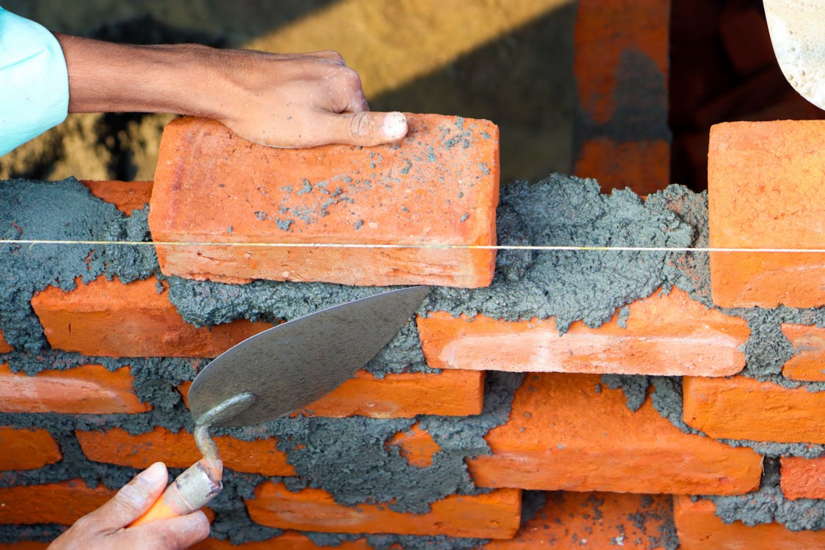
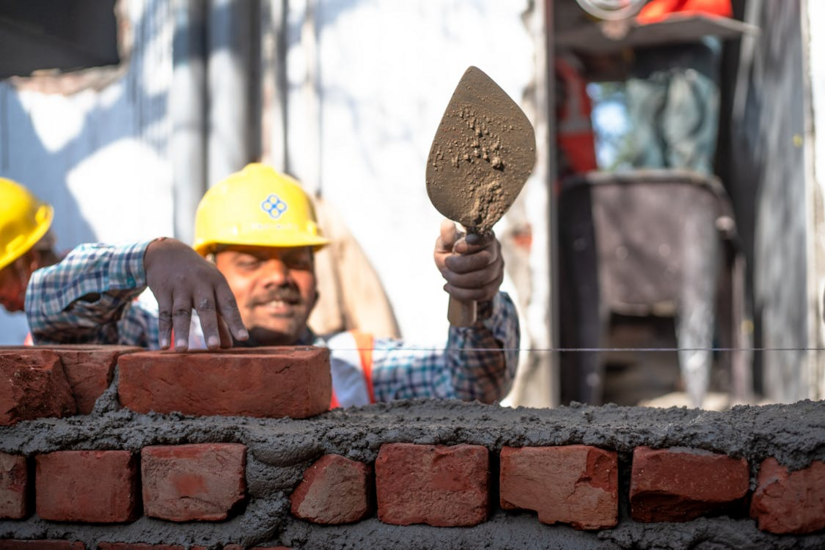
Once the corners are raised and racked back, a string line is pulled tight between them. The line is aligned perfectly with the top outer edge of the leading course. When laying the intermediate bricks, the bricklayer must bring the brick exactly to the line without touching it. Even a single millimeter of pressure on the line will cause a bow in the middle of the wall, ruining the straightness of the entire panel.
Frogs And Proper Buttering
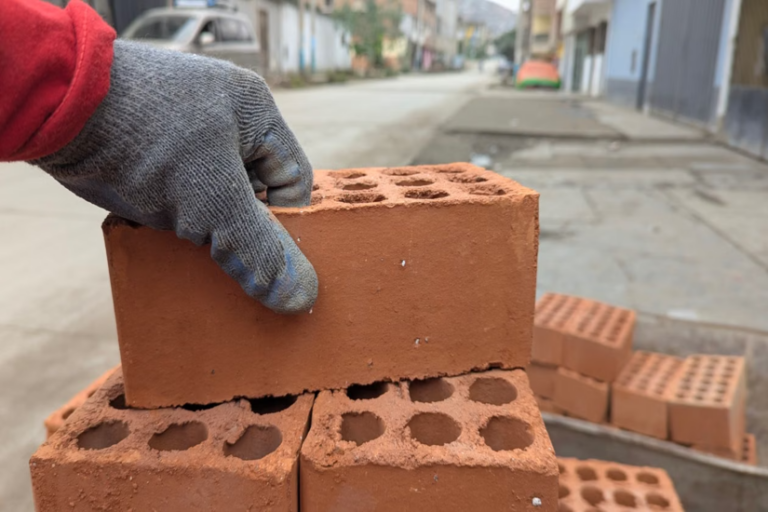
Most modern manufactured bricks have an indentation called a frog. Bricks should generally be laid frog up to ensure the indentation is completely filled with mortar, which maximizes the compressive strength of the wall. When buttering the vertical joints, the mortar must completely fill the gap. Slushing, which involves pushing loose mortar into the joint after laying, is a poor practice that leaves internal voids. These internal voids allow water penetration and significantly weaken the masonry structure.
Structural Stability And Expansion Elements
For longer runs of masonry, thermal and moisture movement must be accommodated to prevent extensive cracking. Clay bricks expand slightly over time as they absorb moisture, while concrete bricks tend to shrink slightly.
Vertical Movement Joints
For continuous clay brickwork runs, vertical movement joints should be installed every 10 to 12 metres. These joints are left entirely free of mortar and filled with a compressible filler, then sealed externally with a weather-resistant mastic. This structural gap allows the masonry panels to expand independently without causing structural damage.
Cavity Trays And Weep Holes
When constructing external cavity walls, managing penetrating moisture is just as critical as stopping rising damp. Cavity trays must be installed above all structural openings, such as windows and doors, to intercept water that breaches the outer leaf. This intercepted moisture must then be directed back out of the building envelope. Weep holes must be incorporated into the external masonry leaf, typically positioned at 900mm centers directly above the cavity tray. Omitting weep holes will inevitably lead to internal damp issues and costly remedial works.
Cavity Wall Ties
If building a cavity wall, stainless steel wall ties conforming to BS EN 845-1 must be installed correctly. These must be placed at a rate of 2.5 ties per square metre, evenly spaced, to tie the two leaves together and provide required lateral stability. Learning how to build a brick wall that stays straight, stable, and weather-resistant means anticipating these physical stresses and building in the necessary tolerances from the very beginning of the project. Additional ties are always required around openings and at unreturned ends.
Pointing Profiles For Weather Resistance
The joint finish, commonly known as pointing, is the absolute first line of defense against driving rain. Recessed pointing, while aesthetically pleasing to some architects, creates a physical ledge for water to sit on and drastically increases the risk of frost damage.
Recommended Pointing Styles
For maximum weather resistance, bucket handle pointing or weather-struck pointing are the recognized professional standards.
- Bucket handle jointing compresses the mortar inwards to create a concave shape that naturally sheds water down the face of the brick.
- Weather-struck pointing presses the top of the joint inwards while the bottom sits flush with the brick below, creating an angled ramp that directs rainwater outwards.
Timing The Pointing Process
Pointing must be completed while the mortar is green, meaning it is firm but still workable. Pointing too early causes messy smearing on the brick face. Pointing too late prevents a proper seal and leads to crumbly, weak joints that will easily fail under heavy weather exposure.
Weather Protection During Construction
A newly built wall is highly vulnerable to the elements during its curing phase. Heavy rain will wash cement out of the fresh mortar, ruining its compressive strength and permanently staining the brickwork.
Protecting Against Frost And Heat
Freezing temperatures will cause the water in the fresh mortar to expand. This expansion leads to immediate structural failure known as frost attack. Site protocols require that all fresh masonry be protected comprehensively at the end of the working day. Thick polythene sheeting or heavy hessian should be securely draped over the new work. In extreme summer heat, rapid evaporation can cause the mortar to dry before it cures properly. In such cases, dampening the bricks prior to laying and keeping the finished work shaded is absolutely necessary to maintain strength.
Health And Safety Protocols
No professional guide would be complete without firmly addressing site safety. The Health and Safety at Work Act mandates strict adherence to safety protocols across all construction sites in the United Kingdom.
Silica Dust And Manual Handling
Cutting bricks with a masonry saw generates respirable crystalline silica dust, which is highly hazardous to lung health. This hazard requires FFP3 respiratory protection alongside wet cutting methods to safely suppress airborne particles. Manual handling protocols must be strictly observed when lifting brick packs and heavy mortar tubs to prevent musculoskeletal injuries among the workforce.
Working At Height Securely
If the wall exceeds manageable, safe reaching heights, proper access equipment must be utilized immediately. Independent scaffolding or proper podium platforms must be erected by competent, certified personnel in compliance with TG20 guidelines. Working from unstable platforms or balancing on upturned buckets is a severe violation of site safety rules.
If you want to strengthen the practical skills behind safe bricklaying work, TradeFox offers step by step training, hands on simulations, and flexible learning that fits around your schedule.
Final Quality Assessment
Achieving excellence in masonry is an ongoing process of strict, uncompromising quality control. By maintaining precise foundations, adhering to correct mortar specifications, utilizing exact string line techniques, and applying appropriate weather profiles, tradesmen ensure their work meets all United Kingdom structural standards.
Mastering how to build a brick wall that stays straight, stable, and weather-resistant separates the highly skilled professional from the amateur, ensuring durable infrastructure that will safely stand for generations.