

Well-planned hallway lighting plays an important role in both safety and visual comfort inside buildings. Hallways and corridors are circulation spaces that connect rooms, staircases, and entrances. Poor lighting in these areas can reduce visibility, create uncomfortable glare, and make a corridor appear narrower than it actually is.
For electricians, lighting installers, and those training to enter the electrical trade, understanding the fundamentals of hallway lighting design is essential. Lighting must provide consistent illumination for safe movement while avoiding strong shadows and excessive brightness contrast.
Electrical installation work in the United Kingdom should be designed and installed in accordance with BS 7671 Requirements for Electrical Installations, which is the recognised technical standard used to support electrical safety compliance. For dwellings in England, Approved Document P of the Building Regulations addresses electrical safety, while Approved Document L covers energy efficiency requirements for fixed lighting installations.
This article explains how glare control, fixture placement, and shadow distribution influence the appearance of a hallway, and how professionals can apply layered lighting techniques to create safer and more comfortable spaces.
Why Hallway Lighting Is Important In Building Design
Hallways often receive limited natural daylight. In many buildings the corridor relies primarily on artificial lighting throughout the day and night.
When hallway lighting is poorly planned, several problems can appear:
- Dark areas that reduce visibility
- Bright hotspots that cause visual discomfort
- Shadows that visually narrow the corridor
- Uneven illumination that disrupts the flow of movement
Balanced lighting improves visibility and helps maintain a consistent level of brightness along the entire circulation route.
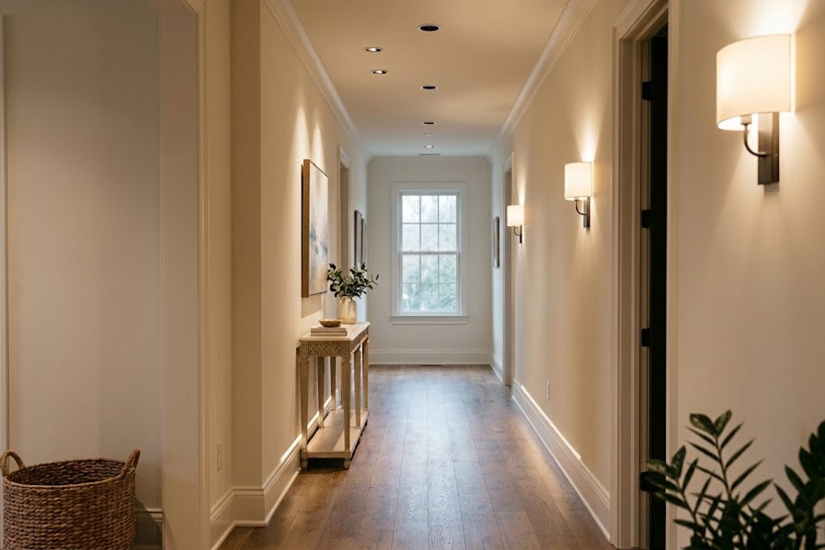
Lighting designers often consider both horizontal illumination on the floor and vertical illumination on walls. Lighting vertical surfaces can reduce contrast within the corridor and may help the space feel more open, depending on surface finishes and luminaire placement.
How Shadows Influence The Perception Of Corridor Width
Shadows created by lighting fixtures can strongly affect how wide or narrow a hallway appears.
Side Wall Shadows
Lighting positioned along only one side of a corridor can cast strong shadows across the floor and opposite wall. These shadows exaggerate the depth of wall features and can make the corridor appear narrower.
Positioning fixtures along the centre line of the ceiling often helps distribute light more evenly across both sides of the hallway.
Ceiling Fixture Shadows
Downlights with narrow beam angles sometimes produce bright pools of light directly beneath the fitting while leaving upper wall surfaces darker. When the upper wall area remains dim, the hallway can appear lower and more confined.
Fixtures that distribute light more broadly across surfaces help maintain visual balance.
Doorway And Recess Shadows
Door frames, alcoves, and recesses can create strong shadow lines if lighting is uneven. These shadows interrupt the visual continuity of the corridor.
Evenly distributed hallway lighting reduces sharp contrast between lit and unlit surfaces and helps maintain a more consistent appearance along the corridor.
The Principle Of Layered Lighting
Professional lighting design often uses a layered approach rather than relying on a single light source. Layered lighting combines multiple lighting elements to improve distribution, control glare, and reduce harsh shadows.
Ambient Lighting
Ambient lighting provides the general illumination for the corridor.
Common ambient lighting fixtures include:
- Surface-mounted ceiling luminaires
- Recessed downlights
- Linear ceiling fixtures
These fixtures should be spaced to provide consistent illumination along the circulation route.
Wall Lighting
Wall-mounted luminaires can improve vertical illumination and reduce contrast between the ceiling and wall surfaces.
En voici quelques exemples :
- Wall sconces
- Wall washer fixtures
- Linear wall lighting systems
Illuminating wall surfaces can soften shadows and improve the overall visual balance of the corridor.
Accent Lighting
Accent lighting may be used in residential hallways to highlight decorative features such as artwork or architectural details. Accent lighting should complement the main ambient lighting rather than create strong brightness contrasts.
Managing Glare In Hallway Lighting
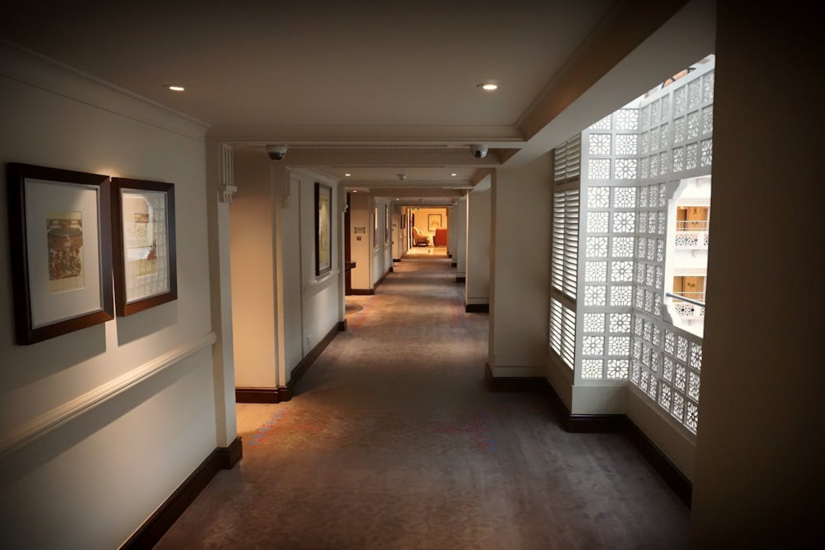
Glare occurs when light sources are excessively bright relative to surrounding surfaces. Glare can reduce visual comfort and make it more difficult for occupants to move safely through a corridor.
Several installation practices help reduce glare.
Shielded Light Sources
Luminaires with diffusers or recessed optics help prevent direct view of the lamp or LED source. This reduces the likelihood of discomfort glare, particularly in narrow corridors where fixtures are visible within the field of view.
Appropriate Beam Angles
Downlights with wider beam angles distribute light more evenly across the floor and walls. Narrow beams may create bright spots on the floor while leaving surrounding areas darker.
Surface Reflectance
Highly reflective floors or glossy wall finishes can increase perceived glare. Lighting placement and output should take these surfaces into account to avoid excessive reflections.
Lighting Layout Strategies For Narrow Hallways
Narrow corridors require careful fixture placement to avoid creating a visually compressed space.
Centreline Fixture Layout
Installing fixtures along the centre line of the ceiling often provides balanced illumination across both walls and reduces strong side shadows.
Consistent Fixture Spacing
Uneven spacing between luminaires can create alternating bright and dim zones. Consistent spacing improves uniformity along the corridor.
Wall Illumination
Lighting that spreads illumination across wall surfaces can reduce contrast and may help the corridor feel visually wider.
Energy Efficiency And UK Regulatory Considerations
Lighting installations must consider both safety and energy efficiency requirements.
Electrical Safety
Electrical work in dwellings should be designed and installed in accordance with BS 7671. Compliance with this standard helps demonstrate that installations meet recognised safety practices. Electrical work in domestic properties in England must also meet the requirements of Approved Document P, which addresses electrical safety for installations in dwellings.
Energy Efficiency
Approved Document L sets requirements for energy efficiency in buildings. In many installations, LED luminaires are used to help meet these energy performance expectations for fixed lighting.
Emergency Lighting Considerations
In some buildings, corridors may form part of a designated escape route. In these situations the fire safety strategy may require emergency lighting to ensure safe movement if normal lighting fails. Requirements for emergency lighting depend on the building type, layout, and fire safety design and should be considered during project planning.
Selecting Suitable Fixtures For Hallway Lighting
Choosing appropriate luminaires helps ensure both reliable performance and visual comfort. Common fixture types used in hallway lighting installations include:
Recessed Downlights
Recessed downlights are frequently used in modern residential hallways. They provide a discreet appearance and can deliver even illumination when spaced correctly.
Linear Ceiling Luminaires
Linear lighting fixtures distribute light along a continuous length and work well in long corridors. These fixtures are commonly used in commercial circulation spaces.
Wall-Mounted Luminaires
Wall mounted lights add vertical illumination and reduce shadow contrast across wall surfaces. These fixtures can also contribute to the architectural appearance of the corridor.
Avoiding Common Hallway Lighting Problems
Certain installation issues can reduce the effectiveness of hallway lighting.
Excessive Brightness
Fixtures that are too bright relative to the surrounding environment may create glare. Lighting output should be balanced to maintain comfortable visibility.
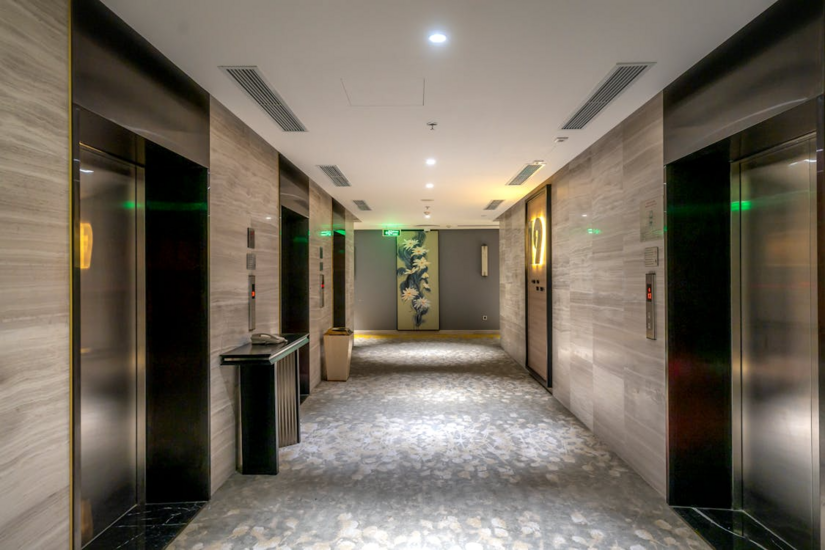
Poor Alignment
Misaligned luminaires can create uneven illumination patterns. Accurate layout during installation helps maintain uniform light distribution.
Limited Vertical Lighting
Lighting that only illuminates the floor can leave upper walls darker and make the hallway feel enclosed. Providing some vertical illumination often improves the overall balance of the space.
Safety Considerations For Electrical Installations
Safety should remain the primary consideration when installing lighting systems. Electrical installation work should be carried out by competent persons who understand the requirements of BS 7671 and applicable Building Regulations.
Key safety considerations include:
- Correct circuit protection
- Secure mounting of luminaires
- Safe cable routing and connections
- Proper inspection and testing after installation
These measures help ensure that hallway lighting systems operate safely and reliably. If you want to build confidence with lighting basics and safe setup steps, TradeFox is a practical place to learn at your own pace.
Conclusion
Well designed hallway lighting improves both visibility and the overall perception of space within a building. Proper fixture placement, glare control, and balanced illumination across walls and floors can reduce shadows that make corridors appear narrow.
Layered lighting strategies help distribute light more evenly and support comfortable movement through circulation areas. When installations follow recognised electrical standards and consider both safety and energy efficiency, hallway lighting can enhance both functionality and visual comfort.
For trades professionals and those entering the electrical industry, understanding how lighting placement affects shadows and glare is an important step toward delivering reliable and well balanced lighting installations.