

Every sealed central heating system needs a way to bring it up to pressure. That job falls to the filling loop, a short run of pipe or flexible hose linking the mains cold supply to the heating circuit. It does one simple thing well, but it also creates the single connection the water regulations worry about most: a direct link between clean mains water and a circuit full of dirty, inhibitor-dosed system water.
Get it wrong and you are not just looking at a callback. You are risking contamination of a drinking water supply, and possibly enforcement action from the water undertaker. So it pays to know where the loop sits, how to fit it, and why leaving it connected is a problem.
What a Filling Loop Does?
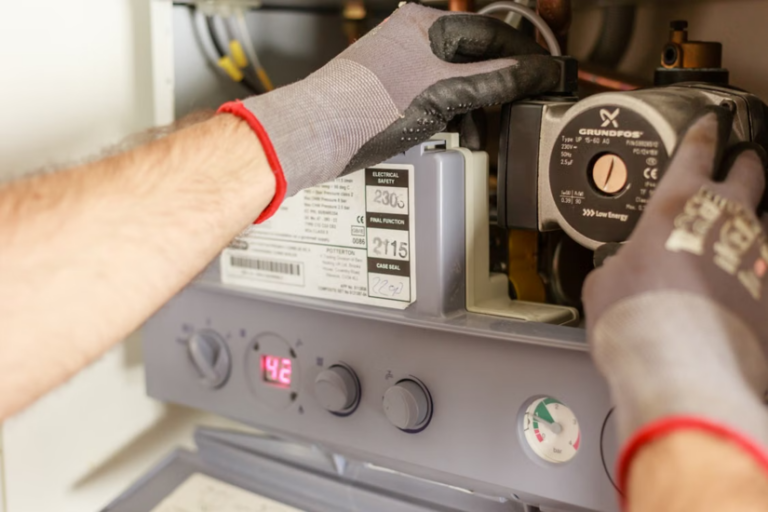
A filling loop pressurises and tops up a sealed system. On first commissioning a combi or system boiler, or when boiler pressure drops below its normal cold working range of roughly 1 to 1.5 bar, you open the loop to let mains water into the circuit until the gauge reads right.
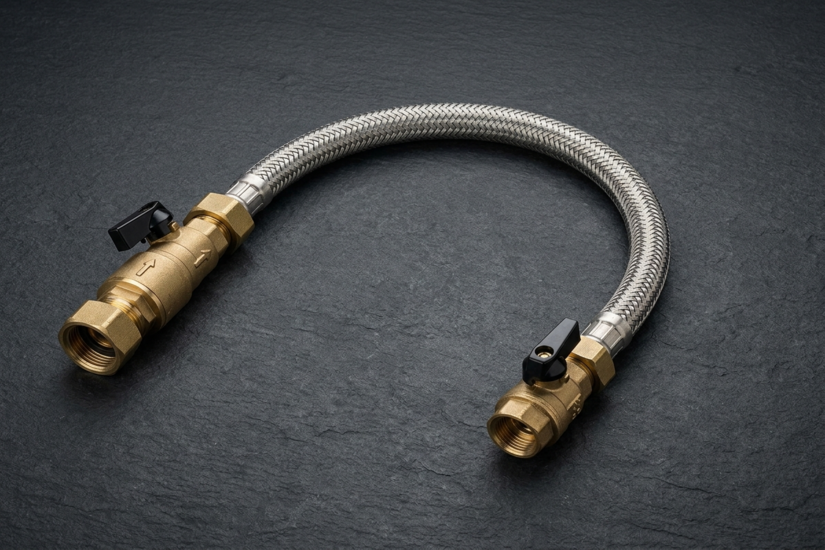
A compliant loop is built from a few set parts:
- Mains isolation valve: Shuts off the cold supply feeding the loop.
- Double check valve: Two single check valves in series, the backflow barrier for a fluid category 3 duty.
- Flexible hose or fixed pipe: Carries water across to the heating side.
- Heating-side isolation valve: Lets you close the loop off at the circuit.
Where the Loop Connects?
The loop sits between the mains cold water inlet and the central heating return, usually at the boiler or at a heat interface unit on communal setups. Fit it the right way round. An external loop installed backwards will stop the system refilling, because the check valve blocks flow in the intended direction. Check the arrow before you tighten anything.
Why the Loop is a Cross-Connection Risk?
Here is the core of it. One side of the loop holds clean drinking water. The other holds primary water that has sat in radiators, pipework and a heat exchanger, usually dosed with corrosion inhibitor and carrying rust, sludge and dissolved metals. Nobody should be drinking that.
While the loop is open, those two bodies of water are kept apart only by the check valve. That is fine for the few minutes you are filling. The danger starts when the loop is left connected and treated as a permanent barrier, because a mechanical valve can and does fail with age.
Backflow Explained
Backflow is water travelling the wrong way, from the system back towards the main. On a central heating filling loop it shows up in two forms:
- Backpressure: Mains pressure normally sits above the heating circuit, which is how the system fills. Backpressure becomes a risk when that balance flips, say the mains drops or the system over-pressurises through a fault, and the heating side briefly pushes harder than the supply.
- Backsiphonage: A sudden fall in mains pressure, such as a burst main nearby or a heavy draw-off, can siphon system water back into the supply pipe.
Water Regs UK has recorded a real case where a permanently installed filling loop with no proper backflow protection let heavily polluted heating water push back into the cold supply at a school, discolouring the water at the drinking fountains. That is what happens when a loop is left in place and the barrier fails.
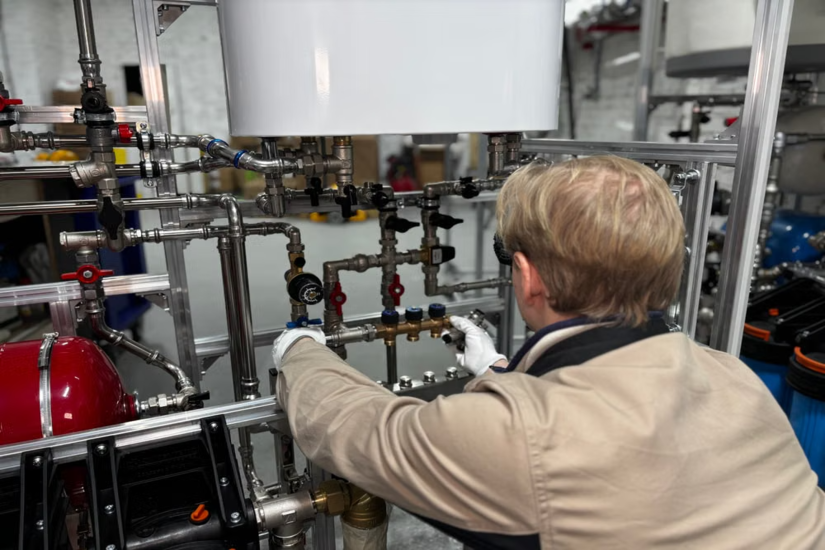
What UK Water Regulations Require?
Backflow protection is a legal duty across the UK. The rules are set out in the Water Supply (Water Fittings) Regulations 1999 in England and Wales, the matching 2009 Regulations in Northern Ireland, and the Water Supply (Water Fittings) (Scotland) Byelaws 2014. Schedule 2, paragraph 15 requires every plumbing system to include protection against backflow.
The level of protection depends on the fluid category the water undertaker assigns to the system.
Fluid Category and The Right Protection
- Domestic sealed systems: Normally treated as a fluid category 3 risk, a slight health hazard from inhibitors and contaminants. Water Regs UK confirms a compliant double check valve on the fill point can be accepted as backflow protection here.
- Commercial primary systems: Treated as a fluid category 4 risk. A category 3 filling loop can only be used in specific circumstances after a risk assessment, and category 4 duties need an RPZ (reduced pressure zone) valve, not a double check valve.
Why A Filling Loop Must Be Disconnected After Use?
A double check valve is fine for the act of filling. It is not designed to be a permanent cross-connection you leave in place and forget. Valves wear, and a worn check valve on a live connection is how contaminated water finds its way back into the main.
Best practice is straightforward. Once the system is up to pressure, fully disconnect the hose and take it off. Store it with the boiler so the next engineer can find it.
If you only detach one end, the break has to be in the right place:
- Keep the check valve on the mains: The double check valve stays fitted to the supply pipe at all times.
- Break on the valve outlet: Disconnect the hose between the hose and the check valve, on the valve's outlet side, so the backflow barrier never leaves the live supply.
- Never strip the protection: Do not remove the check valve and leave the hose joined to an open mains connection, since that takes out the very protection the regulations call for.
A fixed, hard-piped loop left permanently connected is the arrangement that gets flagged on inspection. If a system genuinely needs a permanent filling arrangement, it has to carry backflow protection matched to its real category, not a hose sat on a check valve indefinitely.
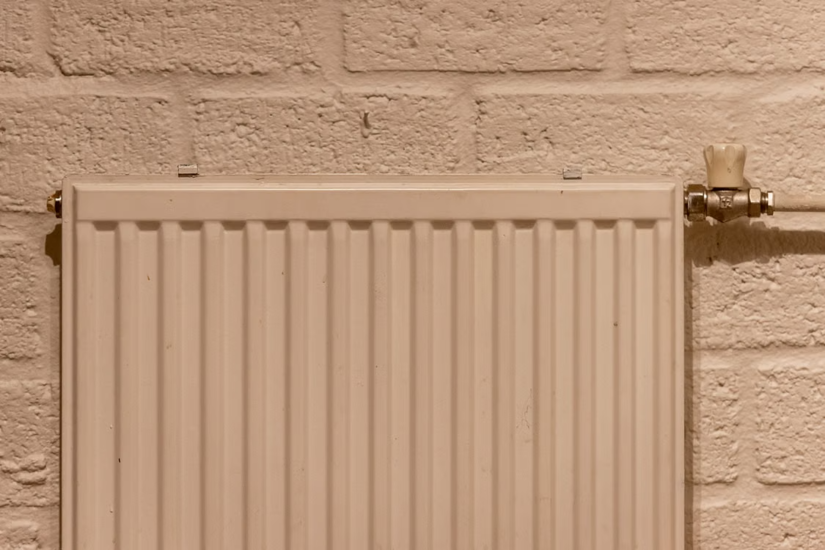
Domestic vs Commercial: The Category Jump
Moving from domestic to commercial work changes the fill point completely. Where a loop is allowed on a commercial system, Water Regs UK sets out that a second isolation valve must sit on the heating circuit at the top-up point, and the connecting loop is only fitted when topping up, then removed straight after.
For a true category 4 duty a double check valve is not enough. An RPZ valve must be installed, commissioned and tested by an approved RPZ tester, who notifies the water authority. Moving into commercial heating work makes that accreditation worth holding, since every valve you fit becomes a repeat annual test booking.
Fitting and Checking On Site
A few practical habits keep you compliant and cut the callbacks:
- Check the flow direction: Fit the loop the right way round so the check valve does not block refilling.
- Fit compliant parts: Use fittings that meet the regulations. WRAS approval, or an equivalent, is a recognised way to show a loop and its check valve hit the required standard.
- Exercise the valve: A loop tap used only now and then can seize, so work it during a service.
- Store it detached: Leave a removable loop disconnected and kept near the appliance.
- Record the rule: On commercial jobs, write the disconnect-after-use step into the site maintenance procedures so it is not forgotten.
Need to refresh your plumbing knowledge before the next job? TradeFox offers interactive simulations you can revisit at your own pace while practising key steps and reviewing safe working methods.
Common Mistakes To Avoid
- Leaving it connected: The most frequent and the most serious, since it turns a temporary tool into a permanent contamination route.
- Relying on a single check valve: A single check covers category 2 only, never a category 3 heating fill.
- Fitting it reversed: Blocks refilling and wastes a visit.
- Treating commercial like domestic: A category 4 system needs an RPZ valve and a risk assessment, not a standard loop.
A filling loop is a small part carrying a big responsibility. Treat it as a temporary tool rather than a permanent fitting, keep the check valve on the live supply, and match the backflow protection to the real fluid category of the system. Do that and the one connection the regulations fear most stays safe.