

That rumbling, whistling, or knocking sound coming from a boiler is one of the most common complaints an engineer gets called out to. Customers usually describe it as a kettle coming to the boil, which is exactly where the name comes from. For a tradesperson, the noise is rarely just a noise. It is a symptom, and reading that symptom correctly is the difference between a proper repair and a callback three weeks later.
This guide breaks down what causes the sound, what it reveals about the wider system, and how to approach diagnosis and remedy in line with current UK best practice.
What Boiler Kettling Actually Is
Kettling happens when water inside the heat exchanger overheats and localised boiling starts at the exchanger surface. Because water flow is restricted, heat builds up in specific spots against the metal. The water boils locally, the steam bubbles collapse as they meet cooler water, and that rapid expansion and contraction creates the vibration and whistling you hear. In plain terms, the boiler is being asked to transfer heat faster than the water can carry it away.
It is worth noting a point of accuracy that experienced engineers will recognise. The appliance does not raise steam or boil the bulk of the water in normal operation. What you are hearing is boiling confined to the hot surface of a scaled or fouled exchanger, not the whole system reaching boiling point.
The noise is a warning. A heat exchanger repeatedly cycling through localised boiling is under thermal stress it was never designed to tolerate continuously. Left unresolved, this shortens component life and can lead to premature failure of the exchanger, which is one of the most expensive parts to replace.
The Main Causes of a Kettling Boiler
Most cases trace back to water quality or flow. The four causes below cover the vast majority of jobs.
Limescale build-up:
In hard water areas, limescale is the leading cause. Calcium and magnesium deposits form on the internal surfaces of the heat exchanger, narrowing the waterways and acting as an insulating layer. That insulation forces the exchanger surface hotter to push the same heat through, which is precisely the condition that drives local boiling. Much of England sits in a hard or very hard water band, so this is a frequent finding on service calls.
Combi boilers are especially prone to it. They heat water directly through small primary and plate exchangers with narrow waterways, so scale takes hold faster and restricts flow sooner than in a system boiler with larger channels.
Sludge and corrosion debris:
Magnetite sludge, the black iron oxide slurry, is the other dominant cause. It settles in the base of the heat exchanger and at low points in the system, restricting flow and creating hot spots. Sludge points to internal corrosion, which usually means a system that was never inhibited correctly or has had inhibitor diluted through repeated draining or leaks. Where you find kettling from sludge, you will normally find cold spots at the bottom of radiators too.
Poor circulation and flow rate:
Anything that slows water through the exchanger can trigger the fault. Common culprits include:
- Pump problems: A failing pump, or one set to too low a speed, will not push water through the exchanger quickly enough.
- Valve and filter restrictions: A partially closed valve or a clogged system filter throttles the flow.
- Airlocks: Trapped air reduces circulation and can cause localised boiling. Air can also insulate the overheat thermostat so it fails to sense the true temperature, which is a genuine safety concern rather than just a noise issue.
Incorrect settings or a faulty thermostat:
Sometimes the cause sits in the controls. A faulty thermostat or overheat sensor that lets the exchanger run too hot, or a boiler set well above the temperature the system actually needs, can produce kettling even in a relatively clean system.
What the Noise Tells an Engineer
For a competent tradesperson, a kettling boiler is a diagnostic starting point rather than a fault in itself. The character and timing of the noise give you clues:
- Gradual onset in a hard water area: Strongly suggests scale.
- Noise plus cold radiator bottoms and dirty system water: Points to sludge and corrosion.
- Sudden onset after other work: Points to an airlock, a pump issue, or a knocked valve.
Reading it correctly saves time. It tells you whether the problem sits in water quality, in flow, or in controls, and whether you are looking at a straightforward chemical clean or a deeper system health issue.
How to Diagnose Kettling On Site
A structured approach beats guesswork. Work through the checks in a logical order:
- Test the system water: Check inhibitor concentration and look for signs of contamination.
- Check flow and return temperatures: A wide differential across the boiler often indicates poor circulation or restriction.
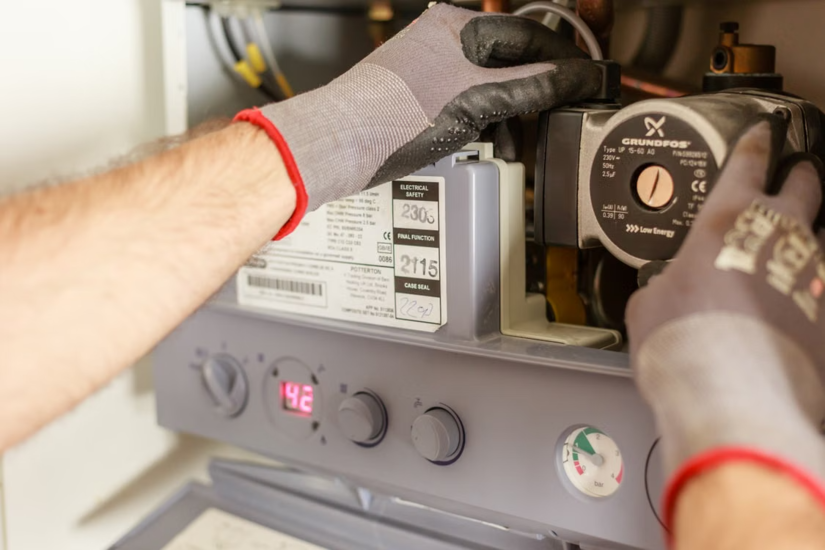
- Inspect the pump and settings: Confirm it is running and set correctly for the system.
- Check the filter and valves: Make sure the system filter is not clogged and all valves are fully open.
- Bleed for air: Where symptoms suggest an airlock, purge it before going further.
Only once you have ruled out flow and control issues should you commit to a scale or sludge diagnosis, though in practice water quality and flow problems often go hand in hand.
Any gas work carried out during diagnosis or repair must be undertaken by a Gas Safe registered engineer. This is a legal requirement under the Gas Safety (Installation and Use) Regulations 1998, not an optional credential. A persistently overheating boiler that keeps locking out should not simply be reset again and again. The overheat stat is a safety device, and repeated resets mask a fault that needs investigating.
How to Fix a Kettling Boiler
Once the cause is confirmed, the remedy follows the diagnosis.
Power flushing and chemical cleaning:
Where sludge and scale are confirmed, a thorough clean is the usual remedy. A power flush or mains-pressure flush circulates cleaning chemicals to break down and remove deposits from the exchanger, radiators, and pipework. In heavily fouled systems this restores flow and clears the hot spots driving the noise.
Descaling:
For scale-specific cases, a targeted descaler can be used, and in severe cases the exchanger itself may need attention or replacement. Prevention through water treatment is far cheaper than repeated exchanger replacement.
Water treatment and protection under BS 7593:
After any clean, the system should be dosed with a suitable corrosion inhibitor to stop the sludge returning. This is where the current code of practice matters. BS 7593:2019+A1:2024 sets out best practice for cleaning, dosing, and ongoing water treatment in domestic heating systems, and it introduced a clear maintenance regime:
- Annual water test: Check the system water once a year, at the same visit as the annual boiler service.
- Five-year re-dose: Re-dose the whole system with inhibitor at five-year intervals, or as indicated by a water quality test.
- Permanent in-line filter: Fit a permanent in-line filter to capture debris and protect the system over its life.
Following it is a mark of competent work, and it supports compliance with Building Regulations Part L at boiler replacement, since Part L guidance references correct system cleaning and water treatment. Note that BS 7593 is a code of practice referenced by Part L, not a statutory instrument in its own right.
Scale reducers and magnetic filters:
In hard water areas, fitting an in-line scale reducer helps limit future limescale formation. A magnetic system filter captures magnetite before it can settle in the exchanger and is now standard good practice on installs and upgrades. Both measures reduce the likelihood of the fault returning.
When to Recommend Replacement
If a heat exchanger has already suffered thermal damage, or an older boiler keeps kettling despite cleaning and treatment, replacement may be the honest recommendation. Part of professional judgement is knowing when further repair is throwing good money after bad, and saying so clearly to the customer.
Understanding boiler kettling starts with knowing how flow, water quality, heat exchangers and controls work together. TradeFox helps plumbers and heating engineers build practical knowledge through interactive training designed around real trade skills.
Why This Matters for Tradespeople
Understanding boiler kettling properly is part of building a reputation as a reliable engineer. Customers remember the difference between someone who silenced a noise for a fortnight and someone who explained the cause, treated the system correctly, and left it running quietly and efficiently. Diagnosing the root cause, working to BS 7593, and protecting the system afterwards is what separates a lasting fix from a temporary one.
For anyone training toward the trade, this is a useful teaching case. It links water chemistry, flow dynamics, controls, and customer communication in a single common fault. Master it, and you have a solid grip on a large slice of everyday domestic heating work.