

Orange flames on gas stove is a combustion performance indicator, not a cosmetic anomaly.
For Gas Safe registered engineers, trainees, and those progressing into domestic gas work, flame colour is an early diagnostic cue that must trigger structured assessment. Persistent orange flames can indicate incomplete combustion, contamination, pressure imbalance, or environmental interference. In certain conditions, these faults may increase the risk of carbon monoxide (CO) production.
This revised technical guide aligns more closely with UK regulatory frameworks and industry procedures. It separates appliance types correctly, removes unsupported thresholds, and clarifies safe escalation pathways.
What a Correctly Functioning Gas Flame Should Look Like
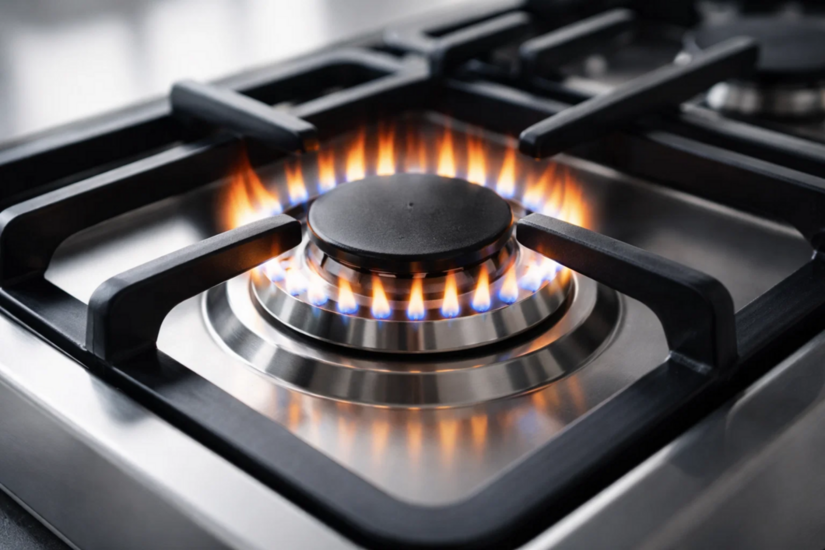
A correctly adjusted domestic natural gas hob burner should display:
- A stable, well-defined blue flame
- Even distribution around burner ports
- No yellow tipping
- No lifting or excessive noise
- No soot deposition on cookware
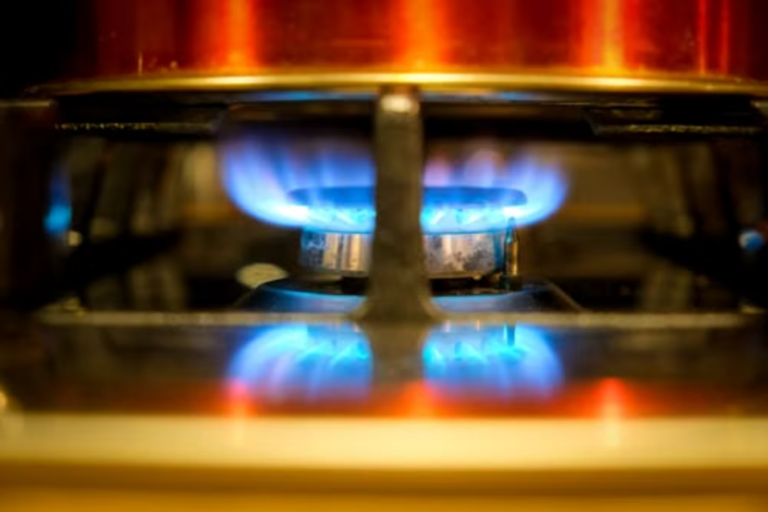
Blue flame indicates appropriate gas–air mixing and adequate oxygen supply. While combustion chemistry is complex, a clean blue flame generally signifies efficient oxidation of methane with minimal formation of carbon particulates.
Why Orange or Yellow Flames Occur
Flame colour shifts occur when combustion conditions change. Common causes include:
1. Burner Contamination (Common and Often Benign)
- Salt (sodium compounds)
- Cleaning aerosols
- Plaster dust
- Debris in burner ports
Sodium contamination can temporarily produce orange colouring without unsafe combustion. This typically resolves once contamination burns off.
2. Inadequate Primary Aeration
Restricted aeration alters the gas–air ratio and may lead to:
- Yellow tipping
- Carbon particle formation
- Sooting
Potential causes:
- Blocked aeration slots
- Misaligned burner caps
- Incorrect injector size
- Venturi obstruction
Persistent yellowing with soot formation should be treated as a combustion fault.
3. Gas Pressure Irregularities
Working pressure outside manufacturer specification can disrupt flame stability.
Engineers must:
- Confirm inlet pressure
- Confirm working pressure
- Compare readings to appliance data badge and manufacturer instructions
4. Environmental Oxygen Deficiency
Reduced available combustion air may influence flame characteristics, particularly in modern airtight properties.
However, ventilation assessment must be appliance-specific. Flueless cooking appliances are treated differently from open-flued or room-sealed appliances under UK guidance.
Appliance Type Matters: Correct Regulatory Context
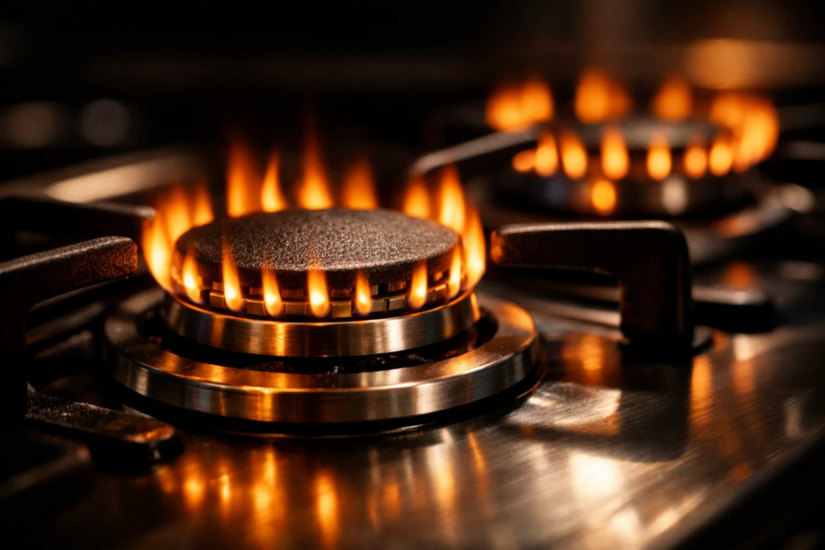
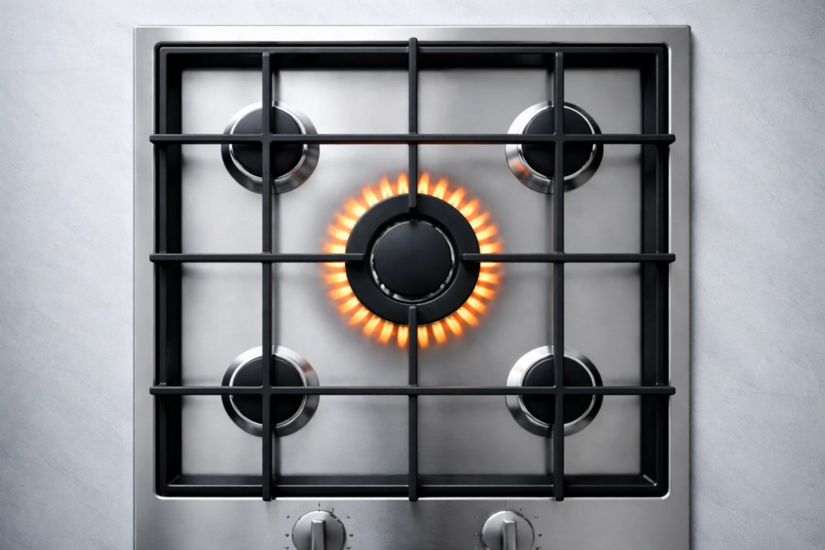
Gas hobs and domestic cookers are typically Type A (flueless) appliances. They discharge combustion products directly into the room and rely on dilution ventilation.
This differs from:
- Open-flued appliances (Type B)
- Room-sealed appliances (Type C)
Ventilation requirements must therefore be assessed with reference to:
- Gas Safety (Installation and Use) Regulations 1998
- Health and Safety Executive Approved Code of Practice (L56)
- Gas Safe Register Technical Guidance
- BS 6172 (Installation and maintenance of domestic gas cooking appliances)
- BS 5440-2 (current edition – ventilation guidance)
- Building Regulations Approved Document J and Part F
Numeric ventilation thresholds must only be applied in the correct appliance context and in accordance with the current edition of the relevant British Standard and manufacturer instructions.
Ventilation Assessment for Flueless Cooking Appliances
For gas hobs and cookers:
- Assess room volume
- Confirm compliance with manufacturer minimum room size requirements
- Confirm ventilation openings (if required) are unobstructed
- Consider interaction with mechanical extract systems
Mechanical extract can affect dilution air patterns and combustion product dispersal. Where strong extraction is present, assess whether negative pressure conditions could adversely affect appliance operation.
Avoid applying open-flue ventilation assumptions directly to flueless cooking appliances without verifying applicability.
Carbon Monoxide Risk: When Orange Flame Becomes Critical
An orange flame on gas stove does not automatically confirm carbon monoxide production. However, persistent incomplete combustion increases risk.
Under industry procedure (IGEM/G/11 – Unsafe Situations Procedure), appliances producing unsafe combustion must be categorised appropriately.
Indicators of concern:
- Soot deposition
- Flame instability
- CO readings exceeding manufacturer limits
- Reports of occupant symptoms (headache, nausea, dizziness)
- Inadequate room volume for appliance rating
If unsafe combustion is confirmed, classification as At Risk (AR) or Immediately Dangerous (ID) may be required, in line with current GIUSP criteria.
Required Safety Escalation Steps
Where combustion safety is in doubt:
- Isolate the appliance where necessary.
- Ventilate the area.
- Test for the presence of CO using calibrated equipment.
- Classify the situation in accordance with GIUSP.
- Issue warning notices where required.
- Advise the responsible person clearly and document findings.
If occupants report CO symptoms:
- Treat as urgent.
- Ventilate immediately.
- Prevent further appliance operation.
- Follow emergency protocol.
If gas escape is suspected, follow national emergency procedures without delay.
Diagnostic Workflow for Tradesmen
A structured approach improves compliance and defensibility:
Step 1: Visual Combustion Check
- Flame distribution
- Sooting
- Burner integrity
Step 2: Mechanical Inspection
- Injector condition
- Aeration pathway
- Burner alignment
Step 3: Pressure Verification
- Inlet pressure
- Working pressure
- Gas rate confirmation
Step 4: Combustion Monitoring (Where Appropriate)
For flueless appliances:
- Monitor ambient CO levels
- Verify compliance with manufacturer combustion performance guidance
For flued appliances:
- Conduct flue gas analysis per MI’s
Step 5: Ventilation Review
- Confirm room volume
- Confirm required permanent ventilation (if applicable)
- Assess mechanical extract interaction
Modern Airtight Homes: Emerging Risk Factor
Energy efficiency upgrades reduce adventitious air infiltration.
Engineers should assess:
- Sealed glazing
- Chimney closures
- Insulation retrofits
- Mechanical ventilation systems
Reduced infiltration may not breach regulations, but it alters dilution dynamics. Combustion air assessment must reflect actual site conditions, not historical assumptions.
When Disconnection Is Required
Disconnection or isolation is required if:
- Combustion performance falls outside manufacturer limits
- CO readings exceed safe parameters
- Persistent sooting is present
- Ventilation is non-compliant
- The appliance is classified AR or ID
Documentation must reflect findings, actions taken, and advice given.
Compliance Checklist (For Site Use)
Before leaving site, confirm:
- Flame characteristics acceptable
- Gas pressures within specification
- Room volume adequate
- Ventilation compliant
- Mechanical extraction assessed
- No unsafe combustion indicators
- Findings documented
Professional Standards for Gas Engineers
Industry expectations include:
- Competence appropriate to appliance category
- Gas Safe registration for relevant work scope
- Use of calibrated testing equipment
- Adherence to manufacturer instructions
- Alignment with GSIUR and GIUSP
Gas engineering is safety-critical work. Flame anomalies must always trigger structured assessment rather than assumption.
If this guide on orange or lazy gas flames has raised questions, explore TradeFox’s interactive courses to learn safety basics and spot warning signs.
Conclusion
Orange flames on gas stoves may be benign contamination or an indicator of incomplete combustion. The distinction must be made through systematic diagnosis aligned with UK regulatory requirements.
For flueless cooking appliances, ventilation and room volume assessment are central. For any appliance, combustion performance outside specification must be addressed immediately and classified correctly under industry unsafe situations procedures.
No combustion irregularity should be dismissed without verification. Safety, documentation, and regulatory compliance remain the engineer’s primary responsibility.