


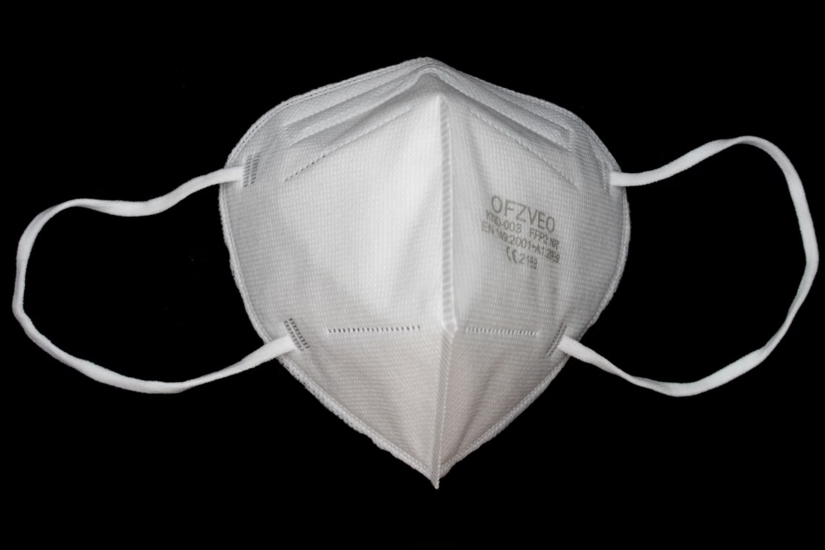
Pick the wrong mask on a dusty job and the rating stamped on it won’t save you. Any respirator has to do three things at once: give enough protection for the hazard, seal against the face of the person wearing it, and keep performing for the whole task. The class printed on the facepiece only answers the first of those.
So where does FFP2 vs FFP3 actually land? The real split comes down to filter performance and the assigned protection factor (APF) used to pick RPE for a workplace. FFP3 sits a step higher for particle protection. Neither class, though, makes uncontrolled dusty work acceptable.
For tradespeople and trainees, the call starts with the employer’s task-specific COSHH assessment, not the shop shelf. Materials, tools, dust controls, how long the job runs and whether the mask fits you all feed into the choice.
FFP2 vs FFP3: Understanding the Classifications
FFP stands for filtering facepiece. These masks pull particles out of the air you breathe as it passes through the filter material. FFP2 and FFP3 both sit under BS EN 149:2001+A1:2009, the standard covering filtering half masks that protect against particles.
Here’s how the two stack up on the points that drive selection:
| Comparison Point | FFP2 | FFP3 |
|---|---|---|
| Minimum Filter Efficiency (Lab Test) | 94% | 99% |
| UK Assigned Protection Factor (APF) | 10 | 20 |
| Face Fit Testing for Tight-Fitting RPE | Required | Required |
| Gas or Vapour Protection From the Class Alone | No | No |
| Use in Oxygen-Deficient Air | No | No |
Those filtration figures are lab results. They don’t promise the same real-world cut in exposure for every worker on every site. Air that leaks around the seal skips the filter, so a mask that passes its class can still let you down if it doesn’t fit.
What Assigned Protection Factors Mean
HSE gives FFP2 an APF of 10 and FFP3 an APF of 20. Think of an APF of 20 like this: the wearer should breathe no more than a twentieth of what’s in the air, and even that holds only when the RPE is picked, fitted, worn and looked after properly inside a real RPE programme. It’s an expectation, not a guarantee for every face or every job.
One thing trips people up. FFP3 carries double the protection factor of FFP2, not double the filtration. On paper, 99% against 94% is a narrow gap. The gap that counts on site is the APF.
Control Construction Dust at Source
RPE protects the person wearing it. It does nothing for the labourer beside you, the other trades on the floor, or anyone walking through the dust cloud. That’s why the mask is never the first move.
Stop the exposure where you reasonably can. Where you can’t, cut down how much dust gets made and how far it travels before you reach for a respirator.
- Material Planning: Order the right sizes or pre-cut pieces so there's less to cut on site.
- Work Method: Pick a method that throws up less dust when the job allows it.
- Source Control: Fit on-tool extraction or proper water suppression to catch dust as it's made.
- Work Area: Keep people out and stop dust drifting into shared or occupied spaces.
- Back-Up Protection: Add RPE where the assessment and the task guidance call for it.
Source control and RPE work best as a pair. Jumping to a higher-rated mask never buys you the right to switch off the extraction or dry-cut in the open.
Which Respirator Do You Need for Common Construction Tasks?
The honest answer: it depends on the substance, the likely exposure, the work rate, how long you’re at it, and how well your other controls perform. Visible dust is a poor guide, because the finest and most damaging particles barely show. Here are the jobs that come up most, with what HSE’s own task sheets say.
Cutting Concrete, Brick, Stone and Paving
Work on silica-containing materials and you release respirable crystalline silica (RCS). Breathe in enough of it over the years and you’re looking at silicosis, lung cancer and COPD. None of that is reversible.
For cutting paving blocks, kerbs and flags, HSE’s guidance on cutting paving blocks, kerbs and flags calls for water suppression or extraction alongside APF 20 RPE, such as an FFP3 disposable mask or a reusable half mask fitted with P3 filters.
FFP2 sits at APF 10, so it doesn’t meet that APF 20 line. Being outdoors doesn’t change it. The dust is the same dust.
Chasing Concrete and Raking Mortar
These two jobs throw out some of the highest silica dust levels on any site. HSE’s guidance on chasing concrete and raking mortar sets out on-tool extraction plus APF 20 protection, and it says to consider powered RPE, such as a TH2 powered hood, for work running over an hour without a break.
Pick kit that still works with the eye, ear and head protection the job needs. If you’re forever nudging the mask aside to fit a visor or ear defenders, you’ve already broken the seal it relies on.
Cutting and Sanding Wood
Wood dust causes asthma. Hardwood dust can cause cancer too, mostly in the nose, and softwood is no free pass. HSE’s guidance on cutting and sanding wood puts a minimum APF of 20, for example FFP3, on most cutting and sanding, especially in enclosed spaces, alongside proper extraction.
Don’t talk yourself into a lower class because it’s only MDF, only softwood, or only a quick sand. The task assessment and the guidance decide that, not a hunch.
Where FFP2 Can Be the Right Call
FFP2 earns its place when the task-specific assessment shows APF 10 gives enough protection, and the mask fits the wearer, the job and the setting.
Don’t pull it off a generic ‘light dust’ list, though. The same job can produce wildly different exposure depending on the material, the tool, the enclosure and how long it runs. Comparing FFP2 vs FFP3 means more than reaching for the higher number. Some work needs different kit altogether, or protection above APF 20. Abrasive blasting is the classic example, and it calls for air-fed breathing apparatus rather than a filtering mask.

Make Extraction and Cleaning Part of the Plan
The dust story doesn’t end when the cutting stops, and the extraction unit only helps if it genuinely suits the tool. Bolting on any old vacuum isn’t control. Run through these before you rely on it:
- Extraction Class: Follow the task guidance, including H-class or M-class kit where it's named.
- Airflow: Match the extraction flow to the tool and the job.
- Connections: Check hoses, shrouds and fittings for damage, blockages and leaks.
- Routine Checks: Inspect the system and act on warnings or any drop in performance.
- Examination and Testing: Arrange competent thorough examination and testing at the set intervals.
For the wood cutting and sanding jobs above, HSE wants dust extraction thoroughly examined and performance-tested at least every 14 months. Day-to-day checks and maintenance still happen in between.
Cleaning Can Throw Up as Much Dust as Cutting
Settled dust is still dangerous dust. Dry sweeping just lifts it straight back into the air you’re breathing.
Skip the broom where you can. Use a vacuum or damp methods matched to the material instead. HSE points to H-class or M-class vacuums for the finer construction debris, and flags where APF 20 RPE is needed on top.
Face Fit Testing Checks Your Personal Seal
Tight-fitting respirators only work if the sealing edge meets clean skin the whole way round. Any gap, and contaminated air takes the easy route in, around the seal rather than through the filter.
Face fit testing proves whether a specific facepiece fits a specific person. It belongs in the selection stage, before anyone leans on that mask for hazardous work.
- Test Each Wearer: Fit test every person on the exact facepiece they'll use.
- Match the Kit: Issue the make, model, type and size that passed the test.
- Use a Competent Tester: Whoever runs it needs the right training, knowledge and experience.
- Have a Plan B: If the fit test fails, try another model or size.
If no tight-fitting mask gives a good seal, move to RPE that doesn’t rely on one, such as a powered hood. Don’t send anyone into hazardous work on a facepiece that failed its test.
Fit Tests and Wearer Seal Checks Aren't the Same Thing
These two get muddled all the time. One is the fit test, which checks whether the chosen facepiece can fit the wearer at all. The other is the wearer seal check, done by the worker each time, to confirm it’s gone on right.
Run the manufacturer’s seal-check routine every single time you put the mask on, before you step into the dust. It never replaces a fit test.
Review whether a retest is due whenever the facepiece changes, or anything else that could shift the fit: a real change in face shape, major dental work, or a switch in other head-worn PPE.
Keep the Fit-Test Record
Write down the result and the facepiece details, and keep the report where the wearer can see it and an inspector can ask for it. Under HSE’s RPE fit testing guidance, the cost of fit testing falls to the employer, not the worker. Records of RPE examination, testing and repair are held for at least five years under COSHH.
Facial Hair, Health and Wear Time All Matter
Facial Hair Can't Cross the Seal
Stubble or beard hair under the sealing edge wrecks the seal, full stop. Pass the test clean-shaven, then turn up with three days’ growth, and that pass means nothing.
Anyone using tight-fitting RPE needs to be clean-shaven where the mask seals. Where that won’t work, look at a powered loose-fitting hood or helmet instead. Loose-fitting gear still needs the right protection level, proper airflow and upkeep, and powered kit with a tight-fitting facepiece still needs a fit test.
Fit Testing Doesn't Cover Medical Fitness
Some heart, lung or skin conditions change whether a worker can wear a given respirator safely. The employer has to weigh that up. Where it’s unclear, get a proper medical assessment. Passing a face fit test says nothing about whether the person is medically fit to wear it.
Match the Kit to the Real Wear Time
Work rate, heat, breathing resistance and the need to talk all affect what someone can wear for hours on end. Gear that keeps getting loosened or pulled off isn’t protecting anyone.
Weigh up powered RPE for long stretches or heavy work. And check the protection rating of the whole system, because not every powered hood lands at the same APF.
FFP3 and P3 Aren't the Same Label
FFP3 describes a whole filtering facepiece. P3 describes a filter class you fit to a compatible respirator. A reusable half mask with P3 filters can reach APF 20, but other combinations land elsewhere, so always check the full manufacturer-approved setup.
Reusable kit also needs inspecting, cleaning, storing and filter changes on a routine. It isn’t just a disposable mask with a swappable filter.
Check the Product Is the Real Deal Before You Buy
Buy from a source you trust, and check the product matches its standard before it ever reaches site.
- Great Britain: Look for the right CE or UKCA marking, the declaration of conformity and English instructions.
- Northern Ireland: Follow the CE-marking rules, with UKNI marking added where it's required. UKCA on its own isn't the Northern Ireland route.
- Individual Fit: Treat any conformity mark as a product check, never as proof the mask fits the wearer.
These splits follow HSE and government product-supply guidance. HSE also warns against leaning on ear-loop masks as tight-fitting workplace RPE, even the ones with clips meant to tension the loops, because HSE research on ear-loop respirators found they rarely pass a face fit test. A conformity mark won’t fix a seal that doesn’t hold.

Inspect, Replace and Store RPE the Right Way
Before you walk into the work area, run through the basics. Two minutes here beats the best mask worn wrong.
- Facepiece Condition: Check the body, straps, nose piece and valve, where fitted.
- Wearer Seal Check: Run the manufacturer's routine before you're exposed.
- PPE Compatibility: Make sure other protective kit isn't breaking the seal.
- Control Equipment: Confirm the extraction or suppression is actually running.
- Fault Reporting: Stop and follow the site procedure the moment protection or dust control fails.
Training, supervision and maintenance carry as much weight as the mask itself.
What the NR Marking Means
Masks marked NR are single-shift only, not reusable. One might need binning sooner if it’s damaged, clogged, getting hard to breathe through, or whatever else the maker specifies. NR doesn’t promise a full shift of service either.
Never wash or try to revive a non-reusable mask. Take RPE off only once you’ve reached the designated safe area, following the work procedure, and keep stored kit clean and protected.
Choosing suitable RPE is one part of preparing for site work. Keep building your trade knowledge with Tradefox’s interactive courses, where you can follow guided simulations, get feedback and revisit lessons at your own pace.
UK Duties Cover the Whole Control System
In Great Britain, hazardous construction dust falls under the Control of Substances Hazardous to Health Regulations 2002, as amended. Northern Ireland has its own version, the Control of Substances Hazardous to Health Regulations (Northern Ireland) 2003, as amended. The duties run across assessment, controls, maintenance, training, supervision, and monitoring or health surveillance where it’s needed.
Those regulations set the legal duties. HSE guidance shows the recognised ways to reach adequate control for each task.
Safety data sheets can feed the assessment, but they never replace it, and process dust from cutting or grinding has to be counted too. For carcinogens, mutagens and asthmagens, exposure has to be controlled as low as reasonably practicable. Meeting an exposure limit on its own doesn’t let you off the hook for the rest of the controls.