

If you’re new to site work or learning carpentry, choosing the right timber can feel like a guessing game. You’ll hear people talk about C16 vs C24 timber as if it’s obvious, but nobody wants to be the one who orders the wrong grade for a job.
The good news is this: both grades are structural timber, both are widely available in the UK, and both can be the right choice for projects when you understand what they’re designed to do. This guide will walk you through what each grade stands for, where they’re best used and how to pick the right one for things like joists, studs and roofs.
What C16 and C24 Actually Mean?
Let’s start with the label.
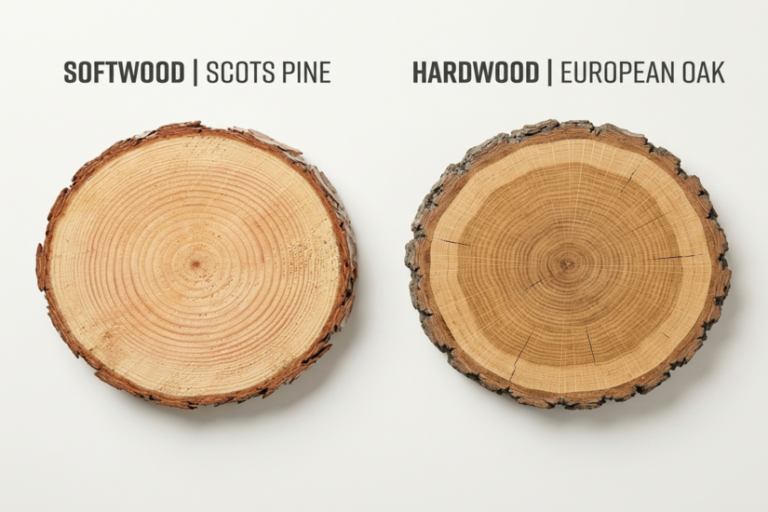
- The “C” stands for conifer: It’s softwood from coniferous trees such as spruce, pine, and fir.
- The numbers relate to strength grading. Put simply, C24 is stronger than C16.

You’ll often see it explained using bending performance. C16 timber is associated with a characteristic bending strength level around 16 N/mm², and C24 is around 24 N/mm². That’s whefrtre the numbers come from. If you’ve ever seen it scribbled in shorthand on a merchant sheet as “strength of 16 n mm”, it’s referring to the same idea, just written loosely.
For beginners, the key takeaway is straightforward: C24 generally offers higher load bearing capacity and stiffness than C16.
How is Timber Prepared and Graded?
Before timber gets its strength grade, it’s usually kiln dried. This process removes moisture from the wood so it’s more stable, less likely to shrink or warp once installed, and better suited for structural use.
After kiln drying, the timber is graded either by a trained human inspector or by machine. They look for factors that affect strength, like the size and frequency of knots, direction of grain and any splits or defects. Fewer defects generally mean a higher grade, which is why C24 often looks cleaner with fewer knots than C16.
Key Differences Between C16 and C24 Timber
When people compare C16 vs C24 timber, they usually mean three things: strength, appearance, and price.
Strength and Load-Bearing Capacity
C24 has a higher load-bearing capacity, which matters when timber spans a distance or carries a heavier load. You’ll hear C24 mentioned more often for heavy load bearing situations, longer spans, and parts of the structure that you really don’t want flexing over time.
C16 is still structural. It’s not “weak”. It’s just the lower strength class, which can be absolutely fine in many typical domestic builds.
Straightness and Knots
C16 can have more knots and visible imperfections. That doesn’t automatically make it “bad”; it’s just how the grading works. C24 tends to have fewer large defects, which can make it nicer to work with when you’re trying to keep lines straight and reduce wastage.
Cost and Availability
C16 is usually more cost effective and commonly stocked. C24 can cost more due to grading, supply, and demand. The right call is rarely “always buy C24” — it’s about what the job needs and what the drawings specify.
C16 Timber: Everyday Structural Choice
C16 timber is commonly used across UK sites because it hits a practical middle ground: reliable strength, easy availability, and sensible cost.
Where C16 Works Well
C16 often suits:
- Stud walls and internal partitions.
- General framing where loads are modest.
- Shorter spans (where the design allows).
- Many routine structural applications in domestic work.
If you’re building internal studwork, C16 will often do the job neatly and economically. It’s a popular choice when you need a wide range of lengths and sections without pushing the budget.
One important note for learners: timber grade and timber treatment are different things. You can buy C16 as untreated internal timber, or as treated timber for certain uses.
C24 Timber: Higher Strength, Wider Uses
C24 is the stronger option in the C16 and C24 timber comparison. It’s commonly chosen where strength, stiffness, and long-term performance matter more.
When C24 Is A Good Option
C24 often makes sense for:
- Floor joists, especially over longer spans
- Roof members where loads and spans are higher
- Situations where you want extra confidence in strength and durability
- Builds where movement and bounce need controlling
C24 is frequently used where you’re pushing spans or loading. It doesn’t mean C16 can’t be used, just that C24 is often specified because it gives more capacity in the same size timber.
Comparing Strength And Performance Without Overcomplicating It
Here’s a simple way to think about c16 vs c24 timber on site:
- If the timber is carrying more weight, spanning further, or supporting parts of the structure above it, you’ll more often see C24 specified.
- If it’s framing internal walls, simple partitions, or other areas with lighter demand, C16 is often used.
Also, keep in mind that “stronger” doesn’t always mean “better value”. Sometimes, the more cost-effective route is C16 in the correct size and spacing. In other cases, C24 can reduce the need for upsizing timber, because it can carry more load in the same section.
Understanding Costs And Appearance
Beginners often assume the nicer-looking timber must be the right timber. In structural work, appearance comes second to performance.
Yes, C24 can look cleaner. But the real reason it’s specified is its higher grading and improved performance under load. If you’re pricing up a job, you’ll often see that C16 gives better value where the structural design allows it.
So when you’re weighing up C16 vs C24 timber, think like a trade professional: match the timber grade to the job requirements, not just the look of the boards on the rack.
Do I Need C16 Or C24 For Roofing?
Roofing is one area where timber grade makes a real difference because rafters and joists can carry significant loads, especially over wide spans.
For standard domestic roofing like rafters and purlins, many builders prefer C24 timber because its higher strength and load bearing capacity gives extra peace of mind and helps avoid sagging over time.
However, C16 timber can still be used in roofing where:
- The spans are shorter.
- The loads aren’t heavy.
- The design allows closer spacing of timbers.
Using C16 in these situations can be cost effective while still meeting building standards, as long as you follow span tables and structural guidance (often set out in BS 5268 and current codes).
In short, for simple roofing with modest spans, C16 may suffice. For larger roofs or where heavier loads and wider spans are expected, C24 is usually the safer choice for structural integrity.
Safety and Regulations In The UK
Both C16 and C24 timber grades are recognised structural grades under BS EN standards and are used in structural applications throughout the UK. They’re kiln dried and graded so builders, carpenters, and trades learners know what they’re buying and can trust its performance.
When selecting timber, always check the grading stamp, timber used for structural work must be clearly stamped with its strength class. If it’s not marked, it’s not suitable for structural use.
For those learning trades or refreshing their skills on standards and safety, TradeFox offers practical training and guidance that complements understanding of materials, grading, and on-site practices.

Conclusion
Understanding c16 vs c24 timber helps you match the right material to your construction needs. C16 is strong, cost-effective and commonly used for everyday structural jobs like stud walls and internal joists. C24 offers higher load-bearing capacity, improved durability and fewer defects, making it ideal for heavier structural work and roofing.
Both have their place on building sites, and the right choice depends on your project’s strength requirements, budget and how the timber will be used. With the right knowledge, you can confidently specify the correct timber grade and build structures that are safe, compliant and built to last.