

Callbacks represent a direct drain on profit margins and professional reputation for any working decorator. Discovering a client has reported bubbling wallpaper days or weeks after a project concludes indicates a fundamental failure in the bond between the wallcovering and the substrate. Resolving this specific issue requires a clinical understanding of materials, environmental conditions, and adhesive science.
This comprehensive guide provides a research-backed breakdown of why wallcoverings fail on site. Tradesmen will learn exactly how to execute professional-grade repairs and implement the strict protocols required to prevent the issue from recurring on future projects.
Diagnosing The Root Causes Of Adhesion Failure
Identifying the exact mechanism of failure is the critical first step before attempting any remedial work. Bubbling wallpaper rarely occurs without a specific catalyst. Professionals must assess the site to determine exactly what compromised the installation.
Substrate Preparation Deficiencies
The most common cause of adhesion failure is poor substrate preparation. A wall is never merely a decorative surface to cover. It acts as an active mechanical anchor for the adhesive paste.
Newly skimmed plaster or highly porous jointing compounds will rapidly draw moisture out of the adhesive. Failing to size or prime the substrate with a diluted paste solution causes the adhesive to dry before it can cure properly. This leaves a weak, powdery bond that easily detaches under the tension of the drying paper. The result is widespread failure across the entire drop. Furthermore, relying on a mist coat of cheap emulsion as a primer is a critical error. Standard emulsion can re-wet when saturated with wallpaper paste, causing the paint itself to delaminate from the plaster entirely.
Contaminated substrates also present a major risk. Walls coated with grease, nicotine, or residual paste from previous installations create a chemical barrier. Adhesives absolutely cannot form a reliable mechanical bond through these contaminants. Thorough washing with sugar soap and clean water is mandatory before any sizing occurs.
Applying water-based paste over high-gloss paints or silk emulsions without mechanical keying is another guaranteed route to failure. Sanding the surface thoroughly or applying a dedicated adhesion-promoting primer is essential. Skipping this preparatory step causes the paste to sit on the surface, eventually leading to localized lifting, seam splitting, and blistering.
The Mechanics Of Booking And Expansion
Standard paper-backed wallcoverings expand when paste is applied because the cellulose fibres absorb water. This soaking process is known in the trade as booking. It remains fundamental to a successful installation.
Cutting the booking time prematurely short means the paper will continue to absorb moisture and expand after application to the wall. Because the paper is already anchored to the substrate in certain areas, this late expansion forces the excess material outward. This creates tension blisters. Conversely, over-booking can cause the adhesive to dry out on the edges before hanging. The paper structure may also degrade under excessive moisture, making it fragile, difficult to handle, and highly prone to tearing during the trimming phase.
Adhesive Misapplication And Chemistry
Selecting the incorrect adhesive for the specific weight and type of wallcovering guarantees failure. Heavyweight vinyls and deeply embossed papers require heavy-duty, ready-mixed tub adhesives. These formulations feature a low water content to minimize paper expansion and maximize initial grab.
Mixing standard flake paste with an incorrect water-to-solid ratio results in a weak, low-tack application. This compromised mixture simply cannot hold the weight or the drying tension of the paper. Furthermore, applying paste unevenly will leave dry voids on the backing paper. The surrounding pasted areas shrink and pull tight during the natural curing process. These dry voids will subsequently present as sharp, distinct bubbles that cannot be brushed out.
Environmental Stressors On Site
Controlling the drying environment is just as important as the physical application process. Professional decorators must manage site conditions tightly.
If a room is overly heated, the moisture within the paste evaporates far too quickly. Clients sometimes turn the radiators up to maximum to speed up the drying process after the decorator leaves. The paper shrinks violently under these extreme conditions. It physically pulls itself away from the wall and creates severe bubbling wallpaper across the entire installation.
Unheated or damp sites cause the exact opposite problem. Cold environments force the adhesive to remain wet for too long. Extended open time allows gravity to pull heavy papers downward, opening up the seams. Moisture can also seep through the paper face, causing permanent staining and widespread blistering.
UK Regulations, Health, And Safety Compliance
Professional tradesmen operating in the United Kingdom must adhere strictly to health and safety guidelines. Assessing and rectifying wallcovering failures requires absolute compliance with established industry protocols.
Electrical Safety And Circuit Isolation
Blisters and lifting edges frequently occur around heat sources and physical obstacles like plug sockets and light switches. Injecting wet adhesive or using a metal scalpel near live electrical fittings presents a severe, potentially fatal hazard. Mains power to the relevant circuit must be entirely isolated at the consumer unit before addressing any defects near electrical outlets. Safe isolation procedures must be verified with an appropriate voltage tester before any remedial work commences. Never rely on the wall switch alone to isolate a socket or fitting.
COSHH And Chemical Handling
The Control of Substances Hazardous to Health regulations mandate the safe handling of all adhesives, fungicidal washes, and primers used on site. Rectifying a wall where damp has caused the failure often requires aggressive anti-mould treatments. Site assessments must include proper ventilation protocols. Tradesmen must use appropriate Personal Protective Equipment, including nitrile gloves and respirators, when spraying biocides or mixing powdered adhesives. Safety Data Sheets for all chemicals should be kept accessible in the work vehicle.
Substrate Assessment And Asbestos Risk
Catastrophic failure in properties built before 1999 often requires a full strip of the existing materials. Tradesmen must remain highly vigilant regarding asbestos in these older environments. Asbestos-containing materials can be found in older textured coatings, original backing papers, and insulating wall boards. Scraping or heavily sanding an unknown substrate without a prior asbestos survey breaches UK Health and Safety Executive regulations. Work must cease immediately if suspect materials are uncovered behind failing wallcoverings. Professional testing must be conducted before proceeding further.
Professional And Safe Fixes For Adhesion Failure
Decorators called back to a site for snagging must evaluate whether the failure is localized or systemic. Minor trapped air or isolated dry patches can usually be repaired in situ. Widespread failure requires stripping the affected drops and starting over.
The Syringe Method For Localized Dry Blisters
Injecting paste is the cleanest professional fix if the blister is caused by a lack of adhesive rather than trapped air.
Preparation involves filling a specialized wallpaper adhesive syringe. You must use a specialized, high-tack border and repair adhesive for this task. Standard flake paste is often too thin for reliable repairs and can cause further saturation issues.
Insert the needle into the edge of the blister at a very shallow angle. This careful approach minimizes the visibility of the entry hole on the finished surface. Inject a small amount of adhesive directly into the void. Withdraw the needle carefully to avoid tearing the damp paper.
Gently massage the area with a damp cellulose sponge to distribute the paste evenly behind the entire blister. Allow the adhesive to activate for three to five minutes. Use a professional seam roller to gently press the paper flat against the wall. Wipe away any expelled adhesive immediately with clean water to prevent permanent surface staining.
The Incision Technique For Large Tension Blisters
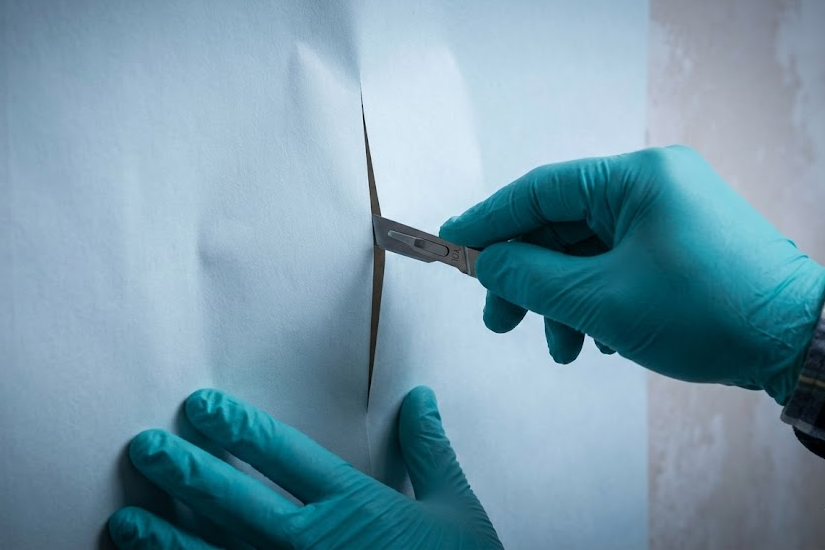
A simple syringe puncture will not suffice for larger blisters where the paper has visibly stretched. The excess material must be managed professionally to maintain a seamless finish.
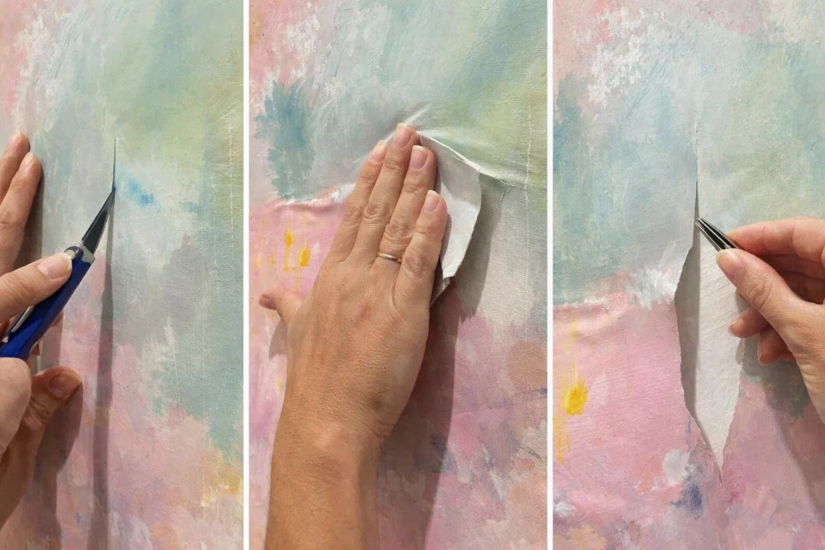
Use a fresh, sharp carbon-steel blade to make a clean vertical slit right down the center of the bubble. Gently peel back the two resulting flaps. Use a fine artist brush to apply a robust repair adhesive directly to the exposed substrate and the back of the paper flaps.
Allow the adhesive to sit for a few minutes so the paper can soak and become pliable again. Press the flaps back into place firmly. The paper likely stretched when it originally bubbled, meaning the newly cut edges may overlap slightly. Carefully trim this overlap with a straight edge and the carbon-steel blade, cutting through both layers simultaneously. This creates a perfect butt joint. Roll the new seam completely flat with a seam roller.
The Systemic Failure Protocol
Tapping the wall might reveal a hollow sound behind the bubbling wallpaper, indicating the plaster itself has blown and detached from the brickwork. Injecting paste is entirely futile in these structural scenarios.
The professional standard requires removing the affected lengths of wallcovering completely. Tradesmen must knock out the loose plaster, apply suitable filler, sand the substrate flush, and seal the new repair properly. Fresh drops of wallcovering must then be hung to replace the damaged sections. Professionals always retain a few spare rolls from the original batch number for this exact scenario.
Preventing Repeat Failures Through Site Best Practices
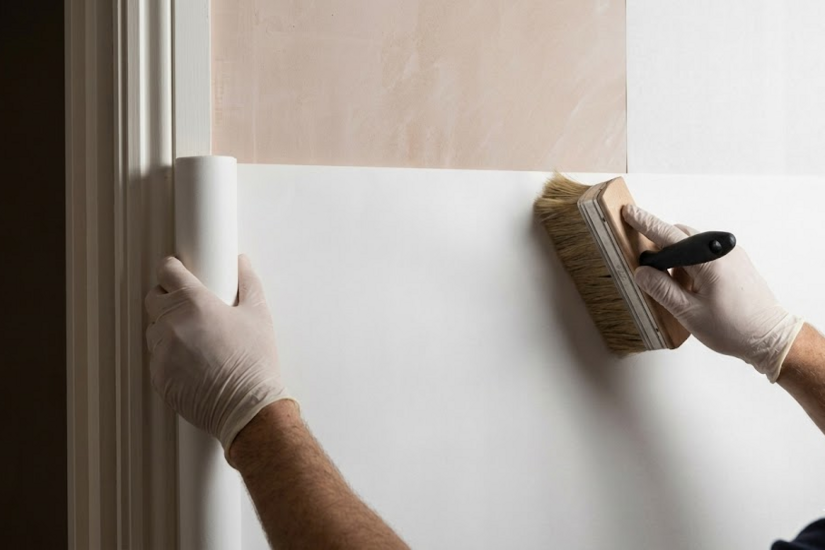
Prevention relies entirely on rigorous site preparation and strict adherence to material specifications outlined by the manufacturer.
Substrate Testing And Moisture Management
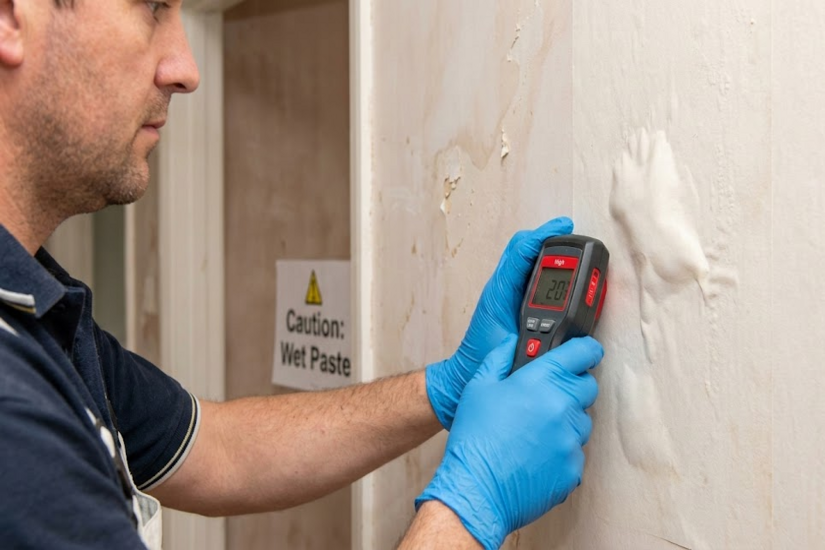
Never apply wallcoverings to a damp wall under any circumstances. Tradesmen should always use a professional damp meter calibrated for masonry to ensure readings are within acceptable limits before quoting a job. Masking structural damp with foil-backed paper is an outdated, non-compliant practice. It simply traps the moisture and pushes the problem to adjacent masonry, causing much worse structural issues down the line. Resolve the damp source before decorating begins.
Sizing And Cross-Lining Techniques
Professionals should always size a newly prepared wall to ensure a uniform surface with highly predictable porosity. Cross-lining is highly recommended for premium finishes and heavy papers.
Cross-lining involves hanging lining paper horizontally across the wall. This provides a chemically neutral, perfectly porous base that absorbs the adhesive evenly across the entire surface area. The joints of horizontally hung lining paper will never align with the vertical joints of the final finishing wallpaper. This specific technique prevents seam splitting and edge bubbling entirely. If you want to practise other training simulations, Tradefox covers the fundamentals in a way that is easy to follow.
Controlling The Drying Environment
Educate the client on the curing process before leaving the site. The room should be kept at a steady, moderate temperature, ideally between 15 degrees Celsius and 20 degrees Celsius. Windows can be opened slightly to allow ambient moisture to escape the room. Heavy drafts must be strictly avoided as they cause uneven drying. Rapid temperature fluctuations remain the ultimate enemy of freshly hung wallcoverings.
Understanding the chemical and mechanical properties of adhesives is non-negotiable for professional decorators. Respecting the absolute necessity of booking times and thoroughly preparing the substrate will eliminate the risk of bubbling wallpaper on your projects. Professional tradesmen protect their profit margins and their reputation by following these rigorous, safety-first protocols on every single site.