

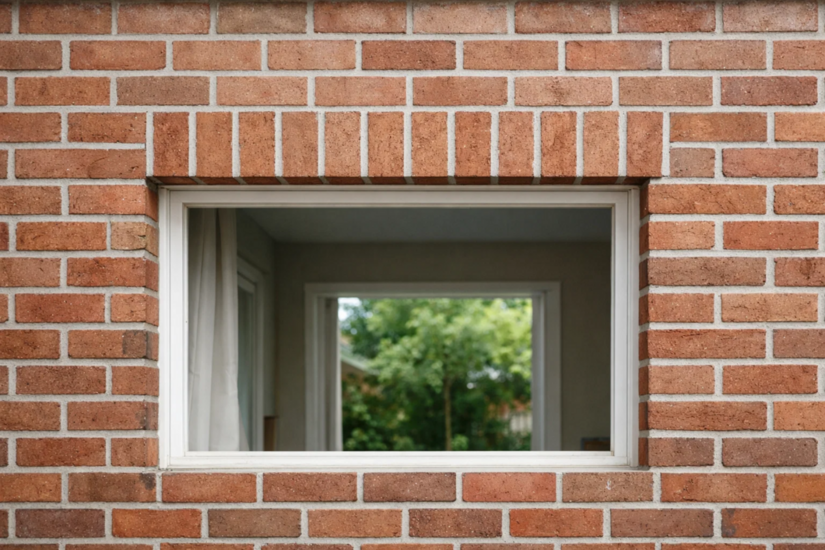
In the hierarchy of structural masonry, the lintel is a critical component that often suffers from fit and forget syndrome. For professional bricklayers and site managers, understanding brickwork lintels goes beyond simply resting a steel or concrete beam over an opening. It requires a firm grasp of structural mechanics, British Standards, and the long-term implications of moisture and thermal movement. Failure to install the correct lintel compromises the structural integrity of the entire leaf.
This guide breaks down the technical essentials of load paths, span limits, and the structural signs of early failure.
Understanding Load Paths and the Triangle of Force
A common misconception in junior masonry is that a lintel carries the weight of the entire wall above it up to the roofline. In reality, brickwork exhibits an effect known as arch action. When mortar cures, the bricks above an opening begin to work together. They transfer the vertical load diagonally to the abutments on either side.
The 45-Degree Rule
Under standard conditions, the load effectively carried by brickwork lintels is defined by a 45-degree isosceles triangle starting from the points of support. Only the masonry within this triangle is considered a dead load directly supported by the lintel. This rule changes immediately if there are applied loads within or near that triangle. Watch out for these common interruptions:
- Floor joists bedding onto the inner leaf.
- Roof trusses or point loads from steel beams.
- Wall openings located directly above the lintel that interrupt the arch action.
If a floor joist enters the wall within the 45-degree zone, the lintel must be rated for heavy-duty loads to prevent deflection.
Technical Span Limits and Bearing Requirements
The span is not merely the width of the window or door. For any professional installation, the total length of the lintel must account for the clear span plus the end bearings.
Minimum Bearing Standards
According to UK Building Regulations and NHBC standards, the minimum bearing for brickwork lintels is generally 150mm at each end. For spans exceeding 4 metres, this bearing often needs to increase to 200mm. It may also involve the use of concrete padstones to distribute the weight and prevent the masonry underneath from crushing.
Span vs Deflection
As the span increases, the risk of deflection becomes the primary concern. Steel lintels are designed with a slight camber to counteract this bowing. A professional installer must ensure the lintel is perfectly level across its length during the dry-fit. The weight of the wet masonry will eventually settle it into its final position. If the span is too wide for the specified gauge of steel, the resulting deflection will pinch the window frames.
UK Regulations and Material Selection
Compliance with BS EN 845-2 is mandatory for all lintels sold and used in the UK. This standard covers the requirements for both steel and concrete variants.
- Corrosion protection is vital. For coastal areas or aggressive environments, standard galvanised steel might be insufficient. Stainless steel lintels are required to ensure the 60-year design life of the building.
- Thermal bridging is addressed in Part L. Modern regulations focus heavily on heat loss. Using lintels with built-in insulation or base plates that allow for a continuous thermal break is essential to meet SAP calculation requirements.
- Damp proof course installation is critical. In cavity wall construction, a flexible DPC or cavity tray must be installed over the lintel. Failure to do so leads to water ingress.
Early Warning Signs of Lintel Failure
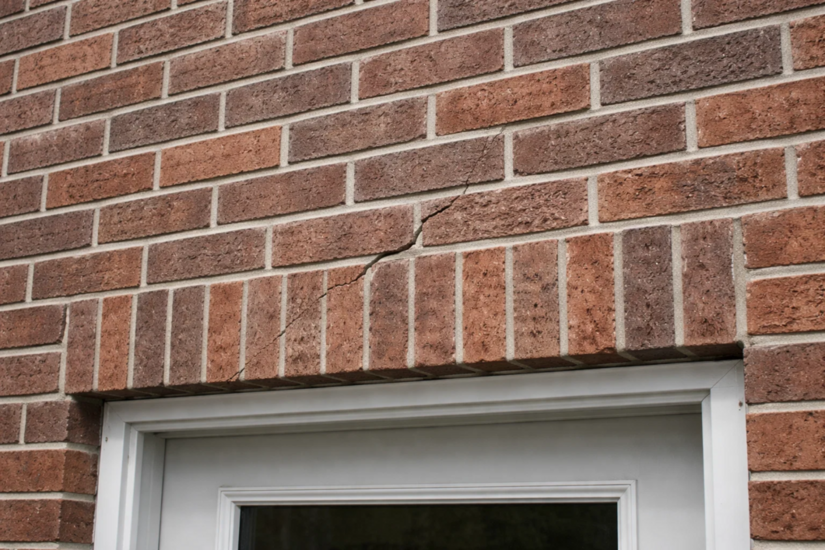
Recognizing early cracking is what separates an expert tradesman from an amateur. Cracks around brickwork lintels are rarely just settlement. They act as structural indicators.
Vertical Cracking at the Bearings
If you see vertical cracks starting at the corners of the opening and moving upward, the bearing is likely insufficient. The concentrated load is overstressing the masonry directly beneath the lintel ends. This causes a shear failure.
Stepped Cracking Above the Lintel
Stepped cracks following the mortar joints in a diagonal pattern usually indicate that the lintel has deflected beyond its limit. This is common when a standard-duty lintel was used where a heavy-duty one was required. Late changes in floor joist positioning often cause this issue.
Horizontal Cracking in the Mortar Bed

If the mortar joint directly above the steel flange starts to open up, it may be a sign of lintel rotation. This happens when the load is not centered on the lintel. The off-center load causes it to twist slightly outward.
Spalling Brickwork
In older properties, the brick face may begin to flake off specifically where the lintel is situated. This is a sign of expansive corrosion. As the steel rusts, it expands significantly. This exerts immense upward pressure that snaps the bricks.
Installation Best Practices for Professionals
To ensure the longevity of your installation, follow this technical checklist during the build.
- Always use temporary propping supported at maximum 1.2-metre centres. This supports the lintel while the masonry is green and prevents premature deflection.
- Leave props in place for at least 24 to 48 hours.
- Ensure the lintel is bedded on a full, level bed of mortar. Avoid compressible plastic shims for levelling, as these create point loads that can crack the masonry. Natural slate is an acceptable non-compressible packing material.
- Install weep holes in cavity walls. NHBC standards specify a maximum of 900mm centres, though 450mm is excellent site practice. Always use at least two per opening.
- Maintain a consistent 10mm mortar joint between the lintel and the first course of bricks.
Structural Integrity and Safety First
The lintel is the silent partner in masonry. It performs its job without fanfare until it fails, at which point the remedial costs are substantial. For tradesmen, the goal is to eliminate risk by adhering strictly to the manufacturer load tables and the structural engineer specifications. Never substitute a lintel on-site without verifying its kilonewton rating against the original design. Correct installation ensures that the building remains safe, dry, and structurally sound for decades.
If you want to build stronger judgement for site checks and when to escalate, TradeFox offers guided training you can follow at your own pace, with clear steps that support safer decisions.