


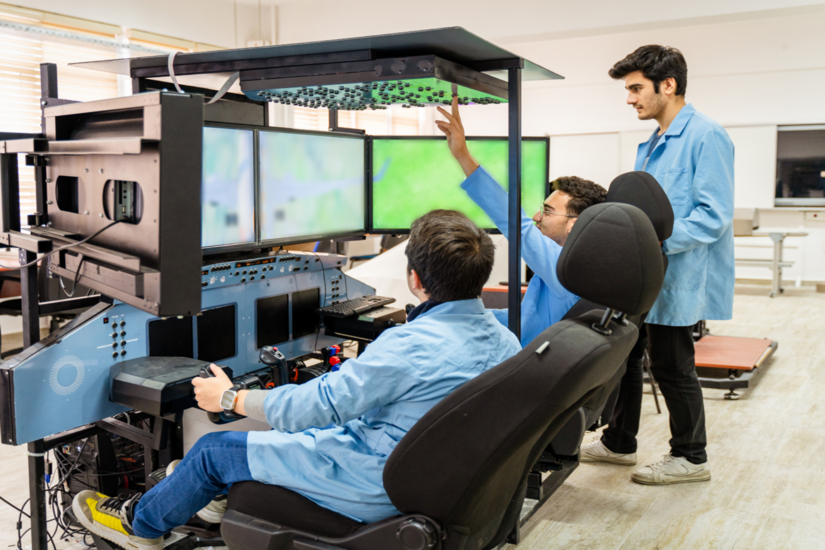
Construction remains the deadliest industry in Great Britain. The numbers from the regulator make that clear, and they explain why the way new tradesmen are trained is changing fast. Aviation worked this out decades ago. Medicine followed. Construction is now catching up, and the method driving the shift is simulation training.
This post breaks down what the evidence actually shows, where it applies on a UK site, and what it means for anyone working in or entering the trades.
The Scale of the Problem in UK Construction
The Health and Safety Executive publishes the official figures every year. For 2024/25, the HSE Construction Statistics in Great Britain 2025 report shows:
- 35 fatal injuries to construction workers.
- A fatal injury rate of 1.92 per 100,000 workers, around 4.8 times the all-industry average.
- 53% of construction deaths over the five-year period 2020/21 to 2024/25 were caused by falls from a height.
- Roughly 50,000 non-fatal injuries each year.
- An estimated £1.4 billion annual economic cost from work-related injury and ill health in the sector.
That last figure is not just an accounting exercise. It reflects lost time, ruined careers, and the human cost behind every site incident. The legal backdrop is the Construction (Design and Management) Regulations 2015, which place a clear duty on everyone from clients to operatives to demonstrate competence. Competence is not a paper exercise. It is the ability to do the work safely and correctly, and that is exactly the gap simulator-based learning is built to close.
The Aviation Story: From Crashes to Near-Zero
Commercial aviation is one of the safest activities a human can take part in. It was not always that way.
In the 1970s and 1980s, the industry confronted the fact that most accidents came down to human factors rather than mechanical failure. Up to 80% of aviation accidents involve human error. The response was twofold:
- Crew Resource Management (CRM): a discipline focused on communication, decision-making, and situational awareness.
- Mandatory, recurrent simulator-based training and checking for every commercial pilot.
The results are measurable. According to the International Air Transport Association 2024 Safety Report, the global accident rate has fallen from 3.72 accidents per million sectors in 2005 to 1.13 per million flights in 2024. The UK Civil Aviation Authority approved its first VR pilot training device in March 2026, which shows that even the most simulator-heavy industry on the planet is still finding ways to push the technology forward.
The lesson is straightforward. When you let people make mistakes in a safe environment, practise the recovery, and repeat the procedure until it becomes second nature, accident rates fall and stay fallen.
What Medicine Learned From Pilots
Healthcare borrowed the simulator playbook directly from aviation. The results have been measurable.
- The MedTeams study, cited by Brown University Health, found that team training with simulation reduced clinical errors by 26.5%.
- A systematic review published through the National Library of Medicine found that simulation-based medical education improves clinical skills, sharpens decision-making under pressure, and reduces error rates in live practice.
- The Agency for Healthcare Research and Quality Patient Safety Network reports targeted simulation interventions improved nurses' adherence to medication best practices from 51% to 84%.
For tradesmen, the parallel is direct. The first time someone operates a 13-tonne excavator near a live cable, or rigs a load on a tower crane in gusting wind, should not be the moment they discover what they do not know.
Construction Is Catching Up Fast
The Construction Industry Training Board (CITB) has invested heavily in plant simulators at its National Construction College, covering excavators, cranes, dozers, telehandlers, dumpers and tractors. The second phase of new CITB plant training standards launched in June 2025, and CPCS-accredited providers across the UK are integrating simulator hours alongside time on real machines.
What the Research Says
Peer-reviewed research published by the American Society of Civil Engineers in 2025 compared VR-based training against traditional paper-based instruction for high-risk post-tensioning tasks. The VR methods improved task performance, raised motivation, and increased retention of safety procedures.
A separate study on heavy machinery training recorded a roughly 300% improvement in the timely identification of critical hazards, including overhead electricity cables. Those cables remain a leading cause of fatal accidents involving tower cranes and high-reach plant, which is why HSG47 (Avoiding danger from underground services) and overhead service guidance underpin so much UK site planning.
A Forrester Consulting study found that 81% of companies identified safety training and simulation as a priority application for immersive technology. That figure reflects what site managers and health and safety leads are already telling their procurement teams.
Why Simulator-Based Learning Works for Trades
There are five reasons this method delivers results that classroom learning cannot match.
Repetition Without Risk
A new plant operator can run the same lift sequence twenty times in a morning. On a live site that is impossible. In a simulator it is routine. Repetition is how habits are built, and good habits are what keep workers alive on tower cranes, scaffolds and excavations.
Exposure to Rare Scenarios
Most apprentices will not encounter a major hazard in their first year on site, which is exactly the problem. When something goes wrong for real, they have no template to draw on. A simulator can introduce:
- Cable strikes on buried services.
- Near-miss reversing incidents with banksmen.
- Slewing collisions and load swing.
- Unexpected ground failure during lifts.
- Adverse weather scenarios.
All of this happens without anyone getting hurt and without damaging plant.
Objective Measurement
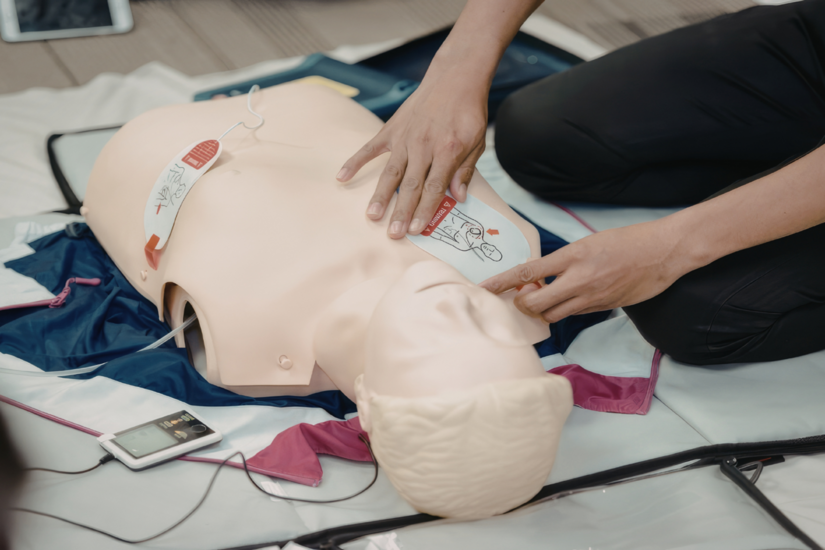
Simulators record every input. Trainers can see exactly where a candidate hesitated, overcorrected, or skipped a check. That feedback is far more precise than what an instructor can offer from the cab door.
Standardised Assessment
Two trainees in two different yards can be set the same scenario under the same conditions. That removes the variability that has historically plagued plant assessment and aligns with the latest CITB plant training standards rolled out across 2024 and 2025.
Lower Cost Over the Long Run
Fuel, wear and tear, instructor time and yard space all cost money. A simulator session uses far less of all four. For high-volume training providers, the maths starts to favour simulator-based delivery quickly.
How This Fits Into UK Regulation
A few key frameworks sit behind everything covered above:
- Health and Safety at Work etc. Act 1974: the foundation of UK workplace safety law.
- CDM 2015: sets competence and information duties for everyone involved in a construction project.
- Provision and Use of Work Equipment Regulations 1998 (PUWER): requires that work equipment is used only by people who have received adequate training.
- Work at Height Regulations 2005: directly relevant given that falls from height account for over half of construction fatalities.
- Lifting Operations and Lifting Equipment Regulations 1998 (LOLER): governs the planning and supervision of lifting operations.
Simulator-based learning does not replace any of these legal duties. It supports them by giving employers a clear, recorded, and repeatable way to demonstrate competence before someone steps onto a live site.
Limits and Honest Caveats
No serious training provider is suggesting simulators replace real machine time. The Construction Plant Competence Scheme (CPCS), now administered by NOCN Job Cards, and the National Plant Operators Registration Scheme (NPORS) both still require practical assessment on actual plant.
There are also fidelity limits. A virtual excavator does not weigh anything. Operators still need to feel the machine, understand the suspension, and read the ground. A new operator who has only ever used the simulator will need supervised time before being signed off, and that is exactly how good providers structure their programmes.
A Quick Note on CPCS Cards
- The Red Trained Operator card is the starting point. It is valid for two years and cannot be renewed.
- To stay carded, holders must upgrade to a Blue Competent Operator card by completing a relevant Level 2 NVQ in Plant Operations within that two-year window.
- The Blue card is valid for five years and is renewable.
Anyone considering simulator-based training should check that the provider is accredited under CPCS, NPORS, or a recognised CITB-approved scheme, and that the qualification at the end is one a main contractor will actually accept on site.
What This Means for Tradesmen and Future Tradesmen
Three takeaways matter for anyone working in or entering the trades:
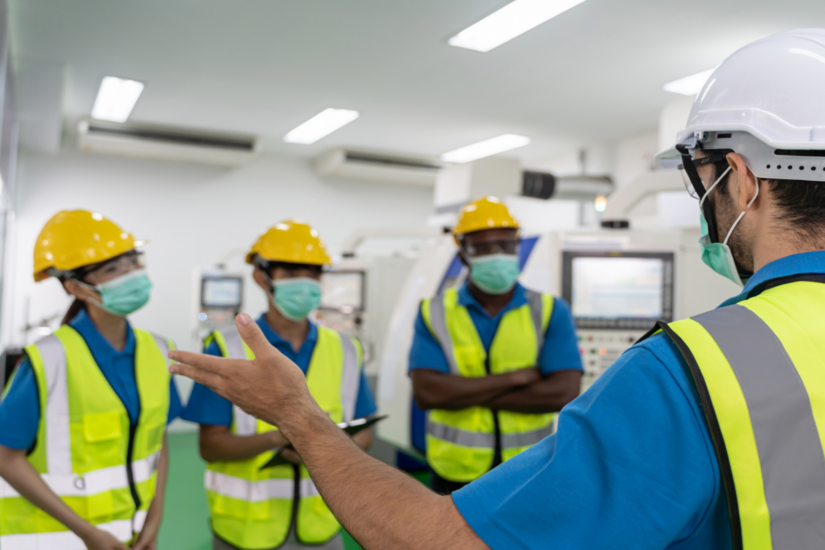
- Simulator-based learning is now a legitimate and increasingly expected part of a modern construction career. If a provider offers it alongside real machine time, that is a positive signal about the quality of the wider programme.
- The safety case is not theoretical. With 35 construction fatalities recorded in 2024/25 and falls from height accounting for 53% of those deaths, anything that builds hazard recognition before someone climbs a scaffold or starts an excavator is worth taking seriously.
- The industry is moving in a direction set by aviation and medicine. Operators, groundworkers, scaffolders, steel fixers and crane drivers who log simulator hours alongside their site time will be better placed as more main contractors specify simulation training in their prequalification documents.
The work is dangerous. The training does not have to be. Simulation training is one of the few interventions with hard evidence behind it from multiple safety-critical industries, and UK construction has every reason to keep building on the foundation that aviation and medicine laid down.
Whether you are starting out or building on existing experience, TradeFox gives you a practical way to strengthen your skills, improve hazard awareness, and prepare for the realities of modern construction work.