

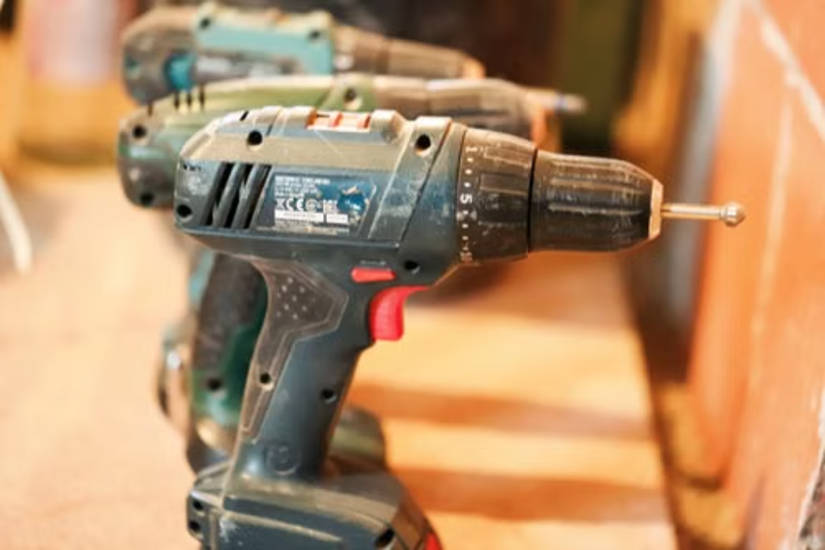
The SDS drill meaning comes down to its chuck. SDS stands for Slotted Drive System, a bit-holding standard developed by Bosch in the 1970s that lets a slotted shank slide back and forth while it rotates. It is designed for heavy-duty drilling and chiseling in materials such as concrete, masonry, and stone. In plain terms, it is a rotary hammer built to punch through masonry far faster than a standard combi drill.
The name has a few recorded origins. Most references settle on Slotted Drive System, though the design’s German name, Steck-Dreh-Sitz, is sometimes translated as insert, twist, hold. Whichever version you go with, the meaning is the same on site: a tool-free chuck that grips a slotted bit and drives a pneumatic hammer action through it.
This guide covers the chuck types, the hammer modes, where each tool earns its place across the trades, and the UK vibration duties every operator needs to work within. It is written for working tradesmen and people training into the trades, not casual users.
How Does an SDS Chuck Work?
An SDS chuck holds the bit with ball bearings that lock into slots on the shank, rather than clamping it with three jaws.This locking system prevents the bit from slipping under the high torque and impact forces.
The important part is what the design lets the bit do. It slides forward and back within the chuck while still being held securely and still receiving rotational drive. That sliding action is what engages the hammer. A piston inside the tool strikes the end of the shank, and the bit floats to transmit that blow into the material.
This is the core of what separates an SDS tool from a hammer drill. A standard hammer drill vibrates a clutch mechanism to fake percussion. An SDS rotary hammer drives a genuine pneumatic piston, which is why it clears masonry with far less push from the operator.
One practical point: the shank slots need grease. Because the bit slides inside the chuck, running it dry accelerates wear on both the shank and the chuck internals. Keep the shanks lightly greased and wipe grit off before you insert a bit.
What Are the SDS Chuck Types?
There are two chuck types you will meet daily on UK sites, plus a couple of variants worth knowing. The difference is shank diameter, and it dictates the whole class of work each tool is built for.
SDS Plus
SDS Plus is the everyday standard. SDS Plus tools have a smaller shank, at 10mm, compared to SDS Max, which is 18mm. The SDS Plus is made to fit into rotary hammers for tasks that are lighter than SDS Max projects. The 10mm shank carries two open grooves for the locking balls and two closed grooves that transmit rotation.
For most first-fix and second-fix work, SDS Plus is the tool you reach for. It handles anchor holes through brick for cavity wall fixings, drilling out concrete for pipe runs, and general masonry fixings. It is light enough for overhead and one-handed drilling, and every major brand builds one.
SDS Max
SDS Max is the heavy-duty class. With a larger shank, 18mm, they’re built for heavier-duty tasks. These SDS Max tools provide much higher impact energy, which makes them ideal for demolition jobs, breaking up concrete, or even deep drilling for tasks like rebar installation. The larger shank uses additional grooves to hold up under high-torque loads.
If you are coring, breaking slabs, or drilling large-diameter anchor holes all day, this is the tool that survives it. It is heavier and pricier, and that weight is the trade-off for the impact energy.
What About SDS-Top and Spline Drive?
Two less common systems sit between Plus and Max. SDS-Top is an intermediate standard with a 14mm shank, found on some older mid-range rotary hammers. Spline drive is a separate system that offers similar performance to SDS Max but uses splined teeth rather than slots, so the bits are not interchangeable with SDS. You may still meet both on older kit, so it helps to recognise them.
SDS Plus vs SDS Max: Quick Comparison
| Feature | SDS Plus | SDS Max |
|---|---|---|
| Shank diameter | 10mm | 18mm |
| Duty class | Light to medium | Heavy-duty |
| Typical work | Anchor holes, pipe runs, cable chasing | Coring, demolition, slab breaking |
| Weight and handling | Light, one-handed capable | Heavy, two-handed |
| Bit compatibility | SDS Plus bits only | SDS Max bits only |
| Best for | Daily trade work | Large-scale construction |
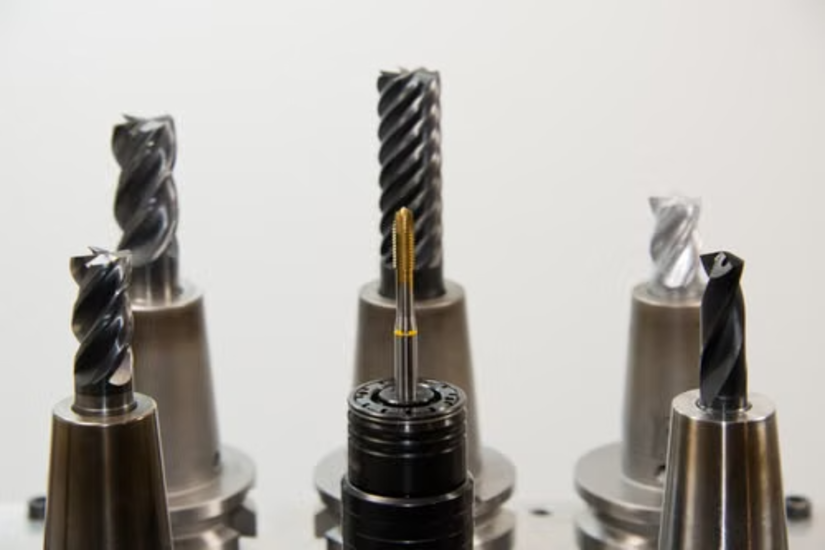
Are SDS Plus and SDS Max Bits Interchangeable?
No. The shank diameters differ, so the bits do not swap between tools. An SDS-Plus bit cannot be inserted into an SDS-Max chuck, nor can the reverse occur due to the Max bit’s larger 18mm diameter. This incompatibility is a safety feature, ensuring that smaller bits are not subjected to forces they were not engineered to withstand.
Adapters exist, but treat them with caution. The adapter adds length and changes the bit balance. Under high percussion forces, this can cause bit breakage or tool damage. For anything beyond the lightest drilling, run the bit that matches the chuck.
One useful thing about the standard is that bits are brand-independent within a chuck type. An SDS Plus bit from Bosch works identically in a Makita SDS Plus drill, a DeWalt, a Milwaukee, or a Hilti. You are buying into a shank system, not a brand.
What Are the SDS Drill Hammer Modes?
Most of these tools carry a mode selector, and understanding it prevents wrecked bits and ruined work. There are three common settings:
- Rotary only (drilling): Rotation with no percussion. Use this for wood and, with the right bit, metal. Never use it to chase concrete, because it simply will not cut.
- Rotary hammer (hammer drilling): Rotation plus the piston hammer action running together. This is the mode for drilling holes in concrete, brick, block and stone, and it is the setting that defines the tool.
- Hammer only (chisel mode): Percussion with no rotation, so the tool acts as a light breaker. Fit a pointed or flat chisel and you can chase channels, remove tile, or break out small areas.
On SDS Plus tools the chisel mode often lets you rotate the chisel to set its angle before locking it. Match the mode to the bit every time. Running a masonry bit in rotary-only mode wastes the tool, and running a wood or metal bit under hammer will destroy it.
What Are the Common Trade Uses for an SDS Drill?
Combining a pneumatic hammer action with standard rotation makes these tools exceptionally versatile.
Common trade applications include:
- Electricians: Chasing cable runs into masonry with chisel mode, drilling back-box recesses, and boring through walls for cabling.
- Plumbers and heating engineers: Drilling pipe runs through brick and block, and setting anchor holes for boiler brackets and cylinders.
- Groundworkers and builders: Setting fixings into concrete, drilling starter-bar holes, and light breaking of slabs and screed.
- Kitchen and bathroom fitters: Removing wall and floor tile with a chisel, and drilling fixings into dense substrates.
- Dryliners and carpenters: Fast fixing of battens and frames into masonry with anchor bolts.
For general drilling into brick and block, concrete for pipe runs, or anchor holes, an SDS Plus handles the vast majority of trade work. Step up to SDS Max only when the scale of breaking or coring demands it.

SDS Drill Safety: Your UK Vibration Duties
Rotary hammers put significant vibration into the hands and arms, and prolonged exposure causes lasting harm.
Regular use of vibrating tools can cause Hand-Arm Vibration Syndrome, or HAVS, a group of injuries to the blood vessels, nerves and joints of the hand and arm. When a person uses these types of tools for extended periods, there is a risk that the blood vessels, nerves, muscles and joints in the hand, wrist and arm may become damaged. Early signs include tingling, numbness, loss of grip and blanching of the fingers. The damage is often irreversible.
What the Law Requires
In the UK, this is not just good practice, it is law. The regulations introduce action and limit values for hand-arm and whole-body vibration. The Control of Vibration at Work Regulations 2005 set two thresholds you need to know:
- Exposure Action Value (EAV): 2.5 m/s2 A(8) at which level employers should introduce technical and organisational measures to reduce exposure.
- Exposure Limit Value (ELV): 5.0 m/s2 A(8) which should not be exceeded.
The A(8) figure is the average exposure over an eight-hour working day. Importantly, the EAV is not a safe line to sit on. HSE is clear that the EAV is not an entirely safe level, so the regulations require risk to be eliminated or reduced even where exposure is below the EAV if further reductions can be achieved at a reasonable cost.
HSE also runs a points system to make exposure easier to add up across tools. The exposure action value (2.5 m/s2 A(8)) is equal to 100 points and the exposure limit value (5 m/s2 A(8)) is equal to 400 points.
Practical Controls on Site
Controls that keep you working within those limits include:
- Check the declared vibration value: Use the tool's stated m/s² figure and HSE's calculator to work out realistic trigger times before you reach the EAV.
- Rotate tasks and operators: Share the hammer work so no single person racks up excessive trigger time.
- Keep hands warm: Keeping the hands warm is an important factor in reducing the effects of vibration. Gloves that hold warmth in do more for circulation than anti-vibration gloves alone.
- Maintain the tool: Sharp bits and a serviced hammer mechanism cut faster and transmit less vibration for the same hole.
- Report early symptoms: Flag numbness or blanching straight away and take part in any health surveillance your employer runs.
A safer approach to SDS drill use starts with knowing your exposure limits, using the right controls and recognising early symptoms. TradeFox can help you build your wider trade skills through practical, easy-to-follow training you can access at your own pace.
Your Duties Do Not Stop With the Employer
The regulations place the main duties on the employer, but the operator has duties too. Employees have duties under the regulations. In practice that means using the controls provided, attending health surveillance, and reporting symptoms early. The full HSE guidance sits in publication L140, and every employer running these tools should hold a tool register with vibration data and exposure times.
Choosing and Using Your SDS Drill
At its core, this is a practical tool: a slotted chuck, a pneumatic hammer, and a design built to move through masonry. Match the chuck type to the work, SDS Plus for the daily grind and SDS Max for heavy breaking. Select the right hammer mode for every bit, keep the shanks greased, and above all, manage your vibration exposure to the UK limits. Get those four things right and the tool will earn its keep on any site.