

A transformer rarely fails without warning. Before a winding collapses or an arc tears through the insulation, the oil inside the tank starts telling a story. The trick is having something in place to read it. That is the job of the Buchholz relay, and for anyone working on oil-filled power transformers, understanding how this device behaves is core knowledge. It is the difference between catching a slow-building fault during a planned outage and dealing with a catastrophic failure in the middle of the night.
This guide is written for electrical tradesmen, transformer maintenance engineers, and apprentices moving into high-voltage work. It is not a DIY reference. Working on live or recently de-energised oil-filled plant carries real risk of electric shock, arc flash, and exposure to hot oil and flammable gas. It should only be carried out by competent, authorised persons under a safe system of work.
What Is a Buchholz Relay?
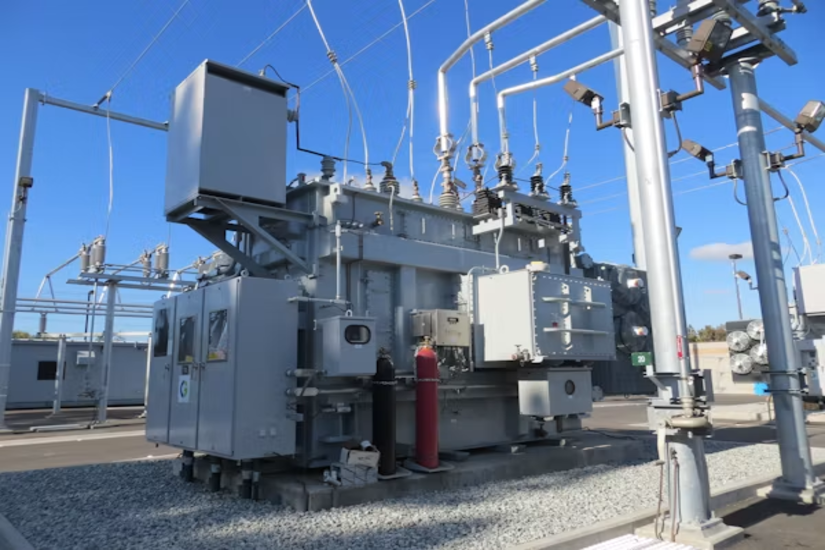
The device is a gas and oil actuated protection unit fitted to oil-immersed transformers and reactors that use a conservator. It sits in the pipework between the main tank and the conservator, mounted on a slight incline so that any gas rising out of the oil naturally travels toward it and collects inside.
It was developed back in 1921 by Max Buchholz, and the core principle has barely changed since. What has changed is the standardisation around it. In current UK and European practice, these relays are covered by IEC 60076-22-1:2019, the standard for power transformer and reactor protective devices, which sits under the wider IEC 60076 transformer series. The older EN 50216-2 specification is also still referenced by many manufacturers.
The reason this matters on site is simple:
- No relay, no early warning: A conservator-type transformer without this protection is missing one of its primary fault-detection layers.
- Standards expect it: IEC 60076 effectively expects oil-immersed transformers with conservators to carry one, alongside pressure relief devices and other protective fittings.
- It is a diagnostic tool, not just a switch: The gas it captures tells you what is happening inside a sealed tank you cannot see into.
The Physics: Why Faults Produce Gas and Oil Movement
Every internal fault inside an oil-filled transformer disturbs the insulating oil in one of two ways. It either produces gas slowly, or it shifts oil violently. The relay is built to detect both, and that dual response is what makes it so useful for revealing what is going on inside.
When insulation overheats or a minor fault develops, the mineral oil and solid insulation begin to break down and decompose. This decomposition releases gases such as hydrogen, methane, ethylene, acetylene, and carbon monoxide, depending on the nature and severity of the fault. These gases are lighter than oil, so they rise. As they travel up the pipework toward the conservator, they get trapped in the top of the relay housing.
A severe fault behaves completely differently. A phase-to-phase short, a winding failure, or a heavy internal arc vaporises oil almost instantly and creates a pressure surge. Instead of a gentle trickle of bubbles, you get a rapid rush of oil moving from the tank toward the conservator. The device is designed to sense that surge directly.
How the Two-Stage Protection Works
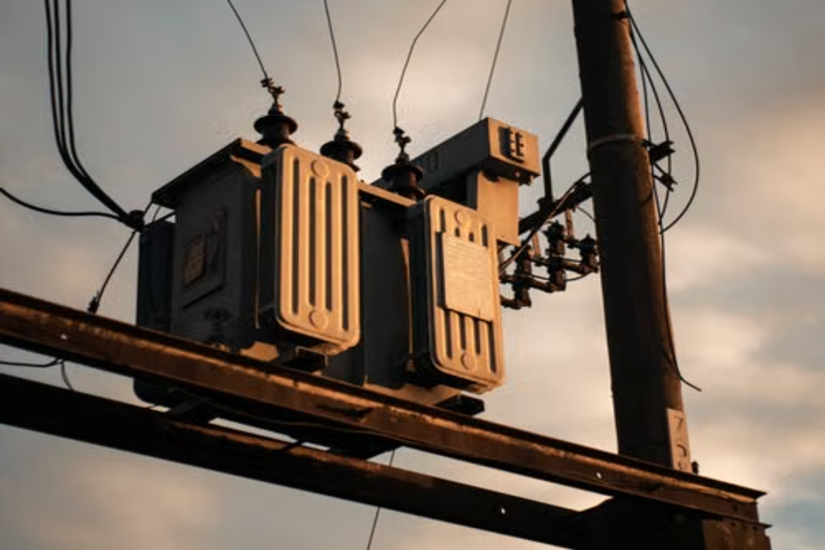
This is the part every tradesman needs to hold clearly in their head, because the two stages mean very different things when you are called out to an operated relay.
Stage One: The Alarm (Slow Gas Accumulation)
As gas collects in the top of the relay housing, it displaces oil and the internal oil level drops. A float in the upper part of the relay follows that falling level down. Once it reaches a set point, it operates a switch and energises an alarm circuit.
This is a warning, not a shutdown. The alarm stage is telling you that a slow-developing fault is present, such as:
- Minor overheating: Localised hot spots in the windings or core.
- Developing insulation weakness: Early breakdown of paper or oil insulation.
- A poor connection: Resistive joints generating heat and gas.
- Trapped air: Air working its way out of the oil after a top-up or repair, which can cause nuisance alarms.
The transformer usually stays in service, and the alarm gives operators the chance to investigate and schedule an outage before things escalate. Importantly, the relay is designed to let a set volume of gas accumulate and then pass excess gas on to the conservator. That deliberate design stops slow gas build-up from ever reaching the level that would trigger the trip stage, which keeps the two events cleanly separated.
Stage Two: The Trip (Rapid Oil Surge)
The second stage responds to violent oil movement rather than gas volume. A baffle plate, or vane, sits in the path of the oil flow. Under normal conditions oil barely moves through the relay, so the baffle stays put. When a severe fault drives a surge of oil toward the conservator, that flow strikes the baffle, forces it over, and operates the trip switch.
The trip does exactly what the name says. It signals the transformer circuit breakers to isolate the unit immediately, cutting power before the fault can cause further damage or start a fire. A Buchholz trip is treated as a primary protection action and, in line with protection practice, is typically wired through a dedicated lockout arrangement so the unit cannot simply be re-energised without deliberate reset and investigation.
There is a second condition that will also drive the lower element to operate. If oil escapes from the transformer and the level drops far enough, the relay first alarms and then trips as the level continues to fall. That is why any operation should always be cross-checked against the conservator oil level gauge.
Reading the Gas: What the Relay Reveals About the Fault
Here is where this device earns its reputation as a diagnostic tool and not just a switch. Every relay has a test port, or petcock, that lets a competent person draw off the accumulated gas for analysis. What you find tells you a great deal about what is happening inside.
The two broad outcomes are:
- Flammable gas found: This points to a genuine internal fault such as overheating or arcing, because that gas came from decomposing oil and insulation.
- Air found: This usually points to a low oil level, a leak, or trapped air rather than an active electrical fault.
That single distinction can steer the entire response.
Dissolved Gas Analysis (DGA)
For a proper diagnosis, gas drawn from the relay is sent for Dissolved Gas Analysis. The relative proportions of hydrogen, methane, ethylene, acetylene, and other gases are interpreted to distinguish, for example, low-temperature overheating from high-energy arcing. The recognised references are:
- IEC 60599: The guide to interpreting dissolved and free gas analysis results and linking gas signatures to fault types.
- IEC 60567: The guidance for sampling gas and oil for analysis, so the sample is taken correctly in the first place.
- IEC 60422: The standard covering the supervision and maintenance of the mineral insulating oil itself.
This is specialist work. Gas sampling on a suspect transformer must only be done by trained personnel following a controlled procedure, because the gas may be flammable and the unit may still be faulted.
Common Reasons a Buchholz Relay Operates
When you are dispatched to an operated relay, running through the likely causes methodically saves time and keeps you safe. Typical triggers include:
- Genuine internal faults: Decomposition gas from minor overheating through to serious arcing.
- Loss of oil: A dropping internal level operating the float, confirmed by the conservator gauge.
- Trapped air: Air entering after maintenance, oil top-up, or a repair, working free over time.
- Oil leaks: Leaks on the main tank allowing air bubbles to migrate up into the relay.
- Wiring or contact faults: Problems in the associated wiring or contacts that mimic a real event.
The presence or absence of gas, its flammability, and the conservator oil level together tell you which of these you are dealing with before anyone even thinks about re-energising.
Safety and Good Practice on Site
None of the diagnostic value matters if the basics are not respected. An alarm or trip means the transformer is under suspicion, and it must be treated that way.
- Never re-energise after a trip without investigation: A trip is a primary protection signal, and re-energising into an internal fault risks tank rupture, fire, and serious injury.
- Establish a safe system of work first: Work in line with the Electricity at Work Regulations 1989 and follow the duty holder's guidance.
- Assume gas is flammable: Treat gas in the relay as flammable until proven otherwise, and keep ignition sources away during sampling.
- Cross-check the oil level: Confirm every operation against the conservator oil level gauge before drawing conclusions.
- Confirm the relay itself: Contacts, floats, and wiring can develop faults that mimic a real event.
The HSE provides the authoritative UK references on safe working. HSG85: Electricity at Work – Safe Working Practices covers the practical side, and HSR25: Guidance on the Electricity at Work Regulations 1989 sets out the legal duties. Following HSE guidance is not itself compulsory, but if you follow it, you will normally be doing enough to comply with the law. The competence duty is central here: only those with the skills, knowledge, and experience to prevent danger should carry out the work.
Where the Relay Sits in the Wider Protection Scheme
A Buchholz relay does not work alone. On a modern transformer it operates alongside differential protection, winding and oil temperature devices, pressure relief valves, and sudden pressure relays. Its particular strength is that it responds to the physical evidence of a fault, the gas and the oil movement, rather than the electrical signature. That makes it capable of catching slow-developing insulation problems long before they show up as an electrical imbalance, which is exactly why it remains standard fitment on conservator-type units decades after it was invented.
For anyone building a career in this area, treat this as a starting point into transformer condition monitoring as a whole. Understanding gas generation, oil analysis, and the standards behind them opens the door to high-voltage maintenance and protection work that is in steady demand across the UK grid and industrial sectors.
The Bottom Line
The Buchholz relay turns invisible internal problems into a clear, staged signal. Gas accumulation raises an alarm, and violent oil movement forces a trip. Reading those signals correctly, checking them against the oil level, and never re-energising on assumption is core competence for anyone working on oil-filled transformers. Learn the physics, respect the safety, and the device will tell you what the tank cannot.
After learning how a Buchholz relay responds to gas accumulation and oil movement, build your understanding further with TradeFox’s practical electrical training and simulations designed for learners and working tradespeople.