

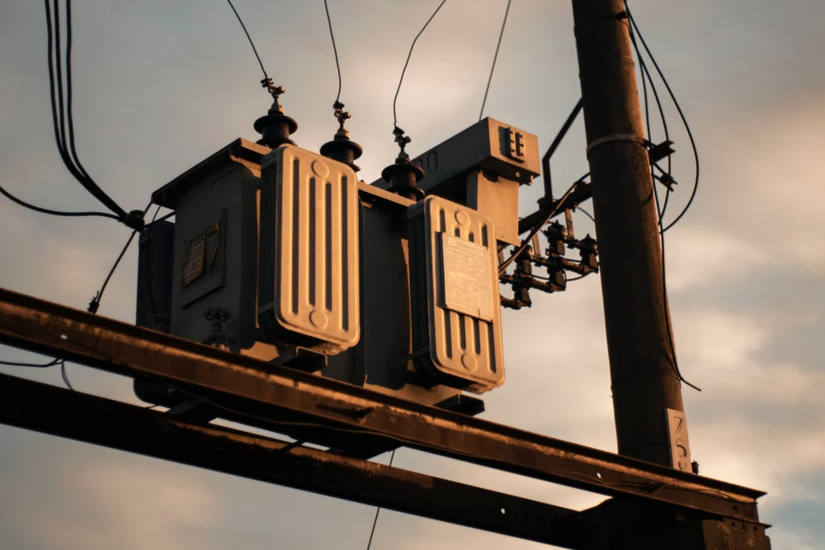
Transformer oil is a refined fluid inside a power or distribution transformer that does two jobs at once. It carries heat away from the windings and core, and it insulates live parts from each other and from earth. When it is in good condition, the transformer runs cool and reliable. When it degrades, the risk of overheating, flashover, and failure climbs fast.
This guide is written for tradesmen and for people training toward substation and electrical plant work. It is not a DIY guide. Work on an oil-filled plant carries live electrical, arc flash, confined space, and manual handling risk, and it should only be carried out by competent, authorised persons following a safe system of work.
What Transformer Oil Actually Does
The insulating oil inside the tank pulls two functions in the same direction.
Insulation
The fluid fills the gaps between windings, taps, bushings, and the tank wall. It has a far higher dielectric strength than air, which lets designers pack high-voltage components closer together. This is measured as breakdown voltage, and it is the single most important electrical property of oil in service.
Cooling
Heat from copper losses in the windings and iron losses in the core has to go somewhere. The oil absorbs that heat, rises by convection, and passes it to the radiators on the outside of the tank. Good thermal performance keeps the winding hot-spot temperature in check and protects the solid insulation, which is usually cellulose paper. Paper ages far faster when it runs hot, and paper ageing, not oil ageing, is often what ends a transformer’s life.
Most units on the UK network still use mineral oil, a refined petroleum product. Ester fluids, both synthetic and natural, are increasingly specified where fire performance matters, because they have a much higher fire point than mineral oil and suit fire-sensitive locations. Mineral oil remains the default across the vast majority of installed plant.
Standards That Govern Transformer Oil in the UK
Two standards frame almost everything a tradesman needs to know.
- BS EN IEC 60296: 2020 covers new and recycled mineral insulating oil. It classifies oil on performance, splitting it into Type A (fully inhibited, high grade) and Type B (standard grade). It sets the limits a fresh delivery must meet.
- BS EN IEC 60422: 2024 covers oil already in service. It gives the supervision and maintenance guidance and the caution and action limits used to decide whether oil is still serviceable, needs reconditioning, or needs replacing.
Two further standards matter for testing. Breakdown voltage is measured to BS EN IEC 60156. Dissolved gas sampling and interpretation follow the IEC 60567 and IEC 60599 family. External references are listed at the end.
Alongside the oil standards, the work itself sits under UK duty-holder law. The Electricity at Work Regulations 1989 and supporting HSE guidance govern safe working on electrical systems, and the environmental duties are enforced by the Environment Agency in England, SEPA in Scotland, and Natural Resources Wales.
Testing Transformer Oil
Sampling and testing is how the condition of the fluid, and by extension the health of the transformer, is judged without opening the tank. A routine oil testing programme is the backbone of transformer maintenance. The core tests fall into a few groups.
Dielectric Strength (Breakdown Voltage)
A sample is subjected to a rising voltage across a standard electrode gap until it breaks down. A low result usually points to water, fibres, or particulates.
- Fresh oil to IEC 60296 shows a breakdown voltage above 70 kV after laboratory vacuum treatment, with an as-delivered bulk minimum of 30 kV, both to IEC 60156.
- In-service limits under IEC 60422 vary with voltage class. As a broad guide, higher-voltage units above 170 kV are expected to sit well above 60 kV, while smaller units below 72.5 kV have lower thresholds. Always work to the limits in the current standard and your site code of practice, not from memory.
Falling dielectric strength is a direct warning that the oil’s insulating ability is slipping.
Moisture Content
Water is the enemy of both oil and paper. It lowers breakdown voltage, speeds up ageing, and moves between the oil and the cellulose insulation as temperature changes. Moisture content is measured in mg/kg (ppm) by Karl Fischer titration. Rising water is one of the clearest early warning signs that seals, breathers, or conservator systems need attention.
Acidity and Interfacial Tension
As oil oxidises it forms acids. Acidity, expressed as a neutralisation value in mg KOH/g, rises steadily over the life of the oil and is a good measure of overall ageing. Interfacial tension, the force at the oil-water boundary, falls as soluble contaminants build up. Read together, the two give a reliable picture of oxidative degradation.
Dissolved Gas Analysis (DGA)
Dissolved gas analysis is the most powerful diagnostic tool for oil-filled plant. Electrical and thermal faults break down oil and paper and release characteristic gases into the oil. A specialist lab extracts and measures these dissolved gases to identify the type of fault developing inside a sealed transformer.
The pattern matters more than any single figure:
- Hydrogen and methane point toward partial discharge or low-energy faults.
- Ethylene points toward hotter thermal faults.
- Acetylene is the gas that raises immediate concern, because it is linked to high-energy arcing.
- Carbon monoxide and carbon dioxide relate to ageing of the paper insulation.
Interpretation of these dissolved gas ratios is set out in IEC 60599 and should be left to a competent analyst, not guessed at on site. Regular analysis lets an incipient fault be caught and tracked long before it becomes a failure.
Early Warning Signs on Site

Lab results tell most of the story, but a competent tradesman also reads the plant directly.
On a drawn sample, watch for:
- A darkening of colour from pale straw toward brown, which suggests advancing oxidation.
- A sharp or burnt smell, which is never normal.
- Sludge or sediment in the bottom of the bottle, which means the oil is past its serviceable life and is depositing degradation products that foul cooling surfaces.
On the transformer itself, watch for:
- Rising operating temperatures for a given load.
- Unusual buzzing or crackling.
- Oil leaks around gaskets and bushings.
- A discoloured or blocked silica-gel breather.
- Any operation of the Buchholz relay, where fitted.
A Buchholz relay is fitted to conservator-type transformers, not to sealed units. A Buchholz alarm or trip is a serious event. Gas has collected or oil has surged, and the unit should be taken out of service and investigated. Do not reset and re-energise without proper diagnosis.
Handling, Storage, and Safety
Transformer oil is a hydrocarbon and must be handled accordingly. Treat it as a combustible liquid, keep it away from ignition sources, and use the correct PPE. Always consult the product safety data sheet before handling. Oil-filled plant should sit within bunded containment, and any spillage must be contained under the site environmental procedures to protect drains and watercourses.
PCBs: A Legal Duty, Not Optional
Older transformers may contain oil contaminated with polychlorinated biphenyls (PCBs), which are hazardous and tightly controlled. Under current UK guidance:
- A transformer may only be held to the end of its useful life if its fluid can reasonably be assumed to contain 0.005% PCBs by weight (50 ppm) or less, or a total PCB volume of 0.05 dm³ (50 ml) or less.
- Equipment above those thresholds had a hard use-by date of 31 December 2025 and must now be decontaminated or disposed of as soon as possible.
- If there is any doubt, you must assume PCBs are present and have the oil tested before work.
Never assume older oil is clean, and never pour any oil to drain, onto land, or burn it.
Waste Oil Is Controlled Waste
Waste transformer oil is a controlled waste, and where it is classified hazardous, including PCB oil, the disposal chain is strict:
- Every movement needs a Hazardous Waste Consignment Note, not a standard waste transfer note.
- The waste must carry the correct EWC (List of Wastes) code.
- Records must be kept for three years, and disposal must go through a licensed carrier to an authorised facility.
The framework differs by nation. England and Wales work under the Hazardous Waste Regulations 2005, Scotland under the Special Waste Regulations 1996 (SEPA), and Northern Ireland under its own 2005 regulations. Producers in Wales generating over 500 kg a year must still register with Natural Resources Wales.
Safe Sampling
Sampling must follow a safe system of work: correct isolation or a documented live-sampling procedure where the equipment is designed for it, the right sampling point, clean containers, and correct labelling. A poorly taken sample gives misleading results and can send a maintenance decision the wrong way.
Reconditioning Versus Replacement
When testing shows oil is out of specification, two routes exist:
- Reconditioning through filtering, degassing, and drying removes water, gases, and particulates and can restore dielectric strength and moisture content to serviceable levels. It does not reverse chemical ageing.
- Reclaiming goes further by additionally removing acidic and polar ageing products.
Where oil is heavily aged, or the paper insulation is already degraded, replacing the oil, or in some cases the whole transformer, becomes the sensible engineering decision. BS EN IEC 60422 sets out the framework for that call.
Safe transformer maintenance depends on the right knowledge as much as the right equipment. Explore TradeFox to strengthen your electrical skills through interactive learning and build confidence before carrying out work on site.
The Bottom Line for Tradesmen
Transformer oil is a live part of the insulation and cooling system, and its condition is a direct readout of transformer health. Learn the two governing standards, understand what each test is telling you, and treat every early warning sign as information worth acting on. Do that, and you catch problems while they are cheap and safe to fix, rather than after a failure that takes out plant and puts people at risk. Always work within your competence, follow the site safe system of work, and escalate anything outside your authorisation.